


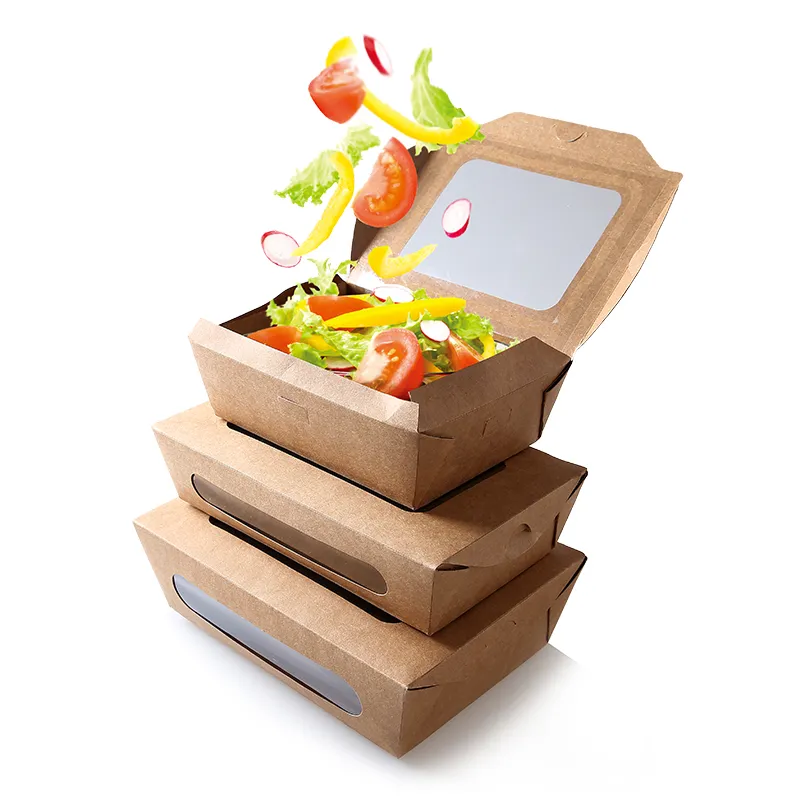
The Service Conditions That Decide Whether Bamboo Fiber Works
Bamboo fiber packaging arrived in foodservice as an alternative to moulded pulp and thin plastic, and it is usually sold on material credentials rather than on handling behaviour. That framing puts the decision in the wrong order. A container either suits a menu and a service sequence or it does not, and the material alone cannot answer the question.
The Paper Materials range shows how much of the outcome depends on what is married to the fibre. The same base can be left uncoated, coated with a water-based layer, or lined for heat and grease, and each version behaves differently in the hand and on the shelf.
Bamboo fibre itself is stiff, dense and pleasant to hold, with a texture that reads as natural rather than synthetic. It is also hygroscopic, so it keeps exchanging moisture with its surroundings long after it leaves the press. Rigidity is therefore never a fixed property; it is a property of the pack in the condition it is used.
Buyers who start with the material specification and then work backwards to the menu avoid most of the disappointment that follows a material-led purchase.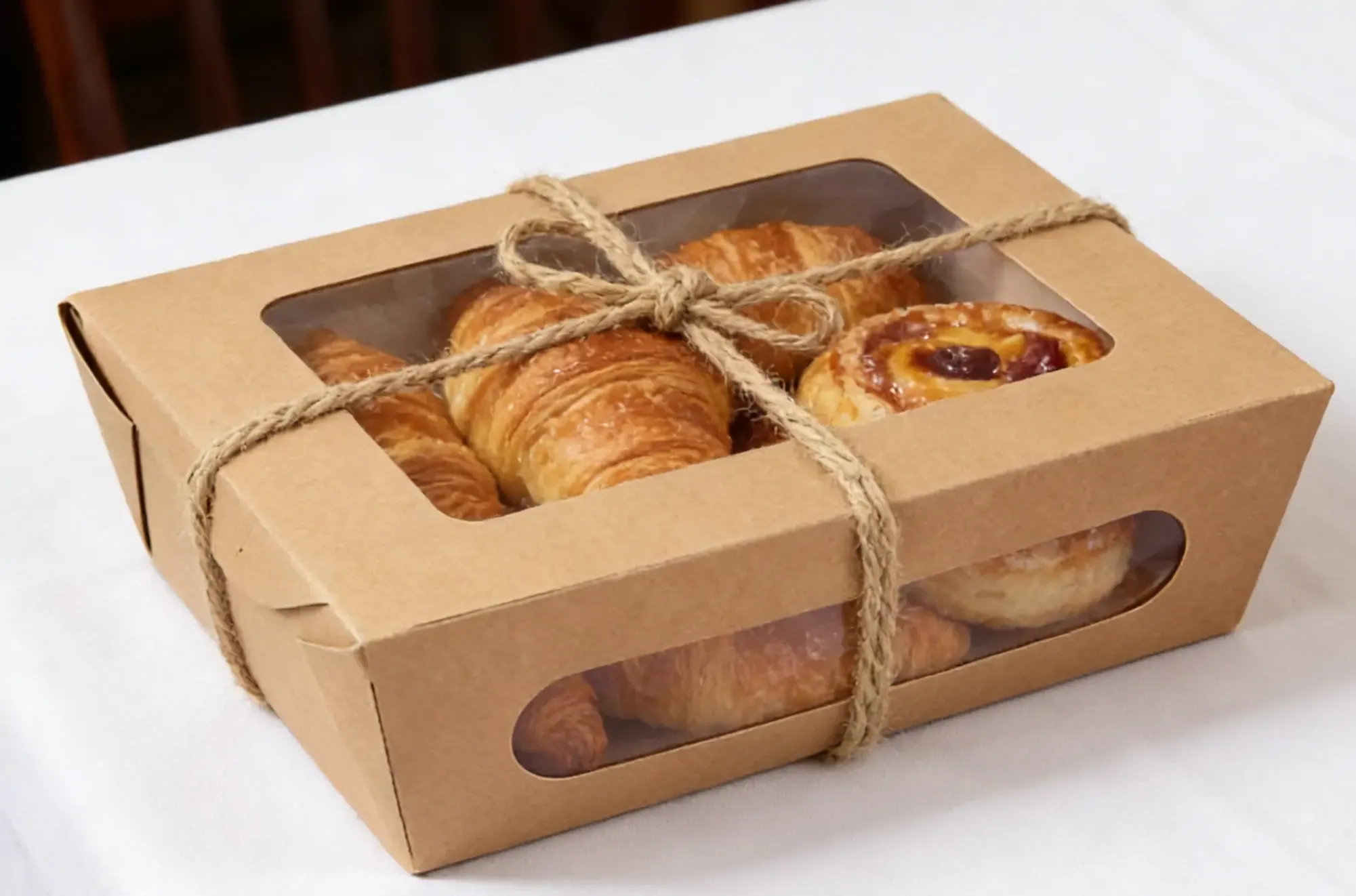
Where the Material Genuinely Fits
Bamboo fiber packaging earns its place in particular service conditions rather than across a whole menu. The dividing line is contact time and free moisture, not the sustainability story, and the Paper Materials grades differ mainly in how they handle that line.
Dry and Warm Service With Short Contact Time
Formats perform best where food is dry or only lightly moist and is eaten within a short window. Bakery items, pastries, sandwiches, fries and hot snacks sit comfortably in a rigid moulded tray because there is little free liquid to absorb and the container only has to hold shape for minutes. Warm service is manageable too, since a fibre wall insulates better than a thin plastic shell, so a customer can carry a hot portion without a sleeve. A bamboo fiber food container used this way rarely fails. Problems appear at the edges of the window rather than in the middle of it.
Wet, Fatty and Long-Hold Menus
Sauces, dressings, soups and marinated dishes attack a fibre container in two ways. Water softens the wall and reduces rigidity, while fat migrates into the surface and leaves a translucent mark that reads as a leak even when the pack holds. Long hold times worsen both, because the material keeps absorbing while the food sits in a delivery bag or a display case. A lined bamboo fiber food container can carry a dressed salad through a short service, but once a coating is added the end-of-life story changes and should be described honestly.
Rigidity, Stacking and the Handling Chain
Rigidity is the property operators notice first and the one most often overstated by a hand-held sample. A bamboo fiber tray that feels solid empty can behave very differently once loaded, so the Paper Materials options should be compared under load rather than on a counter.
Wall Rigidity and Load Bearing
A moulded fibre tray gains stiffness from geometry as much as from weight per area. Ribs, corner radii, a flanged rim and a shallow draft all resist bending, while a flat wall of the same thickness flexes under a loaded grip. For buyers, the useful test is not a thumb press on an empty sample but a loaded tray carried at one corner, which is how staff actually move it. Trays that pass the empty test and fail the loaded one need a deeper profile or a thicker wall, not a different Paper Materials grade.
Stacking, Nesting and Transport
Nesting depth decides how much space a case consumes and how easily staff separate units at the counter. Too tight and the trays jam; too loose and a pallet becomes unstable. Under load, Paper Materials containers creep, so a stack that looks square at packing can lean by the end of a route. Corrugated outer cases and a modest stack height protect the pack more reliably than extra wall thickness. Test a full pallet rather than a column of five, because the failure appears only with real weight and real vibration.
Moisture Sensitivity and Printability
Two further properties decide whether a bamboo fiber format can carry a brand as convincingly as it carries a portion. Both are measurable before a purchase order is raised, and both are documented in the Paper Materials range for the grades that carry a coating.
What Humidity Does to a Fibre Container
Paper Materials fibre is hygroscopic and will exchange moisture with the air before it ever meets food. In a humid kitchen or a chilled display with condensation, an uncoated tray takes up water at the rim, softens, and loses the crisp edge that makes the format look premium. Dimensional change is small but sufficient to affect lid fit and nesting depth. Storage matters as much as the material, since cases left open in a wash-down area behave differently from cases kept wrapped on a dry shelf. Specify storage conditions and check the pack after them.
Print Quality and Surface Finish
Moulded fibre surfaces are textured, so fine detail and large solid areas print differently from a coated board. Direct printing on fibre usually produces a softer image with visible substrate, which suits stamps, short runs and single-colour marks better than photographic artwork. Where brand presentation is the priority, a coated board from the Paper Materials range gives a smoother, more controllable result on shelf. The decision is commercial: a textured, unbleached look communicates the material honestly, while a smooth white surface promises a finish that fibre alone cannot hold.
Scoping a Trial With a Paper Materials Supplier
Bamboo fiber packaging trials fail for organisational reasons more often than technical ones. The usual cause is a sample matrix that tests material rather than use, or a brief that never states the menu the Paper Materials grade has to survive.
Defining the Sample Matrix
Build the matrix from the menu, not from the catalogue. Pick three dishes that represent the range, the driest, the wettest and the hottest, then request the same format in two wall weights or two profiles so that one variable can be isolated. Ask the Paper Materials team for the food packaging material data sheet, the food-contact declaration, and the coating or lining specification for each sample. Run those samples through the real service sequence, including holding, transport and the moment the customer lifts the pack, and record what fails.
Acceptance Criteria and Volume Planning
Agree the pass or fail test before the trial starts. Useful criteria are deformation after a loaded carry, surface marking after a greasy dish, lid or film fit after chilling, and visible staining at the base. Score each one rather than describing it, and photograph the failures. Volume planning follows the result, because moulded formats carry tooling and minimum batch commitments, so the trial should establish annual quantity and the number of sizes before a tool is cut. A Paper Materials supplier who quotes a unit price before those two numbers exist is guessing.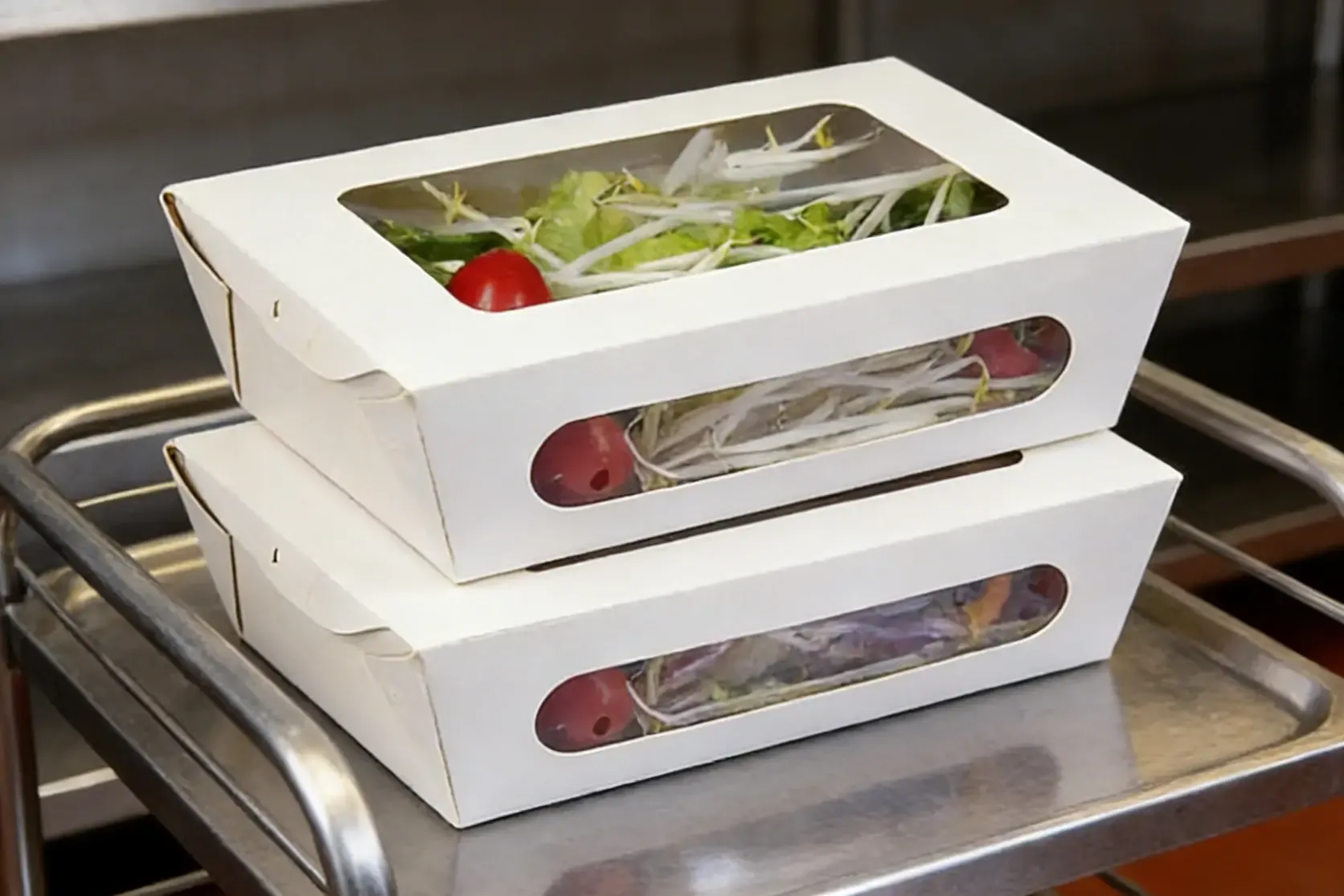
FAQ
Is bamboo fiber packaging suitable for hot soup?
Usually not in an uncoated format. Hot soup combines free liquid, sustained heat and a long hold time, which is the combination that softens fibre fastest and produces the staining customers read as a leak. A coated board container or a plastic container is the safer specification for broth-based dishes. If soup is part of the menu, keep the Paper Materials format for the dry items in the same order and use a separate container for the liquid component.
How does a bamboo fiber tray compare with a coated paper tray?
A moulded fibre tray is thicker and more rigid in the hand, and its texture supports a natural, unbleached look. A coated paper tray from the Paper Materials range is lighter, stacks more tightly and prints sharper graphics because the board surface is smooth. Neither Paper Materials option is better in general. The choice follows the dish, the presentation standard and the handling the pack receives between the kitchen and the customer.
What should a foodservice buyer ask for before ordering samples?
Ask for the food packaging material grade and source, the coating or lining specification, the food-contact declaration, the recommended temperature range, storage conditions and the minimum order per size. Then ask which existing customer uses the format for a comparable dish, and what failed in earlier trials. A supplier who can answer all of that from the Paper Materials catalogue is easier to work with than one who answers only the price question.