



Why the Red Party Cup Deserves a Specification Review
A red party cup looks like the simplest line in a wholesale catalogue, and it is the one most likely to produce a complaint nobody can explain. A caterer fills it with mulled wine at 85°C and the rim goes oval. A pallet sits in a 45°C container for three weeks and the cups no longer separate cleanly. A university orders ten thousand units for commencement and discovers halfway through service that the lids will not seat. In each case the wholesaler absorbs the blame, not the brand that bought the cups, because the wholesaler chose the supplier.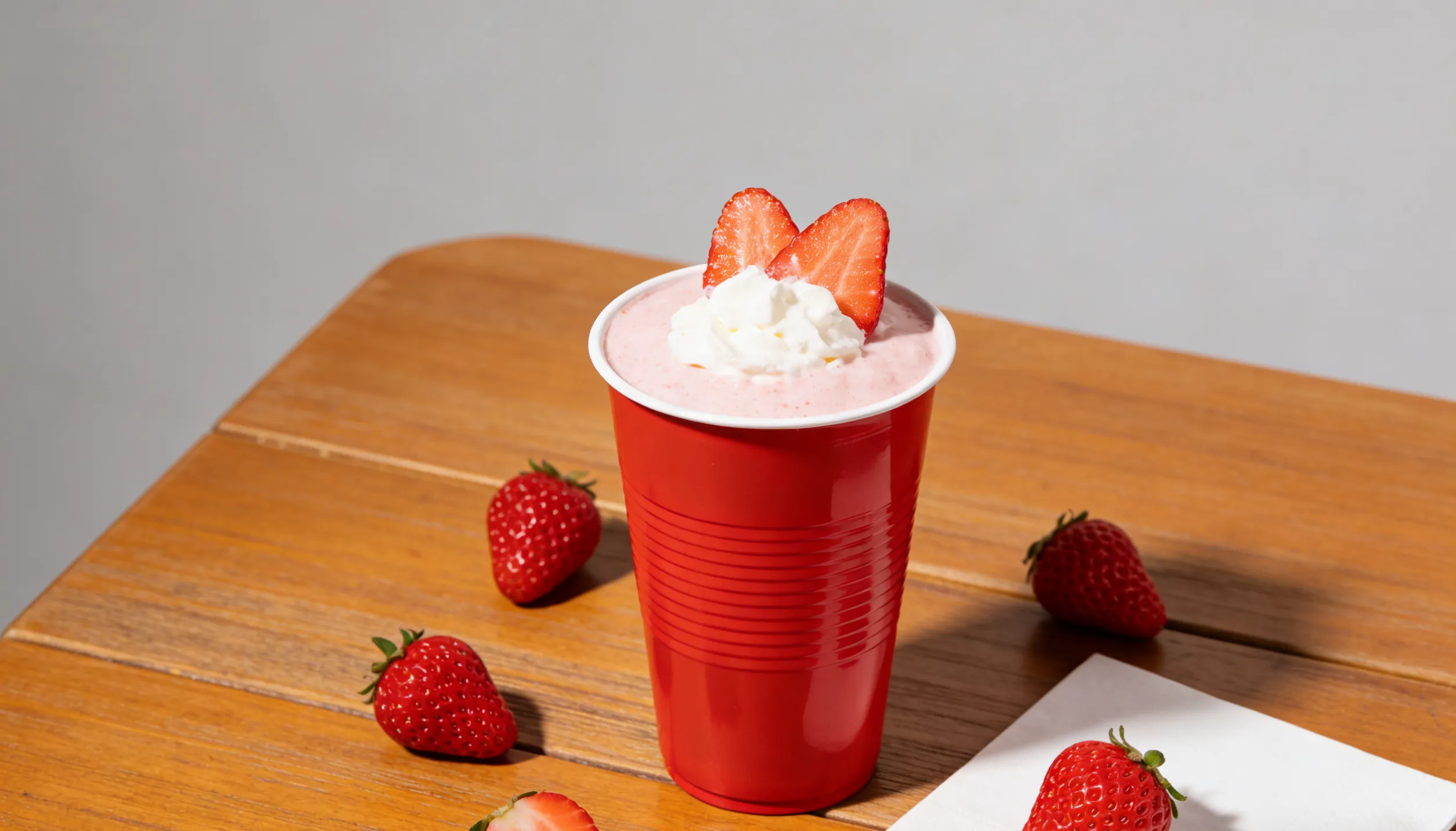
That is the uncomfortable part of the category. A plastic cup is sold as a commodity and bought as an afterthought, yet it behaves like an engineered component. Its performance depends on resin grade, wall thickness, moulding temperature, pigment loading and rim tolerance, and every one of those variables is invisible in a product photo. Two buyers can order what looks like the same red party cup and receive products that fail at completely different temperatures.
Heat resistance and order quantity are the two decisions that determine whether the line makes money. Get the thermal specification wrong and you inherit returns, credit notes and a reputation problem that spreads through a small network of event buyers. Get the quantity wrong and you either miss the summer peak or carry pallets of bulky stock into a slow first quarter. Both mistakes are avoidable with the same discipline: specify before you buy, and calculate before you commit.
The guidance below treats the red plastic cup as a specified item with a thermal envelope and a freight profile: how to read a data sheet, how to test a sample without a laboratory, how to match a lid to a cup, and how to convert event seasonality into a number you can defend to your finance team.
Reading Heat Resistance From the Material Data Sheet
Most suppliers answer the heat question with an adjective. A plastic cup data sheet answers it with numbers, and the numbers are what you can hold a supplier to when a shipment underperforms.
What the Service Temperature Numbers Actually Mean
Three figures matter, and they are routinely confused with each other. Heat deflection temperature under load, usually quoted as HDT-B, describes the point at which a standard test bar bends under a defined load. Continuous service temperature describes the range a finished part can hold for long periods without meaningful distortion. Hot-fill performance describes what happens during the first minutes of contact with a hot liquid, when the wall is at its weakest.
A plastic cup can pass one of these and fail another. A resin with a respectable HDT-B may still creep at the rim after repeated hot fills, because the rim is thin and carries the load of the cup above it. This is why a data sheet alone is not enough, and why a documented hot-fill result belongs beside the temperature rating.
Ask for the resin grade by name, the wall thickness at the rim and at the base, and the hot-fill condition the supplier tested. A plastic cup rated at 100°C continuous service with a 0.35 mm wall behaves nothing like a plastic cup rated at 70°C with a 0.28 mm wall, and the difference will surface in the field long before it surfaces in a quotation.
How Resin Choice Changes Behaviour Under Hot Fill
Polypropylene, polystyrene and polyethylene terephthalate dominate the category, and they fail in different ways. Polypropylene softens gradually and holds shape across a wide band, which is why it tolerates hot fill. Polystyrene is stiffer and clearer at low cost, but it deforms above roughly 70°C and turns brittle under impact. PET delivers the best clarity, yet its glass transition sits at 70–80°C, so it softens early and suits cold service far better.
Material |
Typical service temperature |
Behaviour under hot fill |
Suitable event use |
PP, resin code 5 |
Around 100°C |
Softens gradually, retains shape, tolerates hot fill |
Hot cocoa, mulled wine, coffee urns, mixed service |
PS, resin code 6 |
Around 70°C |
Deforms and crazes above 70°C, brittle on impact |
Cold beer, punch, chilled soft drinks |
PET, resin code 1 |
65–70°C, glass transition 70–80°C |
High clarity, softens early, unsuited to hot liquid |
Iced drinks, cocktails, dessert service |
For a wholesaler who wants one red plastic cup to cover an entire event season, polypropylene is usually the safer default, because event caterers rarely control what goes into the cup. A PP party cup in 18oz with a 95 mm rim, 60 mm base and 125 mm height, paired with a matching PP lid, handles hot and cold service without forcing you to carry two SKUs and explain the difference to every customer.
Where Colour Masterbatch Affects Thermal Stability
Red is the hardest colour to hold consistent, and the reason is partly thermal. Pigment loading influences how the polymer crystallises during moulding, so a heavily loaded masterbatch can leave a wall that is slightly weaker and more prone to stress whitening around the rim. Cheap pigment systems also migrate and bloom, which shows up as blotchy patches and fading after a few weeks in a warm warehouse.
None of this appears on a colour swatch. Ask for the masterbatch supplier and its heat stability rating, request a colour chip pulled from the production batch rather than from a sample room, and compare two shipments side by side under daylight before you approve a season. A plastic cup that arrives the right shade but the wrong shade of red still costs you a customer, because event buyers match cups to table linen and printed signage.
Bench Tests That Reveal Weak Points Before a Season Starts
A wholesaler does not need a laboratory to catch the plastic cup failures that generate complaints. Four repeatable tests, a written pass criterion and a sample from the actual production batch will expose most problems before a container leaves the factory.
Hot-Fill Hold and Rim Ovality
Fill the plastic cup to about eighty percent with water at 90–95°C and hold it for ten minutes. Measure the rim across two axes while it is still warm, then again after it cools, and compare both readings against the dry dimension. Inspect the rim for stress whitening, which appears as a pale band where the polymer has yielded.
Set a pass criterion in advance, typically less than about one millimetre of ovality after cooling, because a rim outside that band will not seal against a lid under load. Test at least ten plastic cups from different cavities in the same carton, since cavity-to-cavity variation is where quality control usually breaks down. Record the results with the batch number so a future shipment can be compared against the approved standard.
This single test predicts more field failures than any other, and it takes an afternoon. Wholesalers who run it once per season stop discovering thermal problems at a customer's event, which is the most expensive place to find them.
Warm Stack Load and Nesting Behaviour
Stack a full carton inside a closed container or a warm chamber at 40–45°C for seventy-two hours, then open it and count how many cups fail to separate by hand. This simulates the worst leg of an ocean shipment, where cartons sit in a steel container through a tropical port and the plastic cup softens just enough for nesting force to climb.
Nesting force is the hidden cost of a cheap wall. Plastic cups that bind slow down every filling line and every volunteer at a charity event, and staff compensate by pulling harder, which cracks rims. A plastic cup that separates cleanly after heat exposure is worth more per thousand than one that saves a fraction of a cent on resin.
Repeat the test at the pallet level if your warehouse stacks high, since compression on the bottom carton adds load to the same rims you are testing. Log the de-nesting rate as a percentage and treat any batch above your threshold as a reinspection case rather than a shipment you hope will improve in the destination warehouse.
Drop, Seal and Lid Compatibility Checks
Fill a plastic cup with cold liquid, seat the lid, and drop it from one metre onto concrete in three orientations: upright, inverted and on its side. Record where the failure occurs, because the location tells you which process is out of control. Splits at the base radius point to thin walls or a cold mould, while lid separation points to rim geometry rather than material strength.
Follow the drop test with a twenty-four-hour inversion check. Seat the lid firmly, invert the plastic cup over a tray, and leave it overnight at room temperature. Any visible seep at the rim plug or the lip indicates a tolerance mismatch that will appear as a leak in a delivery bag, and no amount of double-cupping solves a warped rim.
Document all three tests on one sheet per batch and keep the approved sample in a sealed bag. That reference cup becomes the standard against which every future delivery is judged, and it converts a subjective argument about quality into a comparison of measurements.
Matching the Lid and the Cup as One System
A plastic cup sold without its lid is half a product, and the half that leaks is usually the one nobody tested.
Rim Tolerance and Seal Integrity
Rim diameter is a nominal figure with a tolerance band, and the band is where the trouble lives. A plastic cup moulded at the top of its tolerance paired with a lid at the bottom of its own will seat firmly on the bench and fail in a moving delivery bag. Ask for both tolerances in writing, then sample them together rather than approving each component in isolation.
Seal integrity also depends on rim flatness, not only diameter. A rim that is slightly wavy from uneven trim will seal at three points and leak at the fourth, which is exactly the kind of intermittent defect that survives a quick factory check and fails in the field. Run the inversion test on samples drawn from several cavities to catch this pattern.
A manufacturer that controls both parts of the system can tune the interference fit for a plastic cup and its lid, instead of arguing about whose component is out of specification. That single advantage removes an entire category of complaint from your after-sales workload.
Why Lid Resin Compatibility Matters
Lid material affects both sealing behaviour and the temperature the plastic cup assembly can survive. A polypropylene lid on a polypropylene cup expands at a similar rate when filled with hot liquid, so the interference fit stays within its design range. Mixing a polystyrene lid with a polypropylene cup produces different expansion rates, and the seal that passed a cold test can loosen once hot liquid raises the rim temperature.
Colour is a secondary signal here. A lid matched to the cup in both resin and shade reads as one product on a table, while a mismatched lid reads as an assembly of parts. For event buyers, that visual consistency is part of what they are paying for, and it is one of the few quality signals their own customers can see.
Ask the supplier to quote the cup and lid as a set, with a single batch record, and confirm that both are produced to the same dimensional standard. It is a small request that eliminates a large share of returns.
Turning Event Seasonality Into an Order Quantity
Event demand for a plastic cup is not flat, and a wholesaler who orders on instinct either misses the peak or finances the residue.
Building a Reorder Point From Lead Time and Demand Variance
Start with a simple formula: reorder point equals average weekly demand multiplied by lead time in weeks, plus safety stock. For a 95 percent service level, safety stock is roughly 1.65 times the standard deviation of weekly demand. The formula is less important than the discipline of writing the two inputs down, because most overstock problems begin with an assumed lead time that nobody verified.
Raise the buffer for peak weeks rather than raising the order itself. A larger order locks cash for months, while a larger buffer protects the peak and unwinds once demand normalises. For a plastic cup line with modest margin, the difference between those two moves is often the difference between a good year and a warehouse full of slow-moving cartons.
Review the lead time every quarter with the supplier, including production, inland transport, ocean transit and customs clearance. A figure that was accurate in a quiet season becomes fiction during peak booking, when vessel space tightens and containers roll.
Container Fill, Carton Dimensions and Landed Cost
Nested plastic cups are mostly air, so a forty-foot high cube fills by volume long before it approaches its weight limit. That single fact changes how you should compare quotations. Two plastic cup suppliers can quote the same unit price and deliver very different landed costs, because one packs more pieces into a carton or stacks cartons more efficiently on a pallet.
Ask for carton dimensions, pieces per carton, carton weight and the pallet pattern, then calculate units per container yourself. A plastic cup that looks six percent cheaper per unit can lose that entire advantage to the empty space you are paying to ship, and the loss grows as freight rates rise.
Add duties, insurance, inland haulage and warehouse handling to reach a true landed cost per thousand. Only then does the comparison become meaningful, and only then can you decide whether a higher minimum order quantity is genuinely cheaper or simply larger.
Storage, Pallet Compression and Rotation
Storage belongs in the same calculation as purchase quantity. Cartons stacked six high in a warm warehouse compress the bottom layer, and the rims inside those cartons take the load. Over a summer, that compression turns a clean de-nesting cup into one that binds, and the problem appears to be a quality defect when it is really a storage decision.
Keep the factory pallet configuration, respect the compression limit printed on the case, and rotate stock so the season's first delivery is not the one opened last. If space is tight, ship twice rather than once, even at a slightly higher freight cost per unit.
Bulky low-value items punish over-ordering twice, once in cash and once in space. A plastic cup that occupies a pallet position for nine months has a real carrying cost, and it is usually larger than the discount that justified the extra volume.
What a Comparable Quotation Should Contain
Most plastic cup quotations cannot be compared because buyers send a colour and a size. A specification turns a price list into an offer you can evaluate line by line.
Specification Fields That Change the Price
Resin and grade sit at the top of the list, since polypropylene and polystyrene quotations are not substitutes. Capacity in ounces and millilitres should be accompanied by rim, base and height dimensions in millimetres, because a nominal 16oz plastic cup from one supplier can hold less than a nominal 16oz plastic cup from another. Wall thickness and nominal cup weight are where hidden cost lives, and a supplier who will not state them is not offering a fixed product.
Add lid format and material, pack configuration, carton dimensions, pieces per carton and pallet pattern. Then require the minimum order quantity, production lead time, port of loading and Incoterm, because a price without a delivery term is not a price. Finally, specify the colour target with an approved physical chip rather than a Pantone reference alone.
Seven or eight fields are enough to make quotations comparable, and they create a paper trail when a delivery underperforms. Buyers who send specifications get faster, more accurate answers, because the supplier no longer has to guess what the customer means by a standard red plastic cup.
Documents That Support Market Access
Compliance documentation is part of the product, not an administrative extra. For the United States, food-contact compliance under FDA requirements should be available as a declaration with supporting test data. For Germany and the wider European Union, LFGB testing and conformity with the EU plastics food-contact regulation, EU No 10/2011, are the relevant references. Buyers in the Middle East and Asia often ask for comparable local documentation.
Factory certificates answer a different question. BRC and ISO speak to process control, BSCI addresses social compliance, and FSC applies to paper-based components rather than plastic. A supplier who distinguishes these categories, and sends the right document for the right market, usually manages production properly too.
Request the documentation with the quotation rather than after the order. A plastic cup supplier that cannot produce the right report for your destination market is a supply risk regardless of price, and discovering that at the port is an expensive way to learn it.
Where Supplier Geography Enters the Calculation
Lead time, tariff exposure and port congestion are now part of the specification, and they belong in the same evaluation as wall thickness.
Lead Time, Tariff Exposure and Port Congestion
Two suppliers with identical products can deliver very different total costs once origin is taken into account. Duty rates differ by country of manufacture, and so do the documentary requirements at destination. A plastic cup buyer who treats origin as a logistics detail usually discovers the real cost after the first shipment clears.
Peak-season congestion compounds the problem. Container space tightens before major retail and event seasons, and a booking confirmed in a quiet month can roll twice in a busy one. Building a buffer into the reorder point protects against normal variation, but only a second origin protects against a genuinely blocked route.
For a wholesaler, the practical question is whether the supplier can shift production between plants without changing the specification. That capability is worth more than a marginal cent per plastic cup, because it protects the delivery date your event customers are actually buying.
Holding One Quality Standard Across Plants
Multi-country manufacturing only helps if every plastic cup is interchangeable. Ask how a supplier transfers a mould, a colour standard and a test protocol between sites, and ask to see batch records from more than one plant. A group that operates production bases in China, Vietnam and Indonesia can offer real flexibility, but only when the same specification governs every line.
Sowin Group runs that model across three countries, with paper and plastics production supported by in-house material sourcing, more than 1,500 product references and a documented quality system covering BRC, ISO, FDA and LFGB requirements. For event supply wholesalers, the practical benefit is a single approved standard that can be produced in whichever location clears customs fastest, without reopening the specification each season.
Ask for a sample from each proposed origin before you split an order. Interchangeability is a claim worth verifying, and the test costs one carton.
FAQ
Is a heat-resistant plastic cup safe for boiling liquids?
No disposable plastic cup should be treated as a vessel for boiling liquid, even when its resin is rated for high service temperatures. Polypropylene handles hot fill around 90–95°C well, but pouring at 100°C introduces a margin that most thin-wall cups were never designed to hold, particularly at the rim and base radius. The practical approach is to fill at service temperature, leave headspace, and avoid sudden temperature shocks such as pouring boiling water into a cold plastic cup. If a customer genuinely needs boiling-water service, the correct answer is a different product category rather than a higher-spec plastic cup.
How many red party cups should a wholesaler order for one event season?
Work from a reorder point for each plastic cup SKU rather than a round number. Multiply average weekly demand by verified lead time, add safety stock sized for the peak week, then round up to the supplier's minimum order quantity and to a container fill you can absorb. Most overstock problems come from inflated orders placed to capture a discount, while most stockouts come from lead times that were never confirmed. Order the season in two shipments when lead time allows, keep the pallet configuration intact, and review the forecast after the first peak passes.
Does a thicker plastic cup wall always mean better heat resistance?
Wall thickness in a plastic cup improves stiffness and slows heat transfer, but it does not change the resin's service temperature. A thick polystyrene cup will still deform above roughly 70°C, and an uneven wall can create local hotspots that fail earlier than a thinner but more uniform wall. What matters is the combination of resin grade, wall distribution and rim geometry, verified by a hot-fill hold test. Buyers should compare measured wall thickness at the rim and base, not a single nominal figure quoted for the side wall.
Which certifications should a plastic cup supplier provide for European and American markets?
For the United States, ask for a food-contact declaration supported by FDA test data. For Germany and the European Union, request LFGB testing and conformity with EU No 10/2011 for plastics in contact with food. Factory certificates such as BRC and ISO support process control, while BSCI covers social compliance and FSC applies to paper components rather than plastic. The right set depends on the destination market and the specific product, so request documents by market rather than accepting a generic certificate pack.