


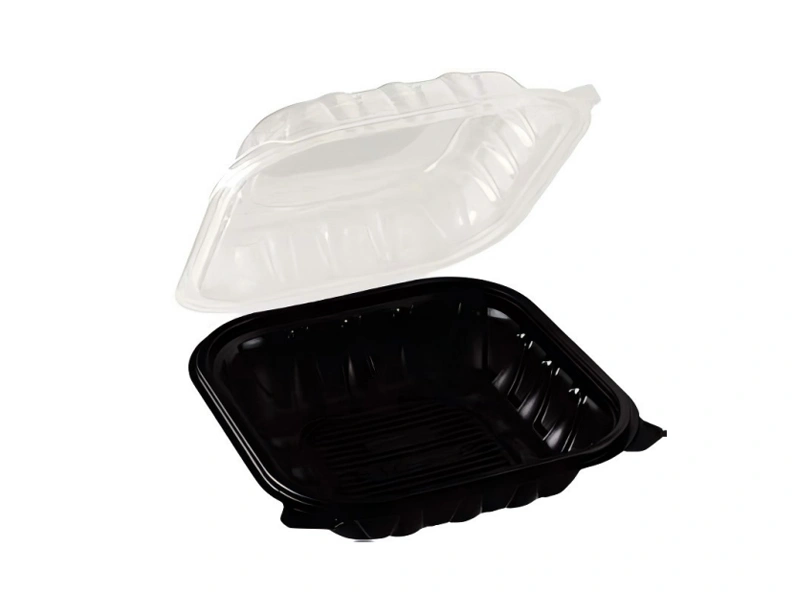
In the food packaging industry, the effectiveness of lid sealing technology directly determines product shelf life, food safety compliance, and consumer satisfaction. When businesses select plastic containers for food applications, the sealing mechanism between the container body and lid becomes a critical quality indicator that influences freshness retention, contamination prevention, and regulatory adherence. Understanding why lid sealing matters and how different sealing methods impact food preservation helps procurement managers, food manufacturers, and packaging engineers make informed decisions that protect both product integrity and brand reputation.

The relationship between lid sealing and food preservation extends beyond simple closure functionality. Modern plastic containers for food must create reliable barriers against oxygen infiltration, moisture migration, and microbial contamination while maintaining structural integrity throughout distribution chains and consumer use cycles. Industries ranging from fresh produce packaging to prepared meal delivery depend on advanced sealing technologies to meet food safety standards, extend product marketability windows, and reduce waste. This comprehensive examination explores the multifaceted importance of lid sealing mechanisms, the technical factors that determine sealing effectiveness, and the business implications of selecting appropriate closure systems for specific food packaging applications.
Why Lid Sealing Functions as the Primary Defense Against Food Deterioration
Oxygen Barrier Performance and Its Impact on Food Quality
Oxygen exposure represents one of the most significant threats to packaged food quality, triggering oxidation reactions that degrade nutritional value, alter flavor profiles, and accelerate spoilage. Effective lid sealing in plastic containers for food creates a controlled atmosphere that minimizes oxygen transmission rates, thereby slowing enzymatic browning in fruits and vegetables, preventing rancidity in fatty foods, and inhibiting aerobic bacterial growth. The sealing interface between lid and container rim must achieve microscopic contact continuity to prevent gas exchange, which requires precise dimensional tolerances and appropriate gasket compression.
Different food categories demonstrate varying sensitivity to oxygen exposure, making seal integrity assessment product-specific. Fresh-cut produce packaging typically requires oxygen transmission rates below specific thresholds to maintain respiration balance, while dry goods packaging prioritizes moisture barrier properties alongside oxygen exclusion. The mechanical design of lid sealing systems must account for these application-specific requirements, incorporating features such as silicone gasket inserts, compression rib geometries, or hermetic snap-fit mechanisms that deliver measurable seal strength and leak resistance under standard testing protocols.
Microbial Contamination Prevention Through Seal Integrity
Food safety regulations worldwide emphasize contamination prevention as a fundamental packaging requirement, positioning lid sealing effectiveness as a compliance-critical feature. Properly sealed plastic containers for food establish physical barriers that prevent post-processing contamination from environmental microorganisms, airborne pathogens, and handling-related exposure during storage and distribution. The seal zone must resist penetration by bacteria, mold spores, and yeast cells, which typically measure between 0.5 to 10 micrometers in diameter, necessitating sealing surfaces that eliminate microscopic gaps and maintain compression over extended timeframes.
Testing methodologies for microbial barrier effectiveness include pressure decay analysis, dye penetration studies, and microbial challenge tests that simulate real-world contamination scenarios. High-quality lid sealing systems demonstrate consistent performance across temperature fluctuations, mechanical stress events, and aging conditions that might compromise seal integrity in inferior designs. For ready-to-eat food packaging and refrigerated prepared meals, seal reliability directly correlates with pathogen exclusion effectiveness, making lid design optimization a food safety imperative rather than merely a convenience feature.
Moisture Control and Its Influence on Texture and Shelf Stability
Water vapor transmission through inadequate seals causes textural degradation, accelerates microbial growth, and triggers chemical reactions that compromise food quality. Effective lid sealing in plastic containers for food maintains moisture equilibrium by controlling vapor exchange rates, which proves particularly critical for products sensitive to humidity changes such as baked goods, snack foods, and dehydrated ingredients. The sealing system must account for internal humidity generation from respiring produce or condensation formation during temperature cycling, incorporating venting mechanisms or absorbent components when appropriate while maintaining primary barrier function.
Engineering considerations for moisture barrier optimization include material selection for both container and lid components, surface finish specifications for sealing interfaces, and gasket formulation chemistry that resists hydrolytic degradation. Advanced plastic containers for food utilize multi-layer lid constructions that combine structural rigidity with barrier performance, often incorporating polyethylene, polypropylene, or polyester films that exhibit low water vapor transmission rates. The seal design must balance tight closure requirements with user-friendly opening features, ensuring that barrier performance does not compromise consumer accessibility or reusability in multi-use applications.
Technical Factors That Determine Lid Sealing Effectiveness
Material Compatibility Between Container Rim and Lid Interface
The chemical and physical compatibility between lid materials and container rim surfaces fundamentally influences seal formation quality and long-term performance. Plastic containers for food typically employ polypropylene, polyethylene terephthalate, or polystyrene for container bodies, each exhibiting distinct thermal expansion coefficients, surface energy characteristics, and mechanical properties that affect seal interface behavior. Lid materials must demonstrate complementary properties that enable reliable mating under assembly conditions while maintaining seal compression throughout product lifecycle stages including filling operations, temperature excursions, and repeated opening cycles.
Surface tension matching between lid and rim materials promotes molecular adhesion that enhances seal strength beyond purely mechanical compression effects. Some advanced lid designs incorporate thermoplastic elastomer gaskets that combine flexibility with chemical resistance, creating conformal seals that adapt to minor dimensional variations while maintaining consistent barrier performance. Material selection criteria must also consider food contact regulatory compliance, organoleptic neutrality to prevent flavor transfer, and recycling compatibility that aligns with sustainability objectives increasingly prioritized by food brands and regulatory frameworks.
Geometric Design Parameters of Sealing Interfaces
The dimensional specifications and geometric features engineered into lid sealing zones directly determine closure effectiveness and consistency. Plastic containers for food incorporate various sealing architectures including flat gasket compression designs, angled snap-fit systems, threaded closures, and interference-fit mechanisms, each offering distinct advantages for specific application requirements. Critical geometric parameters include sealing width dimensions, compression depth specifications, draft angles that facilitate mold release, and undercut features that generate mechanical retention forces during lid engagement.
Finite element analysis and computational fluid dynamics modeling enable engineers to optimize seal geometry before tooling investment, predicting stress distribution patterns, compression force requirements, and potential leak paths under various loading conditions. The sealing surface must achieve uniform contact pressure distribution to prevent localized stress concentrations that could create micro-channels for contamination ingress. For larger format plastic containers for food, geometric designs often incorporate multiple concentric sealing ribs that provide redundant barrier protection and compensate for container deflection under internal pressure or external loading during stacking and transportation.
Manufacturing Process Control and Quality Assurance
Even optimally designed lid sealing systems depend on rigorous manufacturing process control to deliver consistent performance across production volumes. Injection molding parameters including melt temperature, injection pressure, cooling rate, and cycle time directly influence dimensional accuracy, surface finish quality, and residual stress patterns that affect seal interface performance. Plastic containers for food production facilities implement statistical process control protocols that monitor critical dimensions, conduct periodic seal strength testing, and verify barrier effectiveness through standardized leak detection procedures.
Quality assurance methodologies for lid sealing systems encompass both destructive and non-destructive testing approaches. Destructive methods measure peel strength, compression force requirements, and failure mode analysis that inform design improvements and material specification refinements. Non-destructive techniques including vacuum decay testing, ultrasonic inspection, and vision system verification enable 100% inline inspection without compromising product usability. Suppliers of plastic containers for food differentiate themselves through validated quality systems that document process capability indices, maintain traceability through production lots, and provide technical support for seal performance optimization in customer-specific applications.
Application-Specific Sealing Requirements Across Food Categories
Fresh Produce Packaging and Modified Atmosphere Considerations
Fresh produce packaging presents unique sealing challenges due to ongoing respiratory activity that generates carbon dioxide, consumes oxygen, and produces moisture vapor inside sealed containers. Effective lid sealing systems for plastic containers for food used in produce applications must incorporate selective permeability features that maintain optimal atmospheric composition without creating anaerobic conditions that accelerate spoilage. Micro-perforation technologies, breathable membrane inserts, and pressure-relief valves integrate with primary seal structures to balance gas exchange requirements with contamination prevention objectives.
Temperature management during distribution significantly impacts seal performance in produce packaging applications. Refrigeration creates temperature gradients that can induce condensation formation on internal surfaces, potentially compromising seal effectiveness if moisture accumulates at the lid-container interface. Advanced designs incorporate condensation management features such as textured inner lid surfaces, absorbent pad integration points, and geometric features that channel condensate away from sealing zones. The lid sealing system must maintain integrity across temperature ranges from refrigerated storage at 2-4°C through ambient display conditions and potential temperature abuse scenarios during consumer transport.
Prepared Foods and Hot-Fill Application Requirements
Hot-fill processing for soups, sauces, and prepared meal components introduces thermal stress conditions that challenge lid sealing performance in ways distinct from ambient-fill applications. Plastic containers for food designed for hot-fill service must withstand filling temperatures often exceeding 85°C while maintaining dimensional stability and seal integrity as contents cool and internal vacuum develops. The sealing system must accommodate thermal contraction of both product and packaging materials without creating leak paths or allowing lid detachment under negative pressure conditions.
Material selection for hot-fill lid applications prioritizes heat resistance, low thermal expansion coefficients, and crystalline polymer structures that resist deformation at elevated temperatures. Polypropylene compounds with enhanced heat deflection temperatures frequently serve as base materials, often incorporating mineral fillers or glass reinforcement to improve dimensional stability. The seal design must account for thermal expansion mismatch between lid and container components, incorporating compliance features that absorb differential movement while maintaining contact pressure at sealing interfaces. Post-fill cooling protocols and pressure monitoring systems verify seal integrity formation as thermal equilibrium establishes and vacuum conditions develop within sealed plastic containers for food.
Dry Goods Packaging and Long-Term Storage Stability
Extended shelf life requirements for dry goods packaging demand lid sealing systems that maintain barrier performance over months or years of storage under variable environmental conditions. Plastic containers for food used for nuts, grains, dried fruits, and powdered ingredients must resist moisture ingress that could trigger microbial growth, clumping, or texture degradation while preventing oxygen exposure that accelerates rancidity and vitamin degradation. The sealing mechanism must demonstrate minimal property changes through aging, resisting creep relaxation that could reduce compression force and compromise barrier effectiveness over extended timeframes.
Accelerated aging studies simulate long-term storage conditions by exposing sealed containers to elevated temperature and humidity conditions that approximate months or years of ambient storage within compressed testing timeframes. These validation protocols assess seal strength retention, barrier property maintenance, and material compatibility throughout expected product shelf life periods. Desiccant integration, oxygen absorber incorporation, and inert gas flushing technologies often complement mechanical lid sealing systems in premium dry goods packaging, creating multi-barrier protection strategies that extend marketability windows and preserve product quality attributes valued by consumers and retail channels.
Business Implications of Lid Sealing Performance in Food Packaging
Product Loss Reduction and Economic Impact
Inadequate lid sealing directly translates to financial losses through product spoilage, shortened shelf life, and increased rejection rates at quality control checkpoints. Food manufacturers investing in high-performance plastic containers for food with validated sealing systems realize measurable returns through reduced waste, extended distribution capabilities, and decreased customer complaints related to premature product deterioration. The cost differential between basic and premium sealing technologies often represents a small fraction of potential loss value from seal-related failures, particularly for high-value prepared foods, organic produce, and premium product lines where spoilage costs significantly exceed packaging material expenses.
Supply chain efficiency improvements emerge from reliable lid sealing performance that enables longer distribution windows and reduces time-sensitive handling requirements. Products packaged in plastic containers for food with proven seal integrity can withstand extended transportation distances, temperature fluctuations during multi-modal logistics, and handling stresses that would compromise inferior packaging systems. These capabilities expand market access for regional food producers, enable centralized production with distributed delivery models, and reduce inventory turnover pressure that forces premature discounting or disposal of approaching-expiration products.
Regulatory Compliance and Liability Risk Management
Food safety regulations across jurisdictions establish packaging integrity requirements that position lid sealing effectiveness as a compliance obligation rather than an optional quality enhancement. Failure to maintain seal integrity can result in regulatory sanctions, mandatory recalls, and legal liability exposure when contaminated products reach consumers. Plastic containers for food supplied with documented seal performance validation provide manufacturers with defensible evidence of due diligence in packaging system selection, supporting compliance demonstrations during facility inspections and post-incident investigations.
Traceability requirements increasingly mandate documentation connecting packaging components to finished product lots, enabling rapid isolation of affected inventory in recall scenarios. Suppliers offering comprehensive technical documentation including seal performance data, material certifications, and process capability studies facilitate manufacturer compliance with these traceability mandates. The implementation of Hazard Analysis Critical Control Point protocols often identifies packaging seal integrity as a critical control point requiring validation, monitoring, and corrective action procedures that depend on packaging supplier collaboration and technical support capabilities.
Brand Reputation and Consumer Perception
Consumer experiences with packaging functionality directly influence brand perception, purchase repetition likelihood, and word-of-mouth recommendations that shape market positioning. Lid sealing failures manifest as leaking containers, premature spoilage, difficulty opening or resealing, and perceived quality deficiencies that erode consumer trust even when actual food safety remains uncompromised. Premium brands investing in plastic containers for food featuring superior sealing performance differentiate themselves through enhanced user experiences, extended freshness perception, and packaging aesthetics that communicate quality commitment.
Social media amplification of negative packaging experiences accelerates reputation impact from isolated seal failures, transforming individual consumer complaints into viral brand criticism that reaches thousands of potential customers. Conversely, packaging excellence rarely generates equivalent positive amplification, making seal performance more critical as a risk mitigation priority than as a proactive marketing advantage. Strategic packaging decisions increasingly incorporate consumer testing protocols that evaluate seal functionality across diverse user populations, identifying potential usability issues before market launch and enabling design refinements that prevent negative experience propagation.
FAQ
What testing methods verify lid sealing effectiveness in plastic containers for food?
Standard testing protocols include vacuum decay analysis that measures pressure changes indicating leak presence, dye penetration tests using colored liquids under pressure to identify seal breaches, and peel strength measurements quantifying force required for lid removal. Advanced methods employ helium leak detection for ultra-sensitive barrier assessment and microbial challenge testing that exposes sealed containers to pathogen suspensions, then monitors for contamination ingress over specified timeframes. Reputable suppliers provide third-party test reports documenting seal performance under conditions simulating distribution stress, temperature cycling, and aging effects relevant to intended food applications.
How do different lid attachment mechanisms compare in sealing performance?
Snap-fit lids using interference compression typically provide excellent initial seal formation and user-friendly engagement but may experience seal degradation through repeated opening cycles. Threaded closures offer adjustable compression control and reliable resealing capability across multiple uses, though they require rotational clearance and higher tooling costs. Heat-sealed film lids deliver hermetic barriers ideal for single-use applications and tamper evidence but eliminate reusability. Ultrasonic welding creates permanent molecular bonds suitable for extended shelf life products requiring absolute seal integrity. Application requirements including reusability needs, barrier performance targets, and cost constraints determine optimal mechanism selection for specific food packaging scenarios.
Can lid sealing compensate for inferior container material barrier properties?
While effective lid sealing prevents contamination ingress at closure interfaces, it cannot fully compensate for inadequate barrier properties in container sidewalls and bases. Comprehensive packaging protection requires matched barrier performance across all package components including container body materials, lid films or molded structures, and sealing interface designs. Oxygen-sensitive products benefit from high-barrier container materials combined with effective lid sealing rather than relying solely on closure performance. Optimal packaging systems employ holistic barrier design considering transmission through all surfaces, with lid sealing addressing the unique vulnerability created by required closure functionality that interrupts continuous barrier coverage.
What indicators suggest lid sealing problems in plastic containers for food applications?
Premature product spoilage patterns concentrated in specific production lots indicate potential sealing inconsistencies requiring investigation. Visual inspection revealing gaps between lid and container rim, asymmetric lid seating, or deformation at closure points suggests dimensional issues or improper engagement. Increased consumer complaints regarding leakage during transport, difficulty opening containers, or immediate product deterioration after purchase point to systematic seal performance deficiencies. Quantitative indicators include elevated rejection rates during leak testing, trending increases in seal strength variation measurements, and quality audit findings noting packaging integrity concerns. Proactive monitoring through statistical process control identifies emerging seal problems before they impact product quality or generate customer complaints.
Table of Contents
- Why Lid Sealing Functions as the Primary Defense Against Food Deterioration
- Technical Factors That Determine Lid Sealing Effectiveness
- Application-Specific Sealing Requirements Across Food Categories
- Business Implications of Lid Sealing Performance in Food Packaging
-
FAQ
- What testing methods verify lid sealing effectiveness in plastic containers for food?
- How do different lid attachment mechanisms compare in sealing performance?
- Can lid sealing compensate for inferior container material barrier properties?
- What indicators suggest lid sealing problems in plastic containers for food applications?