


Gas Composition as a Product Specification
A tray and a lidding film are visible, so they are discussed in meetings. The gas mixture inside them is invisible, so it is often inherited from a previous product or copied from a standard blend. That inheritance is why a well-built MAP Series pack disappoints on the shelf: the format was right and the atmosphere was not. In fresh meat packaging the atmosphere, rather than the tray, decides food shelf life.
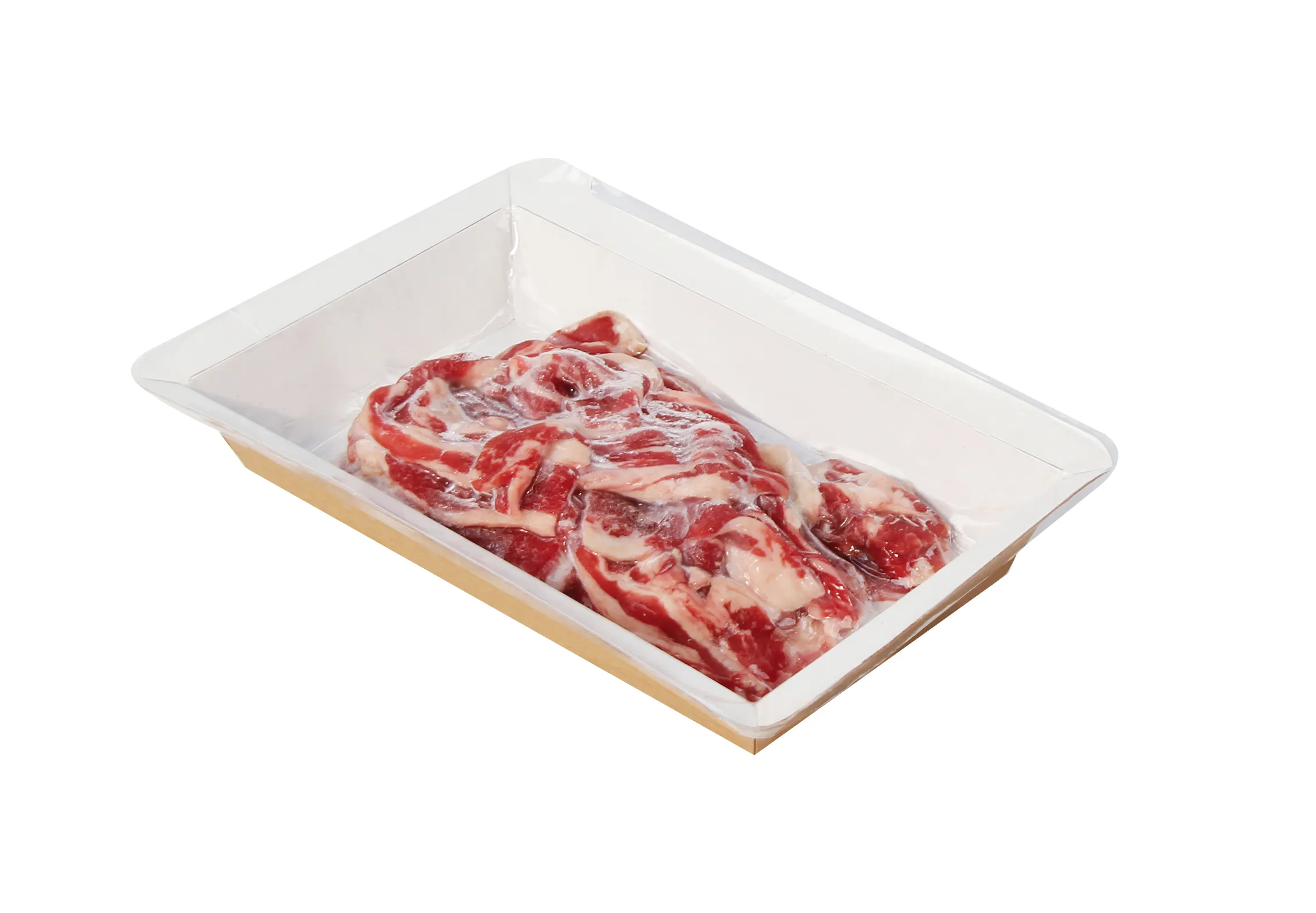
The MAP Series is a set of barrier formats that make a chosen atmosphere possible, not a product family with a fixed environment. The paper-based trays and bowls carry a high barrier EVOH layer and accept standard MAP sealing films, and the gas is decided separately for each product.
That separation matters because the same format can hold beef, pork, lamb, poultry or a marinated cut, and each has a different relationship with oxygen, carbon dioxide and time. Treating the tray as the specification puts the decision in the wrong place.
The sections below work outwards from the product: what species, cut, fat and pH demand, what each gas does, how failures show, and how to brief a gas supplier.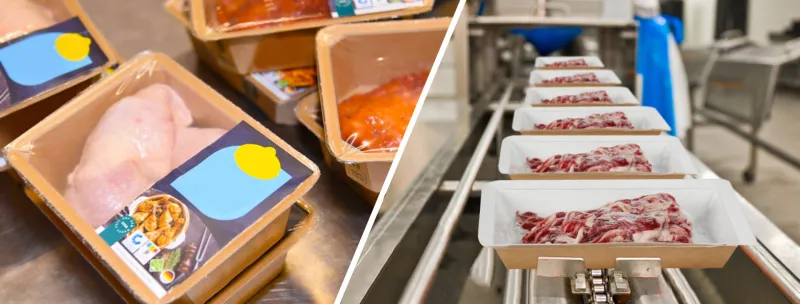
Why the Mix Belongs to the Product Rather Than the Tray
A MAP fresh tray is a delivery system for an atmosphere, and the atmosphere has to be designed against the meat rather than against the pack. Two products sealed in identical MAP Series trays on the same line can need opposite gas strategies.
Species and Cut Change the Requirement
Fresh meat packaging decisions inside the MAP Series start with the species. Beef and lamb are usually presented in a high-oxygen blend to keep the bright red bloom that shoppers read as freshness, while poultry and many processed items are packed with little or no oxygen because the same gas accelerates oxidation and off-flavour in pale meat. Cut matters as much as species: a thick steak oxidises slowly through its surface, while diced or thinly sliced product exposes far more area to the headspace and reacts faster. The mix has to suit the piece, not the category.
Fat Level and pH Shift the Balance
Fat is where oxidation becomes visible and where carbon dioxide dissolves most readily. A fatty cut absorbs more of the gas than a lean one, which pulls down the internal pressure and can leave the film clinging to the product. pH moves the other way: meat with a high ultimate pH holds moisture differently, is more prone to purge and supports a different bacterial population, so a blend that works on a normal carcass can underperform on a dark cutting one. Both variables belong in the brief before a MAP Series mix is proposed.
What Each Gas Is Doing Inside the Pack
Three gases do three distinct jobs, and the ratios between them are the whole design, whatever the MAP Series format underneath. Understanding the job makes a supplier conversation far shorter and far more specific.
Oxygen and the Colour Target
Oxygen is included for one reason in red meat: it binds to myoglobin at the surface and produces the cherry-red colour that retail buyers expect. The practical range for fresh red meat in a MAP Series tray sits around 70 to 80 percent oxygen, with carbon dioxide making up most of the balance. Above that band the colour gain flattens while oxidation of lipids and vitamins accelerates; below it the bloom fades and the product greys. For poultry, cooked meats and many marinated products the target is the opposite, and oxygen is removed rather than added.
Carbon Dioxide and Nitrogen as a Pair
Carbon dioxide is the antimicrobial component. It dissolves into the moisture and fat of the meat, lowers surface pH and suppresses the growth of aerobic bacteria and moulds, and concentrations of 20 to 40 percent are common in MAP Series meat applications. The cost is absorption: as the gas dissolves, the pack can collapse inward and the surface texture can change. Nitrogen is the remedy, an inert filler that holds the pack volume and cushions the product, and it also keeps a low-oxygen pack from looking slack.
Failure Modes That Appear After the Pack Leaves
Most gas problems in a MAP Series pack are invisible at the sealing station and obvious in the cabinet. Knowing how each failure presents narrows the diagnosis before a supplier is blamed for something the route caused.
Colour Loss and the Bloom Window
Grey or brown patches on a red meat surface in a MAP Series tray usually mean the atmosphere has changed, not that the gas was wrong at the start. A slow leak, a fold in the film or a store cabinet running warm will each shorten the window in which the bloom holds, and colour fades faster under bright retail lighting. Buyers should record colour at packing, at despatch and at the end of display life, because a single observation at one point cannot separate a mix problem from a handling problem.
Purge, Drip Loss and the Tray Interface
Purge is the fluid that leaves the meat as proteins lose water-holding capacity, and it collects where the product meets the tray. A gas mix too aggressive on carbon dioxide, a temperature that has fluctuated in transit or a shallow MAP fresh tray that lets the meat sit in its own exudate will all increase it. The visible result is an unappetising pool under the film. Absorbent pads and a deeper MAP Series format help, but neither fixes a mix that is drawing moisture out of the surface.
Briefing a Gas Supplier So the Mix Is Right
A gas supplier can only optimise what it is told, and precise inputs are what make gas mixture optimization possible. A request for a standard meat gas produces a compromise that nobody can defend later, whatever MAP Series tray is printed on the outside.
Data the Buyer Has to Bring
Bring the species, the cut, the average fat cover, the ultimate pH range and the colour target. Add the MAP Series format with its headspace volume, the weight of the portion per pack, the film specification and the temperature the pack will be held at through the route. State the food shelf life you need at the far end rather than at the packing line. With those inputs, gas mixture optimization becomes an engineering exercise for each SKU; without them it becomes a series of guesses tested on real product.
Trials, Tolerances and Change Control
Ask for a trial matrix rather than a single recommendation, so that two or three candidate mixes can be compared on the same day against the same batch of meat. Define what will be measured, how often and by whom, and agree a tolerance around the target mix, because a filler that drifts by a few percent is normal and should not be treated as a fault. Then lock the specification, including the MAP Series format, and treat any change to tray, film or gas supply as a reason to retest.
FAQ
What gas mix is usually specified for fresh red meat?
High-oxygen blends dominate, typically 70 to 80 percent oxygen with 20 to 30 percent carbon dioxide. Sowin's published fresh red meat case used 75 percent oxygen and 25 percent carbon dioxide in thermoformed trays sealed with barrier film, and reports shelf life moving from roughly four days to ten or twelve while colour held. Those figures describe one product and one route, so they are a reference point rather than a recipe to copy directly.
Can one gas mix cover every product on a MAP line?
Only if the products are similar in species, fat content and colour target, which is rare on a mixed line. A line running beef, poultry and a marinated product in the same MAP Series tray usually needs at least two mixes and a controlled way of switching between them. Producers who standardise on one blend for convenience tend to see the compromise in one category, usually as dulled colour in red meat or accelerated oxidation in pale meat.
How can a buyer tell whether colour loss came from the gas or the pack?
Measure both ends of the route. Gas analysis at the packing line confirms what was sealed in, and a repeat analysis on a returned pack shows what survived the journey. If the atmosphere is correct at packing and wrong at retail, the pack leaked or the fill was contaminated. If it was already off at packing, the mix, the ratio or the gas delivery is the place to look.