


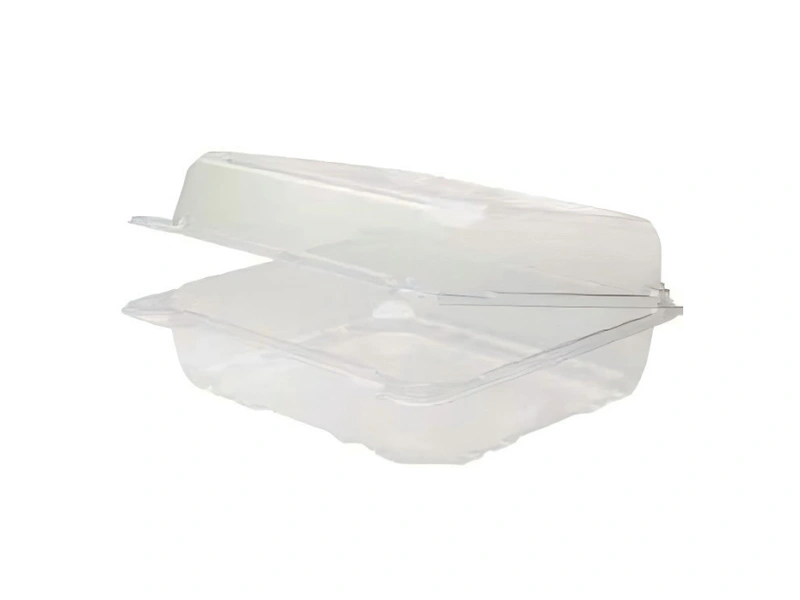
Food packaging serves a critical function beyond simple containment—it must actively protect products during transportation, handling, and storage while maintaining presentation quality and preventing loss. In the competitive food service and retail sectors, spills and product damage translate directly into revenue loss, customer dissatisfaction, and operational inefficiency. The secure closure mechanism and structural integrity of clamshell containers address these challenges through engineered design features that create reliable barriers against common causes of food damage and spillage throughout the supply chain.
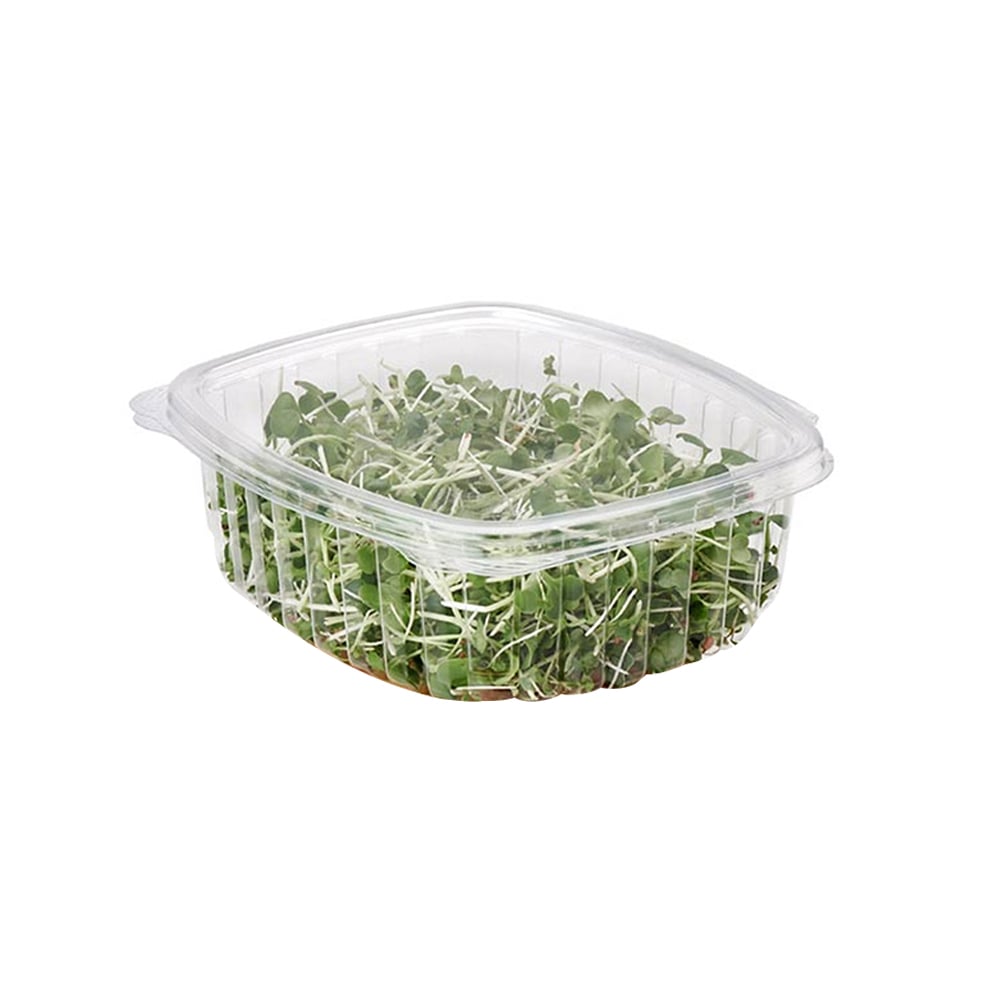
The protective performance of clamshell containers stems from their hinged design architecture that creates a complete seal around food contents while allowing convenient access. Unlike open trays or loosely fitted lids, the integrated hinge system ensures consistent alignment between top and bottom sections, eliminating gaps that permit leakage or contamination. This structural approach directly targets the mechanical causes of food damage—impact forces, compression pressure, and liquid migration—through material selection and geometric configuration specifically engineered for containment integrity under real-world distribution conditions.
The Mechanical Design That Prevents Liquid Migration
Integrated Closure Systems and Seal Performance
The fundamental spillage prevention capability of clamshell containers originates from their integrated closure mechanism that creates continuous contact between mating surfaces. The hinge design ensures precise alignment between the container base and lid, establishing consistent compression across the entire perimeter seal. This geometric precision eliminates the misalignment issues common with separate lid systems, where improper placement creates leak pathways. The perimeter seal functions as a mechanical barrier that resists liquid migration even when containers experience tilting or inversion during handling and transportation.
Material selection for clamshell containers directly influences seal effectiveness, with polymer formulations engineered to provide sufficient flexibility for secure closure while maintaining structural rigidity. The material must compress slightly under closure force to conform to minor surface irregularities, creating a continuous contact zone that blocks liquid passage. Polypropylene and PET formulations commonly used in clamshell containers exhibit optimal balance between flexibility and strength, enabling reliable sealing across temperature ranges encountered in food distribution. This material performance ensures consistent spillage prevention whether containers hold hot prepared foods or refrigerated products.
Latch Mechanisms and Closure Security
Advanced clamshell containers incorporate positive-locking latch designs that maintain closure integrity under external forces that would compromise simple friction-fit closures. These latch systems create mechanical interference that requires deliberate action to open, preventing accidental separation during stacking, transport vibration, or handling impacts. The latch geometry distributes closure force around the container perimeter, maintaining uniform seal compression that prevents localized stress concentrations where leakage typically initiates. This distributed force application is particularly critical for liquid-containing foods where hydrostatic pressure seeks exit points at seal imperfections.
The retention force provided by latch mechanisms can be quantified and optimized for specific applications, balancing security against ease of opening for end users. Food service operations benefit from higher retention forces that maintain closure through delivery handling, while retail applications may prioritize easier opening for consumer convenience. Modern clamshell containers achieve this balance through latch design variations that adjust the mechanical advantage required for opening without compromising spillage prevention during distribution. The engineered resistance to accidental opening directly reduces product loss from premature container separation.
Resistance to Compression and Impact Forces
Stacking stability represents a critical performance dimension where clamshell containers prevent damage through structural design that distributes compression loads away from food contents. The container walls and rim geometry create load-bearing paths that transfer weight from stacked units directly to the base, rather than transmitting forces through the enclosed food. This structural isolation protects delicate items like baked goods, salads, and prepared entrees from crushing damage that occurs when packaging lacks adequate compression resistance. The vertical walls of clamshell containers provide superior stacking performance compared to tapered designs that concentrate loads on food surfaces.
Impact resistance during handling and transportation depends on the energy absorption characteristics of the container material and geometry. Clamshell containers constructed from impact-modified polymers distribute shock forces across their structure, preventing catastrophic failure that leads to contents exposure and damage. The hinged design eliminates the lid separation failure mode common in two-piece packaging systems, where impact forces can dislodge covers and expose contents. This integrated structure maintains protective containment even when subjected to drops from typical handling heights, significantly reducing damage rates compared to alternative packaging formats.
Geometric Features That Maintain Product Integrity
Internal Compartmentalization and Movement Restriction
The controlled internal geometry of clamshell containers limits food movement during transportation, directly preventing the mechanical damage that results from contents shifting and colliding within packaging. Strategic placement of internal ribs, dividers, and surface textures creates friction zones that stabilize food items without requiring excessive compression. This approach is particularly valuable for mixed-component meals where different items must remain separated to preserve individual quality and prevent cross-contamination of flavors and textures. The compartmentalization prevents sauce migration, maintains garnish positioning, and protects fragile components from contact with heavier items.
For bakery applications, the precisely controlled headspace in clamshell containers prevents products from sliding across smooth surfaces while avoiding excessive compression that damages delicate structures. The container depth can be optimized for specific product heights, minimizing void space that permits movement while providing adequate clearance to prevent top-surface contact damage. This dimensional precision ensures that clamshell containers maintain product presentation quality from packaging through final delivery, eliminating the surface damage and displacement common with ill-fitting packaging solutions.
Ventilation and Condensation Management
Moisture accumulation inside sealed containers creates conditions for product degradation, particularly for items with crispy textures or temperature-sensitive coatings. Advanced clamshell containers incorporate engineered ventilation features that balance humidity control against spillage prevention. Strategic vent placement allows controlled gas exchange that prevents condensation buildup while maintaining the primary containment barrier against liquid spillage. The vent geometry employs tortuous paths or hydrophobic surfaces that permit vapor transmission while blocking liquid passage through surface tension effects.
Temperature transitions during food distribution—such as moving hot prepared foods into refrigerated environments—generate significant condensation potential that standard sealed containers cannot manage effectively. Clamshell containers designed for hot food applications integrate ventilation that releases steam pressure while preventing exterior liquid ingress. This bidirectional moisture management preserves food quality by eliminating the soggy textures that result from trapped condensation, while the secure closure system continues to prevent spillage of sauces, dressings, and liquid components. The combined performance maintains both product integrity and containment security across diverse thermal environments.
Edge Protection and Corner Reinforcement
Food damage frequently initiates at packaging corners and edges where impact forces concentrate and structural failure typically begins. Clamshell containers address this vulnerability through reinforced corner geometries that distribute impact energy across larger structural areas. Radius corners replace sharp angles, increasing the material cross-section at stress concentration points and improving energy absorption during impacts. This geometric optimization prevents the corner splitting and edge cracking that compromises containment integrity and exposes food to contamination and damage.
The perimeter rim design of clamshell containers creates a protected zone around the seal interface, preventing edge damage during handling from propagating into the closure system. This rim reinforcement maintains seal integrity even when containers experience edge impacts during stacking or transport. The structural hierarchy—where rim strength exceeds sidewall strength—ensures that any damage remains localized and does not compromise the primary containment function. This failure mode design prevents the cascading damage progression that turns minor impacts into complete packaging failure with resulting food loss.
Material Engineering for Containment Performance
Polymer Selection and Barrier Properties
The intrinsic barrier properties of materials used in clamshell containers determine their effectiveness at preventing both liquid spillage and gaseous migration that affects food quality. Food-grade polypropylene provides excellent moisture barrier characteristics combined with grease resistance critical for prepared food applications. The material's hydrophobic surface prevents liquid wicking along container surfaces that can breach closure systems through capillary action. This molecular-level barrier complements mechanical seal designs, creating redundant protection against spillage through multiple failure prevention mechanisms.
Polyethylene terephthalate formulations used in transparent clamshell containers offer superior clarity for product visibility while maintaining structural performance under varied thermal conditions. The material's glass transition temperature and crystallization behavior can be engineered to optimize rigidity at refrigeration temperatures while maintaining impact resistance. For cold food applications, PET clamshell containers prevent the brittleness issues that compromise spillage prevention in other materials at low temperatures. The material maintains seal integrity and structural strength across the full temperature range encountered in refrigerated distribution chains.
Thickness Optimization and Structural Efficiency
Material thickness distribution in clamshell containers follows engineering principles that maximize protective performance while minimizing material usage and weight. Critical structural zones—such as hinge areas, latch features, and rim sections—receive additional material thickness to ensure mechanical reliability under repeated stress cycles. Sidewall thickness can be optimized for the specific protection requirements of contained foods, with delicate items requiring greater crush resistance than stable products. This selective reinforcement approach delivers superior damage prevention compared to uniform-thickness designs that either waste material or provide inadequate protection at stress concentrations.
The structural efficiency of properly designed clamshell containers enables them to provide protective performance equivalent to heavier packaging alternatives while reducing transportation costs and environmental impact. Finite element analysis during design development identifies optimal material distribution patterns that maximize strength-to-weight ratios. Advanced manufacturing processes like injection molding enable precise control over thickness variations within single containers, creating lightweight solutions that maintain the spillage prevention and damage resistance essential for food distribution applications. This engineered approach demonstrates that effective protection derives from intelligent design rather than simple material mass.
Temperature Stability and Thermal Cycling Resistance
Food distribution exposes packaging to thermal cycling between preparation, storage, and service temperatures that can compromise closure integrity and structural performance. Clamshell containers manufactured from thermally stable polymers maintain dimensional accuracy across temperature ranges, preventing the warping and distortion that creates leak pathways in closure systems. The material's coefficient of thermal expansion must be minimized to ensure consistent seal compression whether containers hold hot entrees or frozen desserts. This thermal stability prevents the seal separation that occurs when materials contract at different rates during cooling.
Hot food applications demand clamshell containers that resist deformation under elevated temperatures while preventing heat-accelerated stress relaxation in closure systems. Polypropylene formulations with enhanced heat deflection temperatures maintain structural rigidity when filled with products above standard serving temperatures. The material retains sufficient flexibility for secure closure while preventing the softening that would allow seal failure under internal pressure from hot contents. This thermal performance ensures that clamshell containers provide consistent spillage prevention across the full spectrum of food service temperature requirements, from cold salads to hot prepared meals.
Distribution Chain Protection and Handling Resilience
Stacking Stability During Storage and Transport
The columnar load transfer capability of clamshell containers enables stable stacking configurations that maximize storage density without compromising contents. The flat top and bottom surfaces create uniform load distribution across stacking interfaces, preventing the point loading that causes crushing damage in containers with irregular geometries. This stacking efficiency allows food service operations to maximize refrigerator and transport vehicle capacity while maintaining product protection. The structural design ensures that bottom-layer containers in tall stacks experience minimal deformation, preserving seal integrity and preventing spillage even under substantial compressive loads.
Nesting features in some clamshell containers allow efficient storage of empty units before filling, while the closed configuration provides stacking stability for filled containers. This dual functionality optimizes space utilization throughout the packaging lifecycle. The container geometry can be engineered to provide interlocking features that enhance stack stability during transportation, preventing lateral shifting that leads to stack collapse and resulting damage. For delivery operations involving frequent acceleration and braking, these stabilization features maintain load integrity and prevent the cascading failures that occur when unstable stacks topple during transport.
Delivery Handling and Consumer Transport
Food delivery services subject packaging to handling stresses that differ significantly from controlled warehouse environments, including single-container carrying, bag placement, and consumer transport in personal vehicles. Clamshell containers excel in these scenarios through secure closure systems that maintain integrity during the grabbing, tilting, and repositioning common in delivery handling. The integrated handle areas molded into many clamshell container designs distribute lifting forces away from closure points, preventing the stress concentrations that cause seal failure during one-handed carrying. This handling resilience reduces spillage incidents during the critical last-mile delivery phase where customer experience directly impacts business reputation.
Consumer transport from restaurants or retail locations involves placement in bags, vehicles, and home storage where containers experience orientations and forces beyond those in commercial distribution. The omnidirectional seal performance of clamshell containers prevents spillage regardless of container orientation, protecting vehicle interiors and personal belongings from food damage. The rigid structure resists crushing in shopping bags when placed alongside other items, maintaining food presentation quality until consumption. This consumer-handling resilience extends the protective performance of clamshell containers beyond commercial distribution into the end-use environment where packaging failures create direct customer dissatisfaction.
Contamination Prevention Through Complete Enclosure
Beyond spillage prevention, clamshell containers provide contamination barriers that protect food from external particles, biological contaminants, and cross-contamination from adjacent items during storage and transport. The complete enclosure created by secure closure prevents airborne particles from settling on food surfaces, maintaining food safety standards throughout distribution. This protective barrier is particularly critical in shared-use refrigeration and transport environments where multiple food products from different sources occupy common spaces. The sealed environment prevents odor migration and physical contact between incompatible food items that could compromise quality or safety.
For prepared food operations subject to food safety regulations, the tamper-evidence capabilities of certain clamshell container designs provide verification that products remain unopened from packaging through consumption. Breakaway tabs or visual indicators show consumers if containers have been previously opened, supporting food safety protocols and building consumer confidence. This security feature complements spillage prevention by ensuring that the protective barrier established at packaging remains intact throughout distribution. The combination of physical protection and tamper evidence makes clamshell containers comprehensive solutions for maintaining food integrity from preparation through final consumption.
FAQ
What specific design features make clamshell containers more spill-resistant than other food packaging types?
Clamshell containers achieve superior spill resistance through their integrated hinge design that ensures precise alignment between top and bottom sections, creating consistent perimeter seals without gaps. The positive-locking latch mechanisms maintain closure integrity under external forces, preventing accidental opening during handling and transport. Unlike separate lid systems that can misalign or detach, the hinged construction eliminates lid separation failure modes. The continuous seal compression around the entire perimeter blocks liquid migration even when containers are tilted or inverted, providing reliable containment for sauces, dressings, and liquid-containing foods throughout distribution.
How do clamshell containers protect delicate food items from crushing damage during stacking and transportation?
The structural design of clamshell containers creates load-bearing paths through the container walls and rim that transfer stacking weight directly to the base rather than transmitting forces through food contents. This structural isolation protects delicate items from compression damage. The rigid geometry resists deformation under stacking loads, maintaining internal volume and preventing top-surface contact with food. Impact-modified polymer formulations absorb shock forces during handling drops without catastrophic failure. Internal geometry features like ribs and surface textures stabilize contents and prevent movement that causes mechanical damage, while optimized headspace prevents both crushing and excessive shifting during transport.
Can clamshell containers maintain seal integrity when used with hot foods or across temperature changes?
Yes, clamshell containers manufactured from thermally stable polymers like polypropylene maintain dimensional accuracy and seal integrity across food service temperature ranges. The materials resist warping and distortion during cooling, preventing the seal separation that occurs in thermally unstable packaging. Enhanced heat deflection temperature formulations retain structural rigidity when filled with hot foods while maintaining closure flexibility. Engineered ventilation features in hot-food designs release steam pressure without compromising liquid containment. The low coefficient of thermal expansion ensures consistent seal compression whether containers hold hot entrees or refrigerated items, providing reliable spillage prevention throughout thermal cycling in distribution environments.
What makes clamshell containers effective at preventing food damage during delivery and consumer handling?
Clamshell containers provide omnidirectional seal performance that prevents spillage regardless of container orientation during consumer transport in bags and vehicles. The secure latch systems resist accidental opening during the grabbing, tilting, and repositioning common in delivery handling. Integrated handle areas distribute lifting forces away from closure points, preventing stress-related seal failures. The rigid structure resists crushing when placed alongside other items in shopping bags or delivery containers. Complete enclosure protects contents from external contamination while preventing cross-contamination with adjacent items. This handling resilience extends protection beyond commercial distribution into end-use scenarios where packaging failures directly impact customer satisfaction and business reputation.
Table of Contents
- The Mechanical Design That Prevents Liquid Migration
- Geometric Features That Maintain Product Integrity
- Material Engineering for Containment Performance
- Distribution Chain Protection and Handling Resilience
-
FAQ
- What specific design features make clamshell containers more spill-resistant than other food packaging types?
- How do clamshell containers protect delicate food items from crushing damage during stacking and transportation?
- Can clamshell containers maintain seal integrity when used with hot foods or across temperature changes?
- What makes clamshell containers effective at preventing food damage during delivery and consumer handling?