


The sustainability debate surrounding plastic containers for food has intensified as environmental awareness grows and regulatory frameworks evolve globally. In 2026, businesses and consumers alike face a critical question about whether these ubiquitous packaging solutions can still claim a place in a sustainable future. The answer is more nuanced than simple condemnation or endorsement, requiring careful analysis of material innovations, lifecycle assessments, recycling infrastructure capabilities, and comparative environmental impacts across alternative packaging formats. Understanding the current state of plastic food packaging sustainability demands examining technological advances in polymer science, shifts in consumer behavior patterns, and the economic realities facing food service operators and manufacturers who must balance environmental responsibility with operational viability and food safety imperatives.
The sustainability credentials of plastic containers for food in 2026 depend fundamentally on which specific materials are deployed, how they are manufactured, their intended use duration, and the end-of-life infrastructure available in their target markets. Modern food-grade plastics range from conventional petroleum-derived polymers like polyethylene terephthalate and polypropylene to bio-based alternatives derived from renewable feedstocks and chemically recycled materials that reduce virgin plastic consumption. The environmental profile of each category varies significantly, and sweeping generalizations fail to capture the complexity of real-world packaging decisions where factors like carbon footprint, water usage, transportation efficiency, food waste prevention, and human health protection must all be weighed simultaneously. This article examines whether plastic containers for food can legitimately claim sustainability in the current landscape by analyzing material evolution, regulatory pressures, circular economy integration, and performance comparisons against alternative packaging materials.
Material Innovation Transforming Plastic Containers for Food
Bio-Based and Renewable Content Plastics
The plastic containers for food industry has witnessed substantial advancement in bio-based polymer development, with materials derived from sugarcane, corn starch, and other plant sources gaining commercial traction. These bio-attributed plastics maintain the functional properties required for food contact applications while reducing dependency on fossil fuel feedstocks. Polylactic acid containers and bio-polyethylene variants now represent viable alternatives for specific food packaging applications, though their sustainability advantage depends heavily on agricultural practices used in feedstock cultivation and whether they displace food crops or utilize waste biomass. The carbon sequestration potential of plant-based materials offers theoretical climate benefits, but comprehensive lifecycle analysis reveals that processing energy, land use changes, and fertilizer inputs can partially offset these advantages depending on production geography and manufacturing efficiency.
Major polymer producers have introduced plastic containers for food with certified renewable content ranging from thirty to one hundred percent, verified through mass balance accounting systems that track bio-based feedstock through complex supply chains. These materials perform identically to their fossil-derived counterparts in terms of barrier properties, temperature resistance, and mechanical strength, making them drop-in replacements that require no modification to existing filling lines or distribution systems. However, the price premium for bio-based plastics remains significant in 2026, typically adding fifteen to forty percent to raw material costs depending on resin type and market conditions. This economic reality limits adoption primarily to brands with premium positioning or strong sustainability commitments, while cost-sensitive food service applications continue relying predominantly on conventional polymers where performance requirements allow.
Advanced Recycled Content Integration
Chemical recycling technologies have matured considerably, enabling plastic containers for food to incorporate post-consumer recycled content that meets stringent food safety regulations without compromising material integrity. Unlike mechanical recycling which degrades polymer chains through repeated thermal processing, chemical recycling breaks plastics down to molecular building blocks that can be purified and repolymerized into food-grade materials indistinguishable from virgin plastic. This closed-loop approach addresses historical concerns about contaminant migration from mechanically recycled plastics while creating genuine circularity in packaging systems. Several major food container manufacturers now offer products with fifty percent or higher chemically recycled content, supported by regulatory approvals from food safety authorities in North America, Europe, and Asia-Pacific markets.
The sustainability benefit of recycled content in plastic containers for food extends beyond waste diversion, delivering measurable reductions in greenhouse gas emissions and energy consumption compared to virgin plastic production. Lifecycle assessments demonstrate that chemically recycled PET and polypropylene can reduce carbon footprint by thirty to fifty percent per kilogram of material, though actual environmental benefit depends on recycling process energy sources and collection system efficiency. Advanced sorting technologies using artificial intelligence and spectroscopy now enable recovery of food-contaminated plastics previously destined for incineration or landfill, expanding the feedstock pool for recycled food containers. The challenge remains scaling these technologies economically while maintaining material quality standards that food brands and regulatory bodies require for consumer protection.
Lightweighting and Material Efficiency Gains
Engineering advances have enabled dramatic reductions in the weight of plastic containers for food without sacrificing structural performance or protective capability. Modern injection molding simulation software, coupled with improved resin formulations, allows designers to optimize wall thickness distribution and rib placement to minimize material usage while maintaining drop resistance and stacking strength. A typical rigid food container in 2026 uses twenty to thirty-five percent less plastic than equivalent designs from a decade earlier, translating directly to reduced resource consumption, lower transportation emissions, and decreased end-of-life waste volume. These efficiency gains compound across billions of units produced annually, delivering sustainability improvements that often exceed the benefit of switching to alternative materials with higher individual environmental burdens.
The plastic containers for food sector has embraced computational design tools that model material flow during manufacturing and structural performance under real-world conditions, enabling unprecedented precision in material deployment. Finite element analysis identifies stress concentration points where reinforcement is essential and areas where material can be safely removed, creating containers that use every gram of plastic purposefully. Some manufacturers have achieved material reductions exceeding forty percent in specific container categories through combination of advanced polymers with superior strength-to-weight ratios and optimized geometries that distribute loads efficiently. This lightweighting trend represents continuous improvement rather than revolutionary change, but its cumulative impact on resource consumption and carbon emissions makes it a critical component of sustainable packaging strategy regardless of base material selection.
Regulatory Landscape Reshaping Plastic Food Packaging
Extended Producer Responsibility Frameworks
Governments worldwide have implemented or expanded Extended Producer Responsibility programs that make manufacturers and brand owners financially accountable for the end-of-life management of plastic containers for food. These regulatory schemes create economic incentives for designing recyclable packaging, using recycled content, and supporting collection infrastructure that actually recovers materials at scale. In the European Union, the Packaging and Packaging Waste Directive mandates minimum recycled content thresholds and recyclability requirements that directly influence which plastic food containers can legally enter the market. Similar frameworks in Canada, Japan, and several U.S. states are reshaping product development priorities, pushing companies toward standardized materials that fit established recycling streams rather than proprietary formulations that contaminate or complicate sorting processes.
The financial burden imposed by Extended Producer Responsibility fees varies based on packaging recyclability, with plastic containers for food made from easily recycled monomaterials like PET or polypropylene incurring lower fees than multilayer structures or materials lacking collection infrastructure. This fee differentiation creates market signals that reward sustainable design choices and penalize problematic formats, gradually shifting industry practice toward circularity without outright bans. Compliance requirements include detailed material disclosure, participation in collective recycling schemes, and increasingly, demonstration of actual recycling rates rather than theoretical recyclability. These regulations force transparency in sustainability claims and prevent greenwashing by requiring verifiable data on collection rates, sorting efficiency, and successful reprocessing into new products.
Single-Use Plastic Restrictions and Exemptions
Regulatory actions targeting single-use plastics have created uncertainty for manufacturers of plastic containers for food, though most jurisdictions recognize legitimate use cases where plastic provides essential food safety, shelf-life extension, or waste prevention benefits. Bans typically focus on items like straws, stirrers, and unnecessary overwrapping rather than functional food containers that serve clear protective purposes. The European Union's Single-Use Plastics Directive, for instance, restricts certain plastic items while exempting food contact packaging that prevents spoilage or contamination. This regulatory nuance acknowledges that eliminating plastic food containers could increase food waste, which often carries greater environmental burden than the packaging itself when considering production resources, transportation, and decomposition emissions from wasted food.
Navigating the patchwork of regional regulations governing plastic containers for food requires manufacturers to develop region-specific product portfolios and maintain detailed compliance documentation across multiple jurisdictions. Some markets mandate compostability certifications for certain applications, others require minimum recycled content percentages, while some impose deposit-return systems that affect container design to ensure durability through multiple handling cycles. The compliance complexity creates barriers to entry for smaller manufacturers and favors larger corporations with regulatory affairs departments capable of tracking evolving requirements across dozens of markets. This regulatory fragmentation also complicates sustainability assessment, as a container design optimized for European recycling infrastructure may perform poorly in markets with different collection and processing capabilities.
Food Safety Standards and Plastic Regulations
The paramount importance of food safety creates regulatory constraints that limit material options for plastic containers for food regardless of sustainability considerations. Regulations governing food contact materials specify approved polymers, maximum migration limits for various substances, and testing protocols that ensure packaging does not contaminate food or alter its sensory properties. These stringent requirements, enforced by agencies like the FDA in the United States and EFSA in Europe, mean that novel sustainable materials face years of testing and approval processes before commercial deployment. The regulatory caution protects public health but slows adoption of potentially beneficial innovations, creating tension between environmental goals and consumer protection that manufacturers must navigate carefully.
Plastic containers for food benefit from decades of safety data and established regulatory pathways that alternative materials often lack, creating an incumbent advantage despite sustainability criticisms. Switching to materials like paper-based packaging or compostable plastics introduces new regulatory questions about barrier coating migrations, structural failures that could allow contamination, and breakdown product safety that require extensive validation. The regulatory framework thus creates significant inertia favoring proven plastic formulations, particularly for applications involving direct contact with ready-to-eat foods or products requiring extended shelf life. Manufacturers pursuing sustainable innovations must invest heavily in safety testing and regulatory engagement, costs that ultimately influence whether alternatives can compete economically with established plastic containers for food formats.
Circular Economy Integration and Infrastructure Reality
Collection and Sorting Infrastructure Capabilities
The sustainability of plastic containers for food depends critically on whether functional recycling infrastructure exists to recover and reprocess materials at scale. In markets with mature collection systems and advanced sorting facilities, plastic food containers achieve recovery rates exceeding seventy percent, genuinely participating in circular material flows that reduce virgin resource consumption. However, global recycling infrastructure remains highly uneven, with many regions lacking curbside collection programs, modern sorting equipment capable of identifying and separating food-grade plastics, or processing capacity to handle collected volumes. This infrastructure gap means that nominally recyclable plastic containers for food often end up in landfills or incinerators not because of material limitations but due to systemic failures in waste management systems.
Advanced materials recovery facilities now employ optical sorters, artificial intelligence, and robotics to identify and separate plastic containers for food by polymer type, color, and even food contamination level. These technological capabilities enable recovery of materials previously considered unrecyclable, though the capital investment required limits deployment primarily to wealthy markets with sufficient waste volumes to justify equipment costs. The challenge intensifies for flexible films and multilayer structures common in food packaging, which confound conventional sorting systems designed for rigid containers. Industry initiatives promoting standardized plastic types and eliminating problematic additives like certain pigments or barrier coatings aim to improve sortability, but progress requires coordination across fragmented supply chains where individual participants lack incentive to absorb costs that benefit the system collectively.
Contamination Challenges in Food Contact Recycling
Food residue contamination represents a persistent obstacle to recycling plastic containers for food, as organic matter interferes with optical sorting, degrades recycled plastic quality, and creates odor issues that limit market acceptance. Even small amounts of residual food can render entire bales of collected plastics unsuitable for food contact applications, forcing downcycling into lower-value products like construction materials or park benches. Consumer rinsing behavior varies widely and many households discard food containers without cleaning, contributing to contamination rates that some recycling operators report as high as thirty percent of food packaging inputs. This reality drives some programs to exclude food-contaminated plastics entirely, sending them to energy recovery rather than material recycling despite theoretical recyclability.
Innovative washing systems and advanced separation technologies are addressing contamination challenges in plastic containers for food recycling streams, using hot caustic washes, friction cleaning, and flotation separation to remove organic residues and restore plastic quality. Chemical recycling processes offer particular promise for contaminated materials since molecular deconstruction eliminates organic compounds and other impurities that would compromise mechanically recycled plastic. However, these advanced processing methods require significant energy and chemical inputs, potentially offsetting environmental benefits if powered by fossil fuel sources. The contamination challenge highlights the importance of design decisions that facilitate easy cleaning, such as smooth interior surfaces without crevices where food particles lodge, and consumer education programs that emphasize the importance of rinsing containers before recycling to maximize material recovery quality.
Economic Viability of Plastic Recycling Systems
The financial sustainability of recycling infrastructure for plastic containers for food remains precarious in many markets, with collection and processing costs often exceeding the value of recovered materials. Virgin plastic prices fluctuate with petroleum markets, and when crude oil costs decline, recycled plastic struggles to compete economically without regulatory mandates or voluntary commitments from brands willing to pay premiums for recycled content. This economic volatility undermines investment in recycling capacity and creates cycles where material recovery rates decline when virgin plastic becomes cheaper, then recovered volumes fall short when demand for recycled content increases. Extended Producer Responsibility systems aim to stabilize recycling economics by ensuring consistent funding regardless of commodity price swings, but implementation varies widely and many programs provide insufficient financial support to maintain high-performing collection and sorting infrastructure.
Market development for recycled plastics from food containers depends on both supply consistency and quality standards that enable use in demanding applications. Brand owners increasingly commit to recycled content targets, creating demand pull that supports higher values for food-grade recycled plastic, but these commitments require reliable supply at specifications matching virgin material performance. The economic equation improves when plastic containers for food are designed for recyclability from inception, using monomaterials that command higher recycled values than mixed plastic streams, avoiding problematic additives that contaminate recycling batches, and incorporating features like detachable labels that simplify sorting. Some manufacturers now design containers specifically to maximize recycled value, recognizing that end-of-life economics influence overall system sustainability as much as production phase considerations.
Comparative Environmental Performance Assessment
Lifecycle Analysis Against Alternative Materials
Comprehensive lifecycle assessments comparing plastic containers for food against alternatives like glass, aluminum, paperboard, and compostable materials reveal nuanced environmental tradeoffs that defy simplistic material hierarchies. Plastic generally demonstrates advantages in production energy consumption, transportation efficiency due to light weight, and manufacturing process simplicity, while showing disadvantages in fossil fuel dependency and end-of-life persistence if not properly recovered. Glass containers require substantially more energy to manufacture and transport but offer unlimited recyclability without quality degradation, making their environmental profile highly dependent on actual recycling rates and transportation distances. Aluminum provides excellent recyclability and high recycled content but demands enormous energy input for primary production, creating heavy carbon burdens unless powered by renewable electricity.
The environmental performance of plastic containers for food improves significantly when comparing equivalent functional units rather than simple material weights. A plastic container providing adequate protection might weigh thirty grams while a glass alternative weighing three hundred grams delivers the same food preservation function, meaning lifecycle impacts must account for the tenfold weight difference in material extraction, manufacturing energy, and transportation emissions. Similarly, paperboard containers often require plastic or wax coatings to achieve necessary moisture barriers, creating recycling complications that undermine their perceived sustainability advantage. Compostable plastics present end-of-life benefits in theory but require industrial composting infrastructure that remains scarce, and many biodegradable materials demonstrate higher production phase environmental burdens than conventional plastics due to agricultural inputs and processing complexity.
Carbon Footprint and Climate Impact
The carbon footprint of plastic containers for food spans raw material extraction, polymerization, container manufacturing, product distribution, use phase impacts, and end-of-life treatment, with relative contributions varying by plastic type and system boundaries. Conventional petroleum-derived plastics carry embodied emissions from fossil fuel extraction and chemical processing, typically ranging from two to four kilograms of carbon dioxide equivalent per kilogram of plastic depending on polymer type and production efficiency. Bio-based plastics can reduce production phase emissions by thirty to eighty percent depending on feedstock and processing, though land use change impacts and agricultural emissions complicate direct comparisons. Recycled content provides substantial carbon benefits, with each kilogram of recycled plastic avoiding approximately two kilograms of carbon dioxide emissions compared to virgin production.
Transportation efficiency significantly influences the total climate impact of plastic containers for food, particularly for products distributed across continental or global supply chains. The light weight of plastic containers reduces fuel consumption during transportation compared to heavier alternatives, and the ability to nest or stack containers efficiently maximizes vehicle cargo capacity and minimizes trips. A lifecycle study comparing distribution emissions for identical food products in plastic versus glass containers found that plastic reduced transportation carbon footprint by sixty percent over a typical retail distribution network. This advantage compounds for products shipped long distances or requiring refrigeration during transport, where every gram of packaging weight translates to measurable energy consumption. The climate calculus shifts if end-of-life treatment involves incineration, which releases stored carbon immediately, versus recycling which defers emissions and displaces virgin production, or landfilling which locks carbon away but provides no material recovery benefit.
Resource Depletion and Circular Economy Metrics
The sustainability of plastic containers for food from a resource perspective depends on closing material loops through effective recycling and transitioning to renewable feedstocks that don't deplete finite resources. Conventional plastics derived from petroleum and natural gas consume non-renewable fossil carbon, contributing to resource depletion concerns beyond climate impacts. However, the actual fossil fuel fraction used for plastic production represents approximately four percent of global petroleum consumption, far less than fuel applications, meaning plastic's resource impact must be contextualized within broader energy system transitions. Bio-based plastics address fossil depletion but introduce questions about sustainable biomass sourcing, competition with food production, and whether agricultural intensification for plastic feedstocks creates unintended environmental consequences.
Circular economy metrics for plastic containers for food include material circularity indicators that measure the proportion of recycled content used and the recyclability rate actually achieved in practice rather than theoretical potential. A truly circular plastic container would contain one hundred percent recycled content and achieve one hundred percent collection and recycling at end of life, eliminating virgin resource consumption and waste generation. Current industry performance falls far short of this ideal, with typical food containers containing ten to thirty percent recycled content and achieving collection rates of forty to seventy percent depending on market infrastructure. Closing the circularity gap requires simultaneous progress on multiple fronts including design for recyclability, expanded collection systems, advanced sorting and cleaning technologies, regulatory mandates for recycled content, and consumer behavior changes that ensure containers enter recovery systems rather than general waste streams.
Practical Decision Framework for 2026
Application-Specific Suitability Assessment
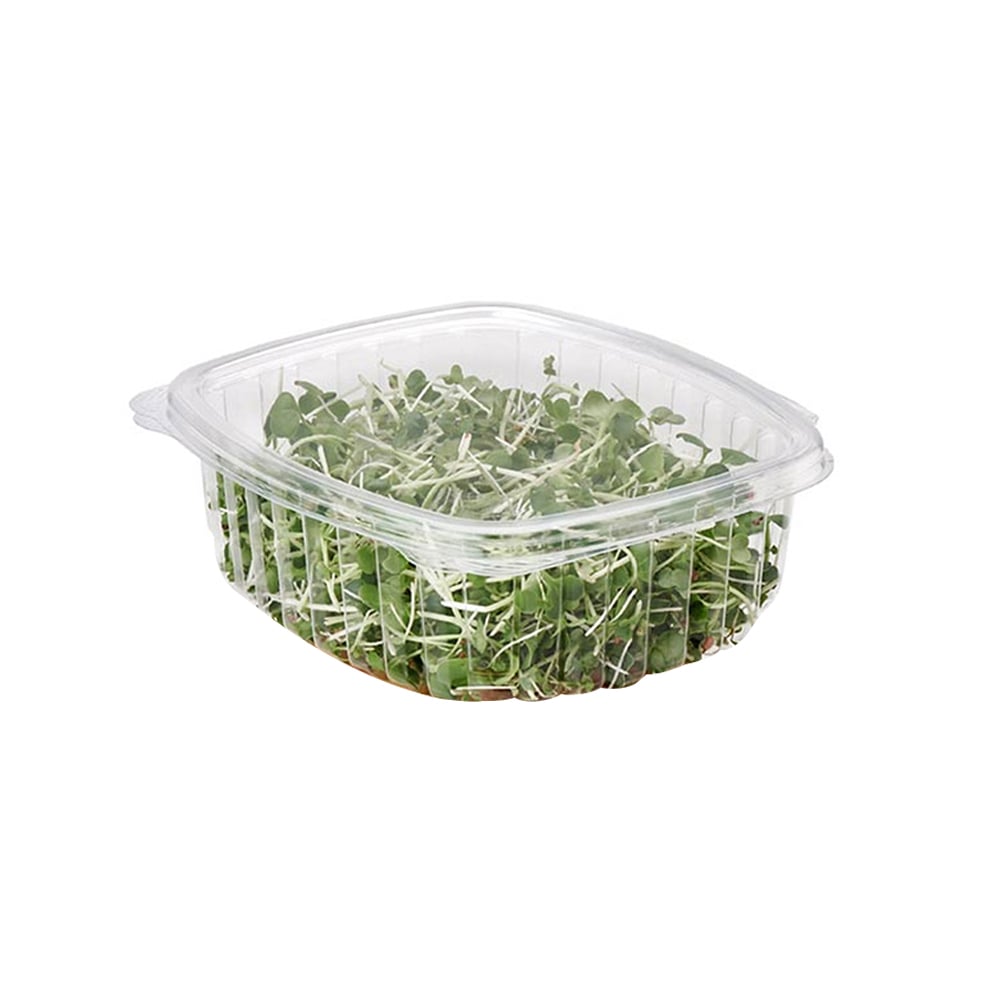
The sustainability question for plastic containers for food cannot be answered universally but requires evaluation within specific use contexts considering food type, shelf-life requirements, distribution system characteristics, and available end-of-life infrastructure. For fresh produce requiring breathable packaging and short retail cycles, compostable or recyclable plastic containers may offer optimal sustainability when local composting or recycling infrastructure exists. For products demanding high barrier protection like prepared meals or processed foods with extended shelf life, multilayer plastics or metallized films might provide irreplaceable preservation functions that prevent food waste exceeding packaging environmental burden. Frozen foods benefit from plastic's durability at low temperatures and resistance to moisture, attributes difficult to replicate with paper-based alternatives.
Evaluating plastic containers for food sustainability requires comparing realistic alternatives rather than idealized solutions that ignore practical constraints. A food service operator considering takeout container options must weigh factors including product protection during delivery, temperature resistance for hot foods, customer convenience, cost implications, and local waste management capabilities. In a market with robust plastic recycling but no composting infrastructure, recyclable plastic containers may deliver better environmental outcomes than compostable alternatives destined for landfill. Conversely, in jurisdictions with industrial composting facilities accepting food-contaminated packaging, certified compostable containers that divert organic waste from landfills might prove more sustainable despite higher production phase impacts. The decision framework must account for system-level outcomes rather than focusing narrowly on material properties in isolation.
Balancing Environmental and Operational Requirements
Food businesses face legitimate tensions between environmental aspirations and operational realities when evaluating plastic containers for food. Alternative materials often carry performance compromises including reduced barrier effectiveness leading to shorter shelf life, structural weaknesses that increase breakage and product loss, or incompatibility with existing equipment requiring capital investment in new packaging lines. These practical limitations don't excuse inaction on sustainability but require honest assessment of tradeoffs rather than assuming seamless substitution. A manufacturer switching from plastic to paperboard containers might discover increased product damage during distribution, leading to higher overall environmental impact when food waste is properly accounted for in lifecycle analysis.
The cost implications of transitioning away from conventional plastic containers for food remain significant for most businesses, with sustainable alternatives typically commanding fifteen to forty percent price premiums depending on material and application. For businesses operating on thin margins, particularly in food service sectors, these cost increases threaten financial viability unless passed to customers or offset through operational efficiencies. Some companies justify premium sustainable packaging as brand differentiation supporting higher product prices, while others find that customer sustainability concerns disappear when faced with actual price increases. The economic sustainability of packaging transitions matters because businesses that fail financially cannot maintain environmental commitments, creating importance for solutions that balance environmental improvement with economic viability rather than pursuing perfect but unaffordable ideals.
Regional Infrastructure Considerations
The practical sustainability of plastic containers for food varies dramatically across geographic markets based on waste management infrastructure, regulatory frameworks, and cultural practices around consumption and disposal. In markets like Germany or South Korea with mature collection systems, advanced sorting facilities, and strong regulatory drivers, plastic food containers participate effectively in circular economy systems with high recovery rates and established recycled content supply chains. These markets support sustainable plastic packaging through infrastructure investment and policy coherence that aligns producer requirements, municipal collection systems, and consumer behavior. In contrast, markets lacking basic waste collection infrastructure see even technically recyclable plastic containers flow to open dumps or informal waste sectors, eliminating any circular economy benefits regardless of material design.
Manufacturers serving global markets must develop region-specific packaging strategies that account for infrastructure variation, potentially using different materials or formats for markets with distinct waste management capabilities. A multinational food brand might deploy plastic containers for food with high recycled content in Europe where collection and reprocessing infrastructure justifies the approach, while using different solutions in markets where plastic recycling remains nascent but other waste management options like centralized composting exist. This geographic customization increases complexity and potentially sacrifices economies of scale, but acknowledges the reality that packaging sustainability depends on system-level factors beyond the container itself. The infrastructure consideration extends to consumer touchpoints including clear labeling about proper disposal, which varies by jurisdiction and requires careful communication to avoid well-intentioned but counterproductive disposal behavior.
FAQ
Can plastic containers for food be considered sustainable if they contain recycled content?
Plastic containers for food incorporating substantial recycled content, particularly from advanced chemical recycling processes that meet food safety standards, demonstrate improved sustainability compared to virgin plastic alternatives by reducing fossil resource consumption and avoiding waste disposal. However, sustainability depends on the entire system including collection infrastructure that actually recovers containers for recycling, processing technologies that maintain material quality through multiple cycles, and sufficient market demand for recycled plastic to justify the recovery investment. A container with recycled content only delivers sustainability benefits when it also gets recycled at end of life, creating circularity rather than merely delaying disposal. The proportion of recycled content matters, with higher percentages delivering greater environmental benefits, though even modest recycled content represents progress toward circular economy goals when combined with design features that facilitate future recycling.
What makes some plastic food containers more recyclable than others?
The recyclability of plastic containers for food depends primarily on material composition, with single-polymer designs like pure PET or polypropylene containers much easier to sort and reprocess than multilayer structures combining different plastics or incorporating barrier coatings. Clear or natural colored plastics recycle more successfully than heavily pigmented versions because optical sorting equipment struggles with dark colors, and containers without adhesive labels or with easily removable labeling improve processing efficiency. Design features like uniform wall thickness, absence of problematic additives such as certain flame retardants or heavy metal colorants, and standardized formats that fit established recycling streams all enhance practical recyclability. The critical distinction lies between theoretical recyclability, meaning the material could technically be recycled, and actual recyclability based on whether collection infrastructure exists, sorting systems can identify the material, processors accept it, and end markets exist for the recycled output.
Do bio-based or compostable plastic containers solve the sustainability problem?
Bio-based and compostable plastic containers for food address specific sustainability concerns like fossil fuel dependency and end-of-life persistence but introduce different environmental considerations that prevent them from being universal solutions. Bio-based plastics reduce carbon footprint during production when derived from sustainably managed agricultural feedstocks but require arable land that might otherwise support food production or carbon sequestration through forestry, and agricultural inputs like fertilizers and irrigation carry their own environmental burdens. Compostable plastics offer disposal advantages in systems with industrial composting infrastructure but often demonstrate higher production phase environmental impacts than conventional plastics, and if they end up in landfills or recycling streams they create contamination problems without delivering composting benefits. The sustainability advantage of these alternatives depends entirely on matching material properties to appropriate applications and ensuring proper end-of-life treatment, making them valuable options for specific contexts rather than blanket replacements for all plastic food containers.
How do plastic containers compare to paper packaging for food sustainability?
Plastic containers for food and paper-based alternatives present different sustainability profiles with advantages and disadvantages depending on specific applications and system boundaries considered in environmental assessment. Paper packaging uses renewable resources and degrades naturally but requires significantly more material weight to achieve equivalent protective performance, often needs plastic or wax coatings to provide moisture barriers necessary for food contact, and demands substantial water and energy inputs during manufacturing. Plastic excels in material efficiency through light weight and thin walls while providing superior moisture resistance and mechanical strength, but relies on fossil feedstocks in conventional formulations and persists in the environment if not properly recovered. Lifecycle comparisons typically show plastic advantages in carbon footprint and resource efficiency for applications requiring moisture barriers or structural protection, while paper performs better for dry goods with minimal protection requirements. The comparison shifts based on end-of-life scenarios, with paper offering biodegradability advantages but plastic providing superior recyclability when appropriate infrastructure exists.
Table of Contents
- Material Innovation Transforming Plastic Containers for Food
- Regulatory Landscape Reshaping Plastic Food Packaging
- Circular Economy Integration and Infrastructure Reality
- Comparative Environmental Performance Assessment
- Practical Decision Framework for 2026
-
FAQ
- Can plastic containers for food be considered sustainable if they contain recycled content?
- What makes some plastic food containers more recyclable than others?
- Do bio-based or compostable plastic containers solve the sustainability problem?
- How do plastic containers compare to paper packaging for food sustainability?