


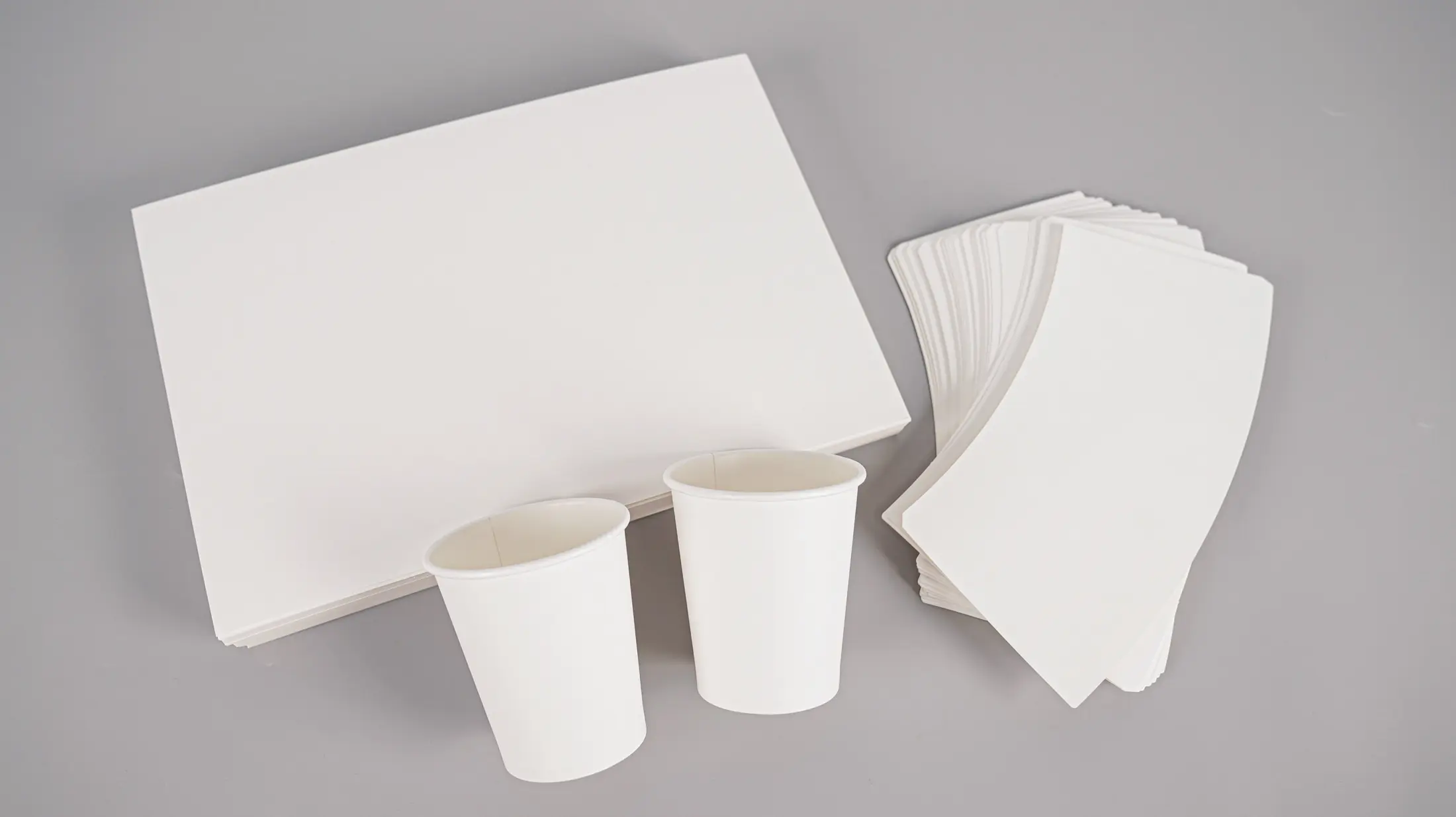
White Paper Roll Physical Integrity: Foundation for Reliable Converting
A white paper roll is a precision input—not a commodity. Its physical integrity directly determines whether downstream slitting, folding, and printing remain stable. Converters rely on consistent roll geometry to set slitter blades, tension zones, and guiding systems. Without uniform core dimensions and clean, aligned edges, even premium paper generates excess waste, misregistration, and unplanned downtime.
Core Diameter, Winding Tension, and Edge Uniformity Ensure Slitting Precision and Unwind Stability
Core inner diameter governs how securely the roll seats on the unwind shaft. An undersized core induces vibration and wobble; an oversized one permits slippage and sudden web acceleration. Winding tension must follow a controlled gradient—from higher at the core (to prevent telescoping) to lower at the outer layers (to avoid starring or crushing). Deviations cause layer shifting, edge distortion, or telescoping—leading to lateral web movement that pulls slitter blades off target. The result is inconsistent slit width, widened trim loss, and more frequent reel changes. Edge uniformity complements this: smooth, square-cut edges track predictably through nips and guides; stepped or offset edges induce wandering, baggy edges, and guide-roll interference—forcing operators to reduce line speed for correction. When core diameter, winding tension profile, and edge geometry are tightly controlled, the roll unwinds steadily and slitting remains precise.
Moisture Content Control and Surface Flatness Prevent Jams and Misregistration on High-Speed Lines
Moisture variation across the web causes uneven fiber expansion and contraction—wetter zones curl, drier ones tighten. On high-speed packaging lines, this leads to corner folds, infeed jams, and static-related sheet adhesion to belts or sensors. Surface flatness works in tandem: caliper variation, ridges, or waviness disrupt vacuum feeding, nip engagement, and sheet transport. These imperfections compound misregistration during printing or die-cutting—especially where registration marks or fine graphics demand micron-level alignment. Flat, dimensionally stable paper enters nips evenly, stays square under tension, and allows vacuum feeders to lift single sheets cleanly. Stable moisture content (target ±0.5% RH across the roll) and tight flatness tolerances (e.g., ≤2 mm bow over 1 m) collectively preserve both machine uptime and final package accuracy.、

Substrate Performance: GSM, Strength, and Optical Properties Drive Packaging Functionality
A white paper roll must deliver mechanical reliability and optical consistency to meet the demands of folding, filling, and print reproduction—without compromise.
Tensile Strength, Tear Resistance, and Fold Endurance Maintain Structural Integrity Through Folding and Filling
Grammage (GSM) sets baseline expectations—but not performance guarantees. Two 60 GSM sheets can differ sharply in burst strength, tear resistance, and fold endurance depending on fiber source, refining, and calendering. For example, a 60 GSM virgin kraft with a burst factor of 35 outperforms a 70 GSM recycled sheet with a burst factor of 20 in real-world tear and puncture tests (TAPPI T403, 2024 benchmark). Virgin fibers inherently provide higher tensile energy absorption (TEA), critical for resisting sudden jerk loads during high-speed filling—where high burst strength alone may mask brittleness. Grain direction also matters: specifying machine-direction (MD) orientation for vertical folds increases tensile strength by up to 30%, improving crease integrity. Multi-ply construction and moisture-resistant coatings further enhance fold endurance under humid or high-tension conditions—reducing cracking, delamination, and seal failure at the fill station.
Opacity, Brightness, and Color Consistency (ΔE*ab) Guarantee Brand-Accurate Print Reproduction
Opacity prevents show-through—especially critical in wrapping, pouches, and retail bags where reverse-side printing or laminated structures amplify bleed-through risk. A 60 GSM sheet at 80% brightness often delivers cleaner print than a 70 GSM sheet at 65% brightness because surface smoothness and brightness influence ink holdout and dot gain more than weight alone. Color consistency—measured as ΔEab—is non-negotiable for brand integrity: shifts above ΔEab 1.5 are visually detectable by trained observers and routinely trigger rejection at distribution centers. Consistent formation, whiteness (CIE Lab*), and coating uniformity reduce mottling and improve halftone clarity. Low-opacity substrates force converters to add extra coating layers or secondary liners—increasing cost, drying time, and complexity. Therefore, converters should require certified data for brightness (ISO 2470-1), opacity (ISO 2471), and ΔE*ab (ISO 12647-3) alongside GSM and strength metrics when qualifying paper for branded packaging.
Surface Engineering: Coating, Finish, and Energy Balance Ink Adhesion and Print Clarity
Gloss/Matte Coating Type and Surface Energy Optimization Enable Halftone Fidelity and Rapid Ink Drying
Surface engineering dictates how ink transfers, wets, and bonds to the substrate. Gloss coatings offer smoothness and higher surface energy—typically 38–44 dynes/cm—supporting fast ink wetting and even film formation. However, excessive polish can increase specular reflection, reducing contrast in fine halftones. Matte finishes diffuse light and hide minor surface flaws, but their micro-roughness requires tighter control of surface energy to ensure uniform ink spread and prevent pinholes. For reliable adhesion, substrate surface energy must exceed ink surface tension by ≥10 dynes/cm. Untreated low-energy plastics (<32 dynes/cm) cause beading and voids—coatings bridge this gap, while corona or primer treatments provide temporary boosts that must be locked in via formulation and drying. Consistent, optimized surface energy across the roll ensures rapid solvent release, minimizes registration drift from differential drying, and enables sharp halftone fidelity without mottling or ink starvation.
FAQ
Why is core integrity crucial for white paper rolls?
Core integrity ensures stable unwinding and slitting precision. An undersized or oversized core can lead to vibration, slippage, and misalignment, causing inconsistent slit widths and increased trim loss.
What factors affect the performance of white paper rolls?
Core diameter, winding tension, edge uniformity, moisture content, surface flatness, GSM, tensile strength, tear resistance, coating type, and surface energy all play key roles in maintaining the reliability of white paper rolls during converting and printing.
How is surface flatness maintained?
Controlled caliper variation, tight flatness tolerances, and moisture consistency are essential to ensure surface flatness, allowing smooth sheet transport on high-speed lines.
Why is color consistency critical for branded packaging?
Color consistency ensures accurate print reproduction. Deviations above ΔE*ab 1.5 can cause visible differences and lead to rejected products.
How does surface energy affect ink adhesion?
Surface energy must exceed ink surface tension by at least 10 dynes/cm to ensure rapid ink wetting, smooth application, and reliable adhesion—critical for halftone clarity and print quality.