



What Makes a White Paper Roll Recyclable?
Paper Fiber Lifecycle and Technical Recyclability Limits
A recyclable white paper roll starts with clean, uncoated base stock and robust cellulose fibers. During recycling, recovered paper is mixed with water, screened, and filtered to remove inks, staples, and films—preserving fiber integrity long enough to form new sheets. Yet each recycling cycle shortens fibers; after five to seven cycles, they become too weak for most commercial paper uses. Blending recycled fiber with virgin pulp improves yield but does not restore original fiber length. That technical ceiling means buyers prioritizing repeated recycling should select white paper rolls with high initial fiber strength.
Industry data shows recovered fiber supplies roughly 76% of U.S. paper mill production. Office-grade white fibers—when de-inked and upgraded—perform well in secondary applications. But contamination drastically reduces value: food residue, grease, oils, or mixed-waste entry can cause rejection—even if the fiber itself remains technically recyclable. Sorting by grade, keeping rolls dry, and removing non-paper attachments are essential practical steps to preserve fiber quality and ensure mill acceptance.
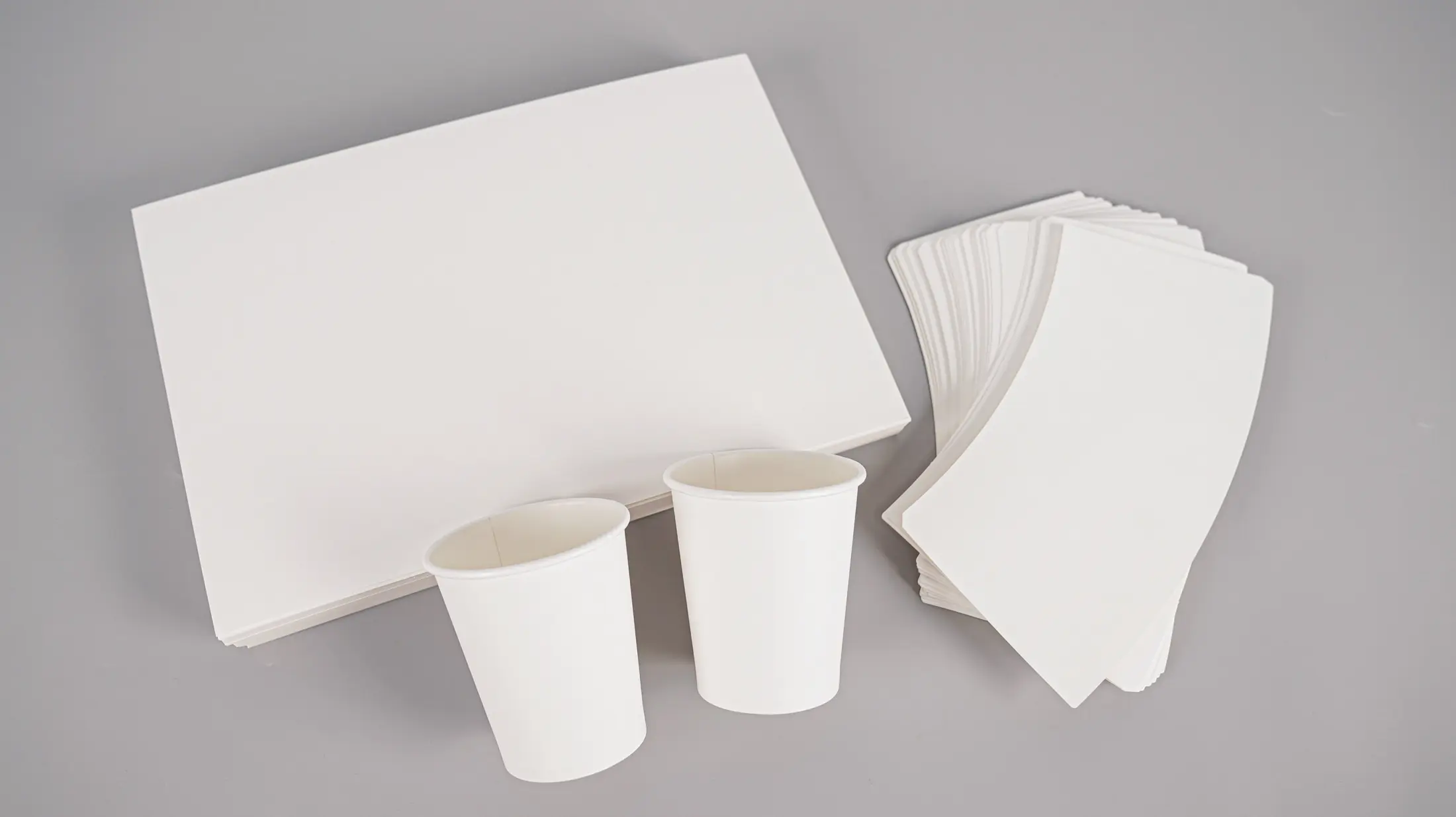
How Adhesives, Coatings, and Contaminants Affect Recyclability
Adhesives, coatings, and contaminants—not certification labels—determine whether a white paper roll is accepted by recycling mills.
Water-based or starch-based adhesives break down cleanly during pulping and rarely disrupt processing. In contrast, hot-melt adhesives, plastic films, and silicone release liners create sticky “stickies” that clog screens, reduce pulp yield, and lower machine efficiency—even in small amounts. Wax and polyethylene coatings block water penetration entirely, preventing repulping and rendering rolls incompatible with standard paper recycling streams.
Thermal paper coatings often contain bisphenol-A (BPA) or bisphenol-S (BPS), which many mills classify as process contaminants. Labels, tapes, self-adhesive patches, and heavy ink coverage further compromise recyclability. For commercial buyers, specifying white paper rolls with repulpable adhesives and minimal surface treatments significantly improves acceptance rates. Always verify coating compatibility with local recycling guidelines—and prioritize clean collection and separation from non-paper waste as the final, critical control point.
Understanding FSC Certification for White Paper Rolls
FSC (Forest Stewardship Council) certification confirms that virgin wood fiber in a white paper roll originates from forests managed to rigorous environmental, social, and economic standards. Crucially, it does not indicate recycled content—that depends on the specific FSC label type.
FSC 100%, FSC Recycled, and FSC Mix: Matching Claims to White Paper Roll Applications
| FSC claim | Fiber source | Common white paper roll applications |
|---|---|---|
| FSC 100% | All wood fiber from FSC-certified forests | Premium printed packaging, brand collateral, food-contact liners where virgin fiber performance is required |
| FSC Recycled | All fiber from post-consumer reclaimed material | Eco-conscious receipt rolls, void fill, industrial wipes, lower-brightness packaging |
| FSC Mix | Blend of FSC-certified virgin fiber, recycled fiber, and/or controlled wood | High-volume thermal rolls, label facestocks, multi-purpose point-of-sale and shipping papers |
FSC 100% delivers superior brightness, stiffness, and print fidelity—ideal for high-end applications. FSC Recycled supports closed-loop systems in janitorial, industrial, and secondary packaging roles, though it may require additional processing due to variability in fiber quality. FSC Mix offers the broadest availability and flexibility, allowing mills to balance certified supply, cost, and performance across diverse white paper roll grades.
Importantly, FSC certification does not affect recyclability: an FSC 100% or FSC Mix roll is no less recyclable than its non-certified counterpart—if it’s uncoated, adhesive-free, and uncontaminated.
Chain-of-Custody Verification: Why It Matters for B2B Buyers of White Paper Rolls
Chain-of-custody (CoC) certification ensures every entity in the supply chain—from forest or recycling facility to mill, converter, distributor, and printer—maintains documented systems to track and segregate FSC-certified fiber. Without valid CoC certification at every stage, a white paper roll cannot legally carry an FSC claim.
B2B buyers must go beyond supplier logos and request the supplier’s active FSC certificate number, confirm the certificate scope explicitly covers the purchased paper grade, and clarify responsibility for label approval and transaction documentation. A supplier may hold FSC certification while sourcing a particular roll outside the certified chain—making product-level verification essential. This diligence prevents greenwashing, supports compliance with brand owner requirements, and meets public procurement standards that mandate traceable, certified fiber.
How Recyclability and FSC Certification Work Together in White Paper Rolls
Can FSC-Certified White Paper Rolls Be Recycled? Debunking the Myth
FSC certification tracks fiber origin and chain of custody—it does not alter how a white paper roll behaves in a pulper. Most uncoated, adhesive-free white paper rolls are fully repulpable, regardless of FSC status. Certification adds no plastic, wax, or functional coatings that interfere with recycling. Instead, recyclability hinges on physical composition: wet-strength resins, silicone release layers, laminates, and non-repulpable adhesives pose real barriers—not the FSC label.
FSC-certified paper and board remain compatible with established fiber recovery systems and retain full biodegradability. With U.S. paper recovery rates for recyclable grades holding steady at 61–65% (AF&PA 2025), clean office and converting scrap—including FSC-labeled white paper rolls—is consistently accepted. Buyers can treat FSC 100%, FSC Recycled, and FSC Mix rolls identically to non-certified equivalents in recycling streams. Certification affirms responsible sourcing; it imposes no end-of-life restrictions.
The FSC Mix Advantage: Higher Real-World Recyclability Rates in Commercial White Paper Roll Streams
FSC Mix enables flexible blending of certified virgin fiber, post-consumer recycled content, and controlled wood—making it uniquely suited to commercial white paper roll applications where performance, cost, and sustainability must align. Many converting facilities specify FSC Mix rolls containing 30–100% post-consumer recycled fiber, shortening the fiber loop and reducing demand for virgin pulp.
This blend mirrors what recycling mills are optimized to recover: dry, uncoated, printable paper—exactly the profile of most standard white paper rolls. As AF&PA 2025 data confirms, the stable 61–65% U.S. recovery rate for recyclable grades reflects consistent market demand for such material. FSC Mix thus supports practical recyclability—not by changing the paper’s chemistry, but by expanding adoption of recycled content across high-volume applications like thermal rolls, labels, and shipping papers. Still, the label alone doesn’t improve recyclability: fiber blend, coating choices, and contamination control remain the decisive factors.
FAQ
What makes a white paper roll recyclable?
A white paper roll is recyclable if it is made from clean, uncoated base stock with robust cellulose fibers. The presence of adhesives, coatings, and contaminants can significantly affect its recyclability.
Does FSC certification mean a paper roll is recyclable?
No, FSC certification ensures responsible sourcing of fibers but does not guarantee recyclability. Recyclability depends on the physical composition of the paper roll, including its lack of coatings, adhesives, or contaminants.
How does contamination impact paper roll recyclability?
Contaminants such as food residue, grease, oils, and other non-fiber materials lower the value of recycled paper and can cause rejection by recycling mills. Ensuring white paper rolls are clean and free from these substances is critical.
What is FSC Mix, and how does it affect recyclability?
FSC Mix represents a blend of certified virgin fiber, recycled fiber, and controlled wood. While the label itself does not impact recyclability, the relatively higher recycled fiber content is often compatible with standard recycling processes.
What are the primary challenges to recycling white paper rolls?
The main challenges include the use of non-repulpable adhesives, plastic films, wax coatings, and contamination by substances like food or oil. These factors can prevent mills from recycling the rolls effectively.