


Why the Plate Logic Drives the Package
A salad bar or meal prep kitchen sells balance: protein, grain, leaves and dressing, each with its own texture and moisture level. Put them into one cavity and the plate becomes a mixture long before the customer opens it. Dressing migrates, crisp leaves soften, and the visual composition that justified the price disappears.
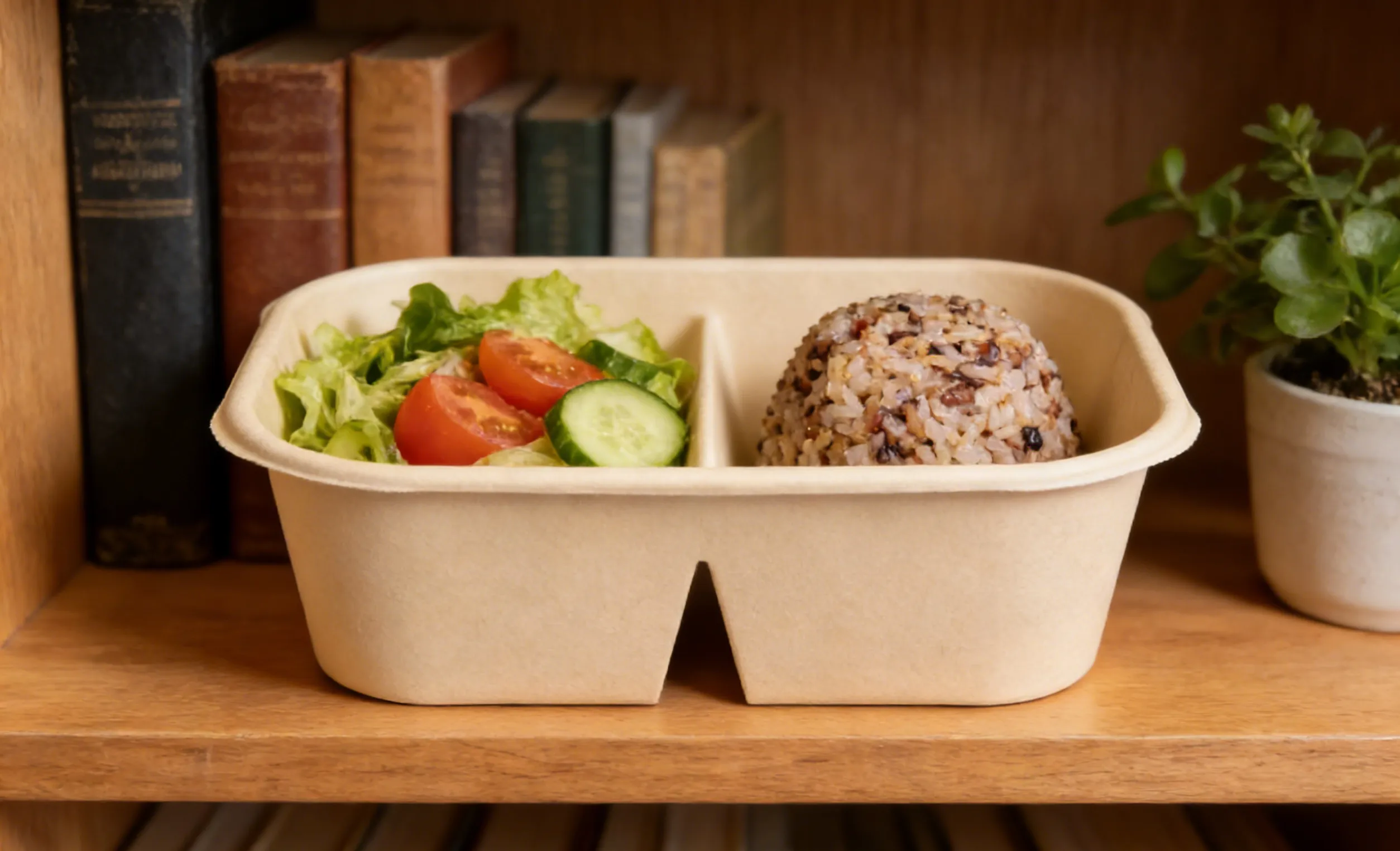
A compartmented paper rectangular bowl keeps those elements apart by building dividers into the board rather than asking the kitchen to use extra containers. The format is produced from food-grade paperboard with a moisture- and oil-resistant coating, in capacities of 500, 650, 750 and 1000ml, with kraft, white or bamboo board and a choice of PET, rPET, PP or paper lids.
The purchasing question is not whether dividers look better on a shelf. It is whether the separations your menu depends on are worth the extra board, the tighter packing tolerance they impose and the reduced usable volume inside each cavity.
Those questions are answered with specifications. This article sets out the fields that decide whether a divided paper rectangular bowl belongs on your line.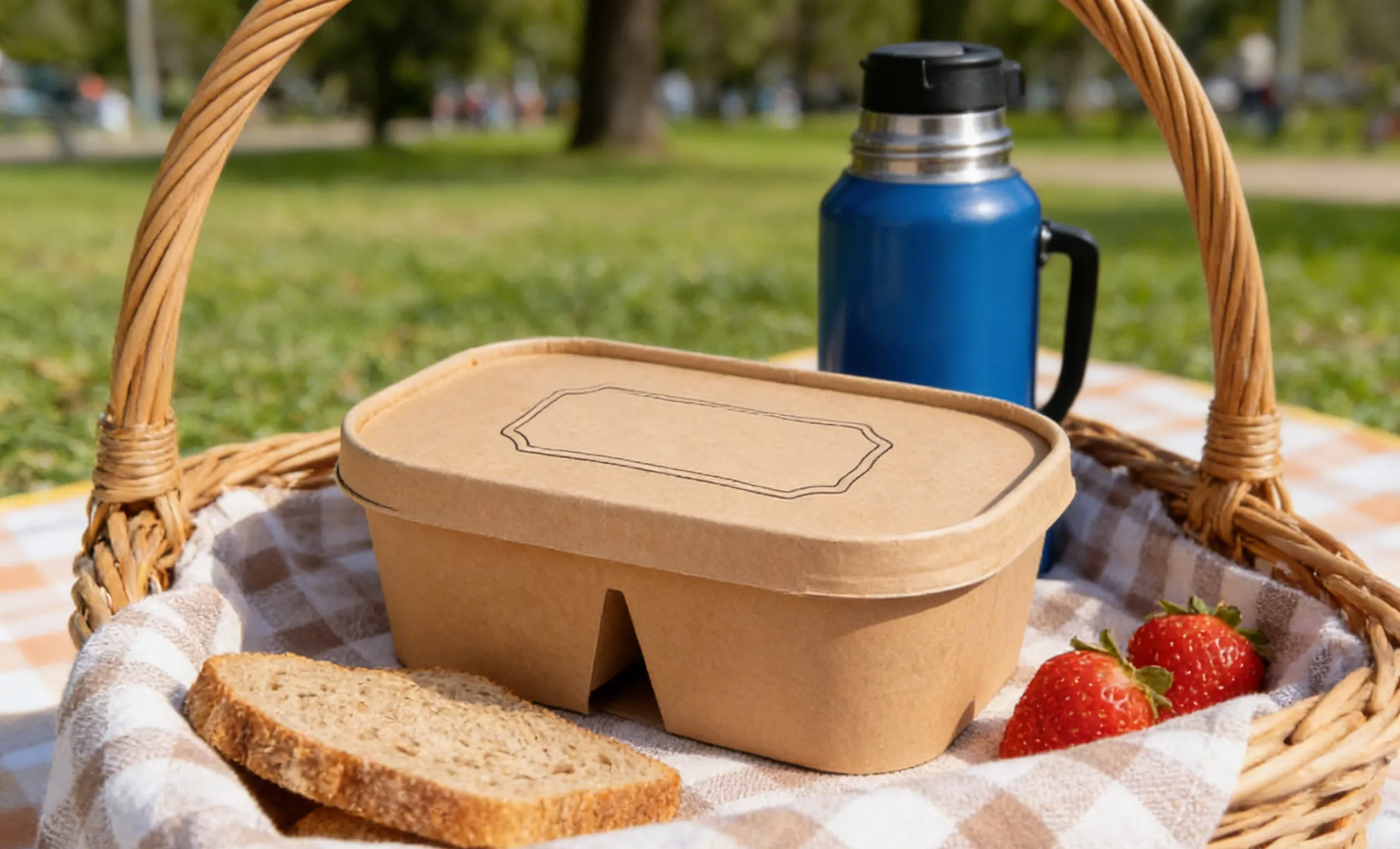
The Menu Logic Behind a Divided Container
Dividers are a menu decision before they are a packaging decision. The number of cavities is set by what the kitchen promises, not by what the tooling offers.
When a Single Cavity Fails the Plate
A single cavity works when the components are meant to meet: a grain bowl dressed at the pass, a rice dish finished with sauce. It fails when the customer is expected to assemble or to control the ratio. Wet and dry items in one cavity exchange moisture within minutes, and fried or crisp elements lose their texture first. If the menu copy promises a separate dressing, a crunchy topping or a distinct protein portion, a divided paper rectangular bowl is the honest package, because the promise survives the journey. Ingredient separation is what the customer paid for, and the paper rectangular bowl is how a kitchen keeps that promise.
Portion Control as a Commercial Function
Fixed cavities do quiet work on cost. A divider that holds a set volume of protein or sauce limits how much a busy line can load without a supervisor watching, and it makes the plate consistent between shifts and between sites. That consistency is what lets a kitchen cost a dish accurately and defend a price. It also reduces over-portioning, which is often the largest uncontrolled cost in prepared food packaging. The cavity size becomes a specification with a commercial meaning, not a decorative detail. The same logic makes meal prep containers work in a retail chiller, where the label must match the shelf.
Divider Walls and Lid Interaction
The divider is only as good as the closure above it. A wall that stops short of the lid leaves a channel for liquid to cross.
How the Divider Meets the Base and Rim
A reliable paper rectangular bowl is formed so the divider runs continuously from base to rim, with the coating unbroken across the internal corner where the divider meets the floor. That corner is the hardest place to coat and the first place a sauce will find. The rim matters equally: a divider that terminates below the rim leaves a gap that a tilted bowl will use. Ask for a sample cut through the divider so the internal geometry can be inspected rather than inferred from a photograph. A divider pressed too hard thins the board of a paper rectangular bowl and starts a leak at that corner.
Lidding Options and What Each One Does
Lid choice changes the physics of a compartmented salad bowl. A PET or rPET lid gives a clear view of the sections, which supports retail display and delivery photography. A PP lid tolerates more flex and repeated handling. A paper lid suits a dry or lightly dressed menu and keeps the pack mono-material for waste sorting. Whichever is chosen, the lid must sit flat across the divider line, because a lid that domes over one cavity will lift at the rim when the bowl is stacked. For a compartmented salad bowl sold to go, clarity usually outweighs material savings.
Leakage Between Compartments
Cross-flow is the failure mode buyers discover last and complain about first, so it deserves a test rather than an assurance in prepared food packaging.
Coating Coverage on Internal Corners
Leakage between compartments rarely comes from a hole in the board. It comes from incomplete coating coverage at the internal corner, a crease that has been over-compressed during forming, or a divider that has been pushed out of position. Each shows up first as a dark patch where dressing has wicked into fibre. Aqueous coatings and PE, PP or PLA coatings behave differently on a wet corner, so the coating should be selected for the wettest item on the menu rather than the average one. Ingredient separation in a paper rectangular bowl fails at that corner before it fails anywhere else.
Testing a Filled Bowl Before Commitment
Test the way the pack will actually travel. Fill each cavity with the real product, including the thinnest dressing on the menu, close the lid, and carry the paper rectangular bowl through a simulated delivery route with vibration and a period of tilt. Then open it and look at the divider base and the underside of the lid. Repeat after chilling, because a cold pack handled roughly behaves differently from a warm one. A short trial on your own menu tells you more than any generic claim. A bench test passes where a bag test fails, so simulate the route on a filled paper rectangular bowl.
Specification Fields That Decide the Order
An order of meal prep containers is only reproducible when the fields are written down. Verbal descriptions of size and layout are where most mismatches begin.
Dimensions and Depth Against the Menu
The range runs from 500ml at 171x118mm across the top, through 650ml and 750ml at the same footprint with increasing depth, to a 1000ml at 171x118mm and a wider 1000ml at 194x142mm. Identical footprints with different depths are useful, because they let one lid and one shelf position serve several portion sizes. Confirm top and base dimensions rather than volume alone, since taper decides how a stack of paper rectangular bowls sits in a case and how much of the cavity is usable. Depth also sets how much of the paper rectangular bowl can be filled without touching the lid.
Coatings, Board and Compartment Layout
Write the coating grade, the board type and the compartment layout into the purchase order, along with the lid material. Coatings available across the range include PET, PE, PP, PLA and water-based options, and custom compartment layouts and printing are supported. A change in any one of those fields can alter the divider geometry, so a layout approved on one coating should not be assumed valid on another. Ask for the approved sample to be retained as the reference. Layout drawings should travel with the order and carry a revision date for any repeat paper rectangular bowl run.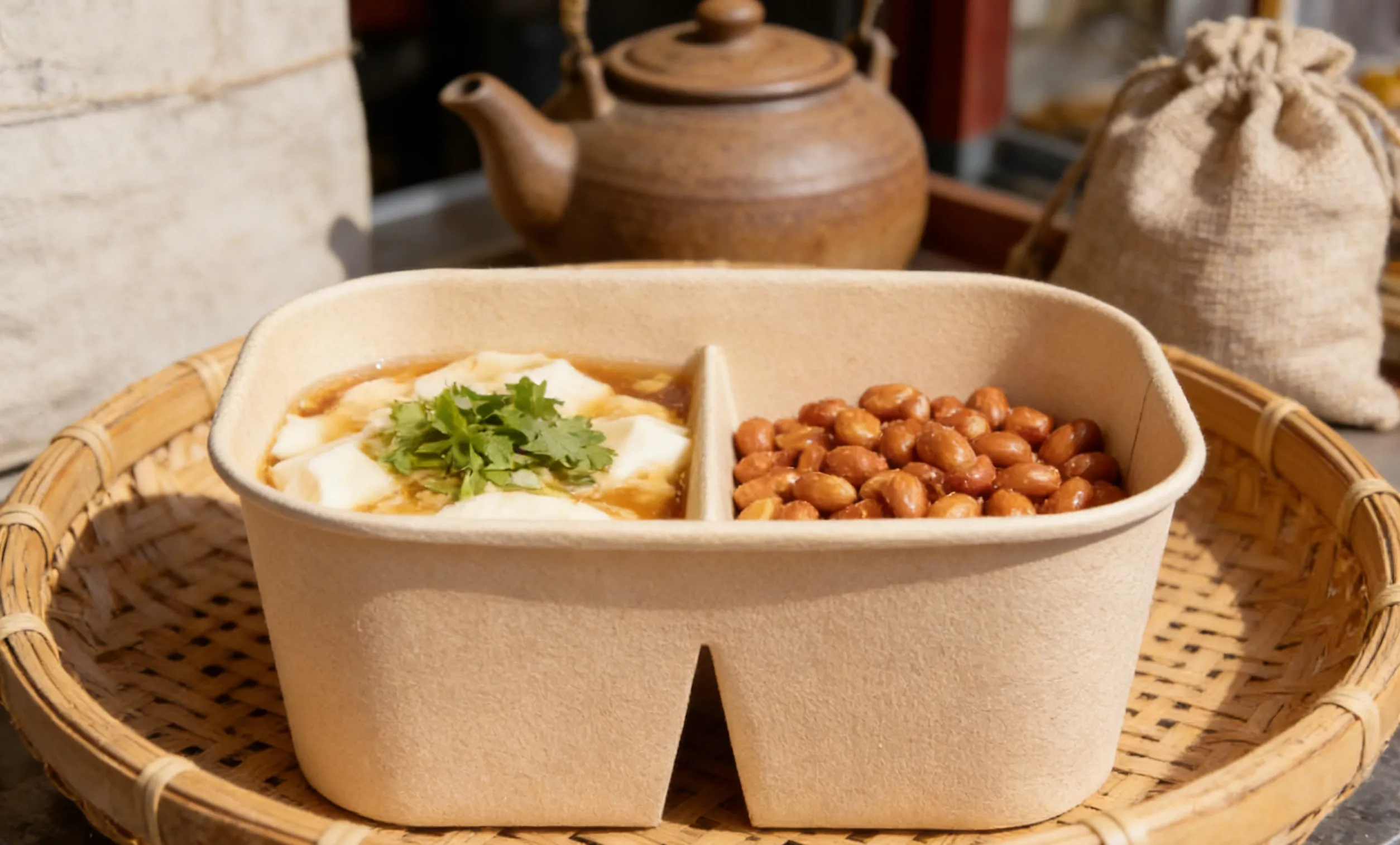
FAQ
How many compartments should a divided bowl have?
The menu decides. Two cavities suit a dressed salad with a separate protein or a hot and cold pairing, three suit a composed plate with a sauce well, and more than three usually means the customer is assembling rather than eating. Count the elements that must not touch, then add one cavity only if the menu promises it. Each additional divider takes usable volume from the paper rectangular bowl and adds a corner to coat and clean. An empty third cavity is cost without benefit.
Are compartmented bowls suitable for hot food?
They are built for prepared food rather than for oven heating. The board and coating handle a warm protein, a room-temperature grain and a chilled dressing in the same pack, which is the common meal prep case. For a genuinely hot dish, confirm the coating and lid combination with the supplier, and check that steam does not soften the divider. Vented lids and a short holding time are usually part of that conversation. Hot and cold in one pack is what the format handles best.
Can the divider layout be changed for a new menu?
Custom compartment layouts are supported, which is useful for a seasonal launch or a private label range. The practical constraint is tooling, so a new layout carries a lead time and a minimum quantity that a standard configuration does not. Plan the change with the menu calendar rather than after the launch date, and approve the revised sample with the same fill and transit test used for the original paper rectangular bowl. Keep the old layout documented, so a returning menu needs no new tooling.