


The Verification List Before the First Order
A soup container is asked to do something unusual: hold a liquid, survive a freezer, tolerate a microwave, and still look presentable on a shelf. Most packaging failures in this category are not manufacturing defects. They are mismatches between what the buyer assumed and what the specification actually covers.
The PET Series is a transparent, food-grade range built for hot and cold foods, offered in 8, 12, 16, 26 and 32oz sizes and described as microwave- and oven-safe up to 220°C, with refrigerator and freezer storage. Those are the headline claims. What a food business must verify is narrower: whether the grade supplied behaves that way in your process, with your food and your handling.
Verification is mostly a matter of asking precise questions and running a short trial that reproduces your own kitchen. It costs a few days and a case of product, and it prevents the more expensive discovery that a container deforms at the pass, cracks in a blast chiller or fogs in a chilled display.
This article sets out what to check on temperature, closure, clarity and record keeping, using the published PET Series specifications as a starting point rather than a conclusion.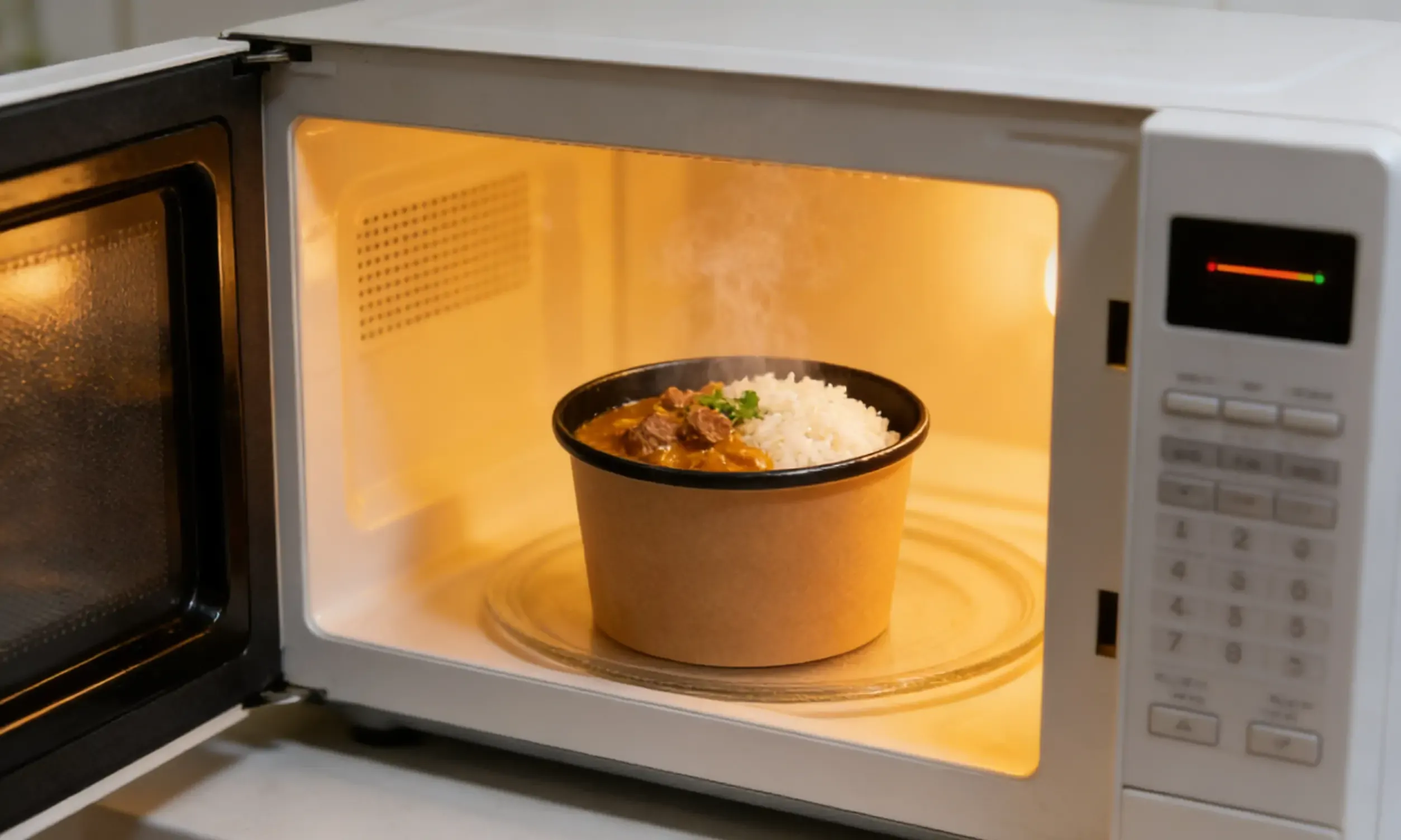
Temperature Limits in Both Directions
Temperature claims are usually read in one direction only, which is why cold-chain problems surprise buyers who tested for heat on a PET Series container.
Heat Tolerance and the Oven Claim
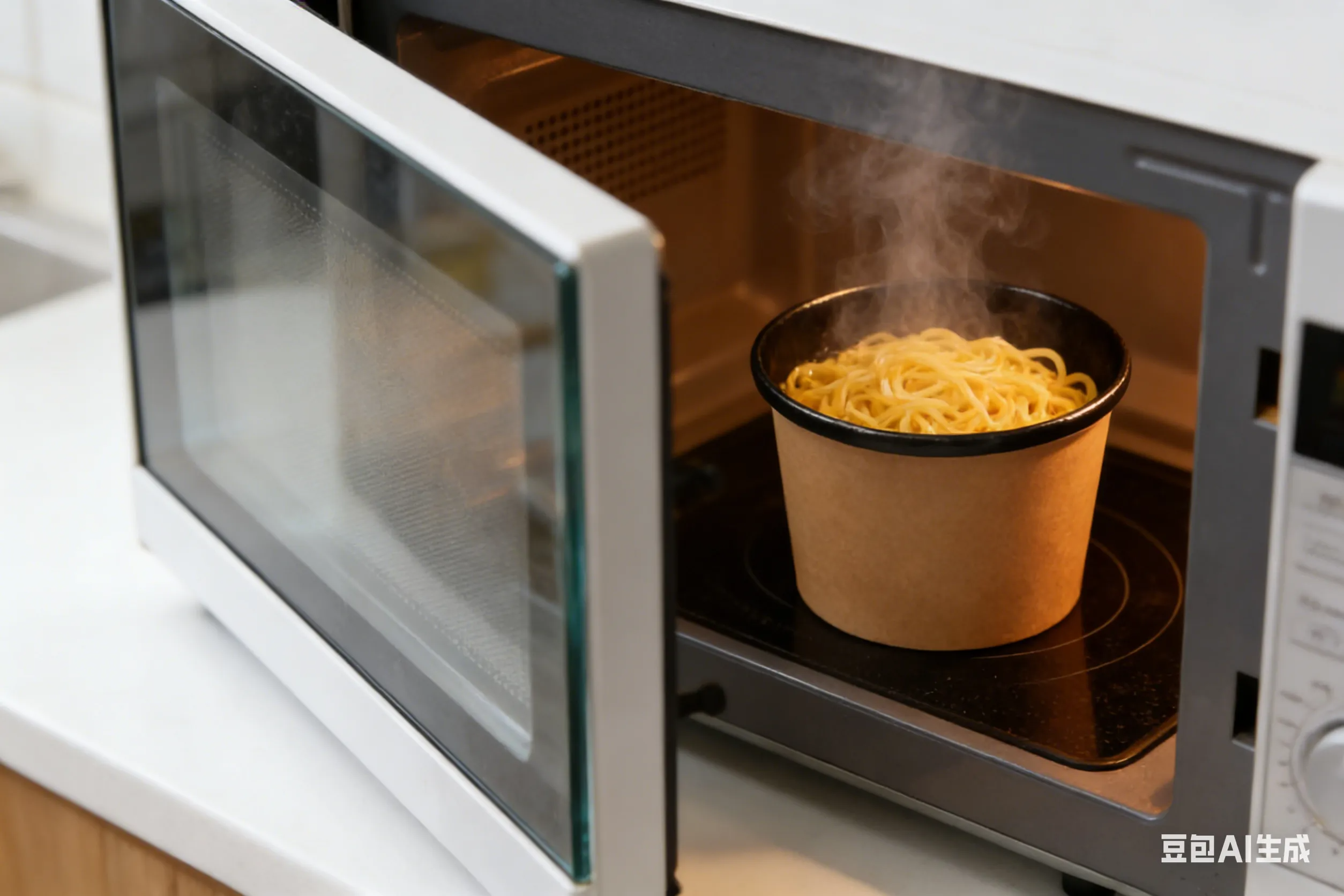
The published figure for the PET Soup Container is microwave and oven safe up to 220°C, and that number belongs to the grade tested. Clear PET and heat-set PET are not interchangeable, and a container formed from the wrong grade will distort well below the stated ceiling. Ask the supplier to confirm which grade the sample was made from, then heat your own product in it: a thick stew reaches temperature more slowly than water and holds heat longer at the wall. That ceiling belongs to the PET Series specification, and it should be confirmed in writing for the lot you receive.
Cold Storage and Brittleness
The same containers are described as suitable for refrigerator and freezer storage, and the PET Series is specified to keep its shape under cold without becoming brittle. Cold performance is about impact rather than temperature alone. A container taken from a freezer at service speed is dropped, stacked and levered, and those loads reveal whether the wall thickness suits your operation. Freeze a filled container overnight, then handle it the way your staff will at the busiest moment. The PET Series is specified to keep its shape under cold without becoming brittle, which is best checked on a filled container.
Lids, Film and Seal Integrity
A container is a system, and the closure decides whether the system holds. In the PET Series the closure is a separate specification with its own material options.
Matching a Lid to the Rim
The PET Series is described as compatible with paper bowls, paper cups, paper trays and cartridge-style packaging systems, which makes it flexible but also easy to specify loosely. Lids are a separate decision with their own material options, and the fit depends on rim geometry rather than nominal volume. Two containers in the same size band can have different rim diameters, so specify the diameter and confirm the lid on a filled container at service temperature rather than on an empty one. On a PET soup container, the rim is the one dimension that cannot be adjusted after the order.
Seal Testing Before a Menu Launch
Seal integrity is where food temperature management meets transport. Fill, close, invert over a tray for a minute, then carry the container through a route that includes vibration and a period of tilt. Repeat warm and chilled, because a warm liquid finds a gap that a cold one will not and a cold wall flexes differently under load. Where a film seal is used instead of a lid, check that the seal survives condensation on the rim, which is the usual cause of a lifted edge. Agitation exposes a weak seal, and food temperature management depends on it holding for the whole trip.
Clarity, Presentation and Retail Display
Transparency sells prepared food, and it also exposes faults that an opaque package would hide. Every clear PET Series container shows its contents and its handling marks with equal honesty.
Transparency Through a Chilled Cabinet
High transparency is the reason many buyers choose the PET Series for retail and ready-meal display, since the customer can see the product before purchase. In a chilled cabinet the enemy is condensation, which forms on the outside of a cold container and can obscure the contents. A clear container does not prevent this, but it does mean the contents are visible through the fog when the cabinet door is opened. Check presentation under your own lighting rather than in a sample room. Retail buyers judge a PET soup container through the wall, so a scuff becomes part of the product.
Labelling and the Limits of a Clear Wall
A clear container leaves few places to hide a label. Adhesive labels adhere poorly to a cold, slightly damp surface, and a label applied in a warm kitchen can lift in a chiller. Where the product needs an ingredients panel, cooking instruction or batch code, plan the label position and adhesive for cold service. Food packaging performance is judged by the customer on the shelf, and a curling label undoes the advantage that the transparency was meant to deliver. Food packaging performance in a chilled case depends as much on the label as on the container.
Building a Test Protocol
A trial is only useful if it reproduces the process it is meant to predict. Bench tests on empty containers from the PET Series predict very little.
Trials That Reproduce Your Own Process
Run the container through the actual sequence: fill at your production temperature, chill at your rate, store for your shelf life, reheat by your method. Test at the extremes of the range rather than the middle, since the 8oz and 32oz sizes behave differently because of wall geometry and fill depth. Keep one container of each size out of the trial as a reference, so deformation can be measured rather than remembered. Record what happened, not only whether it passed. Where the PET Series runs from 8oz to 32oz, one protocol covers the range only if it covers both ends.
Records to Keep From Each Batch
Keep the supplier's grade confirmation, the approved sample, the lid specification and the trial results together, and reference them on every purchase order. When a delivery arrives from a different production run, the retained sample is the only reliable comparison, and it settles disputes quickly. For foodservice packaging bought in volume across sites, a single approved reference per size prevents a drift in specification that nobody notices until a customer complains. A retained PET soup container from each approved lot, kept cool and dark, is the cheapest quality record a foodservice packaging buyer can hold.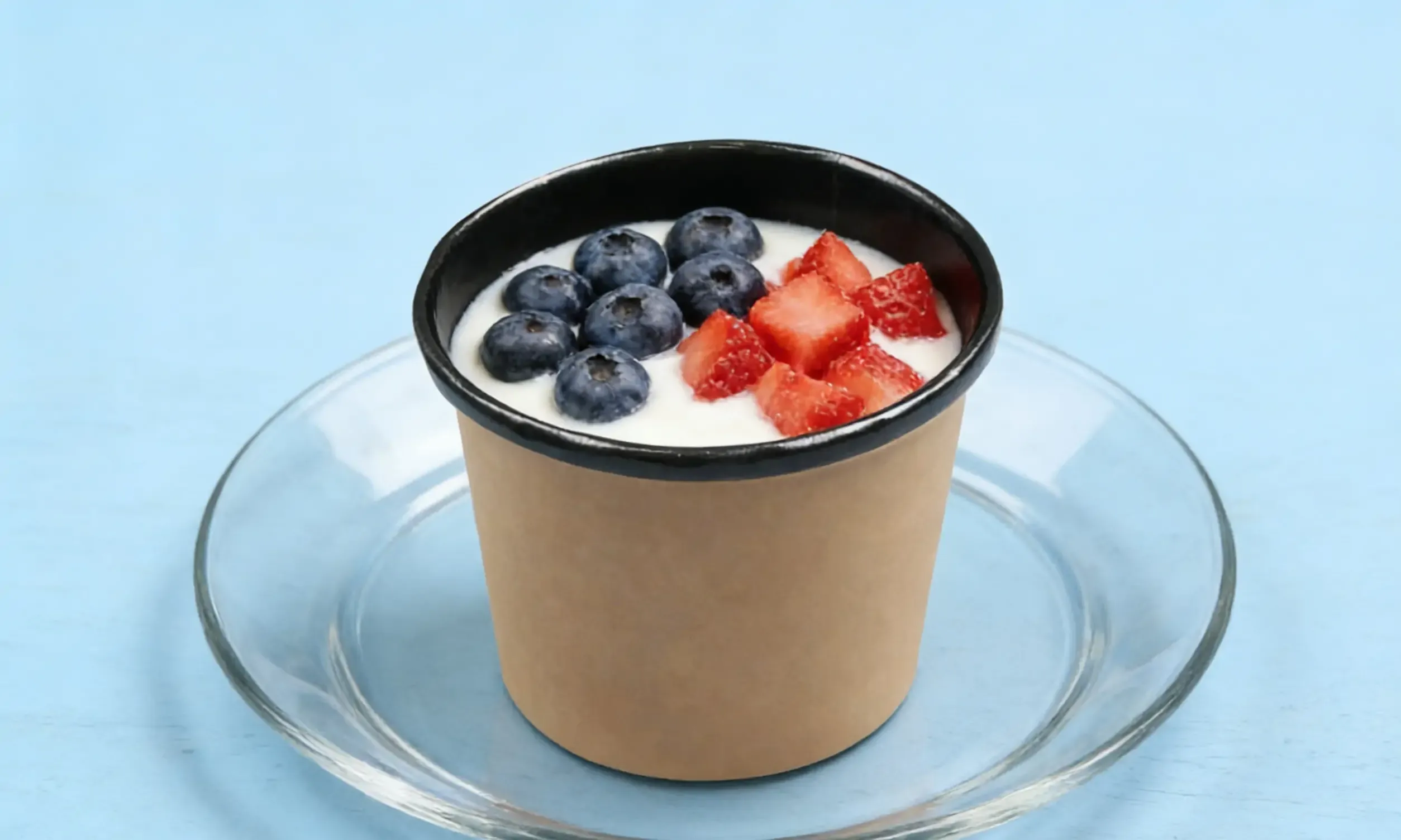
FAQ
Can PET soup containers go straight from freezer to microwave?
The published specification covers both freezer storage and microwave heating to 220°C, but a direct transfer is a stress event, not a routine step. Thermal shock is hardest on any rigid container, and the risk grows with fill depth and with a lid left on. Thaw in a refrigerator where the menu allows it, and where a direct transfer is unavoidable, test it on your own product before writing the step into a procedure. The PET Series grade, not the container, is usually what decides it.
Do I need a different container for hot and cold menus?
Often one format covers both, which is the practical attraction of the PET Series for operators running soup, chilled soup and ready meals from one line. The limits appear at the edges: very high heat, very long freezing, or a lid intended for one temperature band. Audit the extremes of your own menu rather than the average dish, and confirm the closure for each service condition separately. That is where the PET Series earns its flexibility, and where a loose specification loses it.
How do I compare samples from two suppliers?
Ask both for the grade, the rim diameter and the lid they recommend, then run the same trial on the same food on the same day. Compare deformation, seal behaviour and clarity after chilling rather than on arrival. Two containers that look identical on a bench can differ in wall thickness and in how the base sits under load. Keep both reference samples and record the outcome against the size and the dish tested. Ask both suppliers to put the grade in writing on the quotation.