


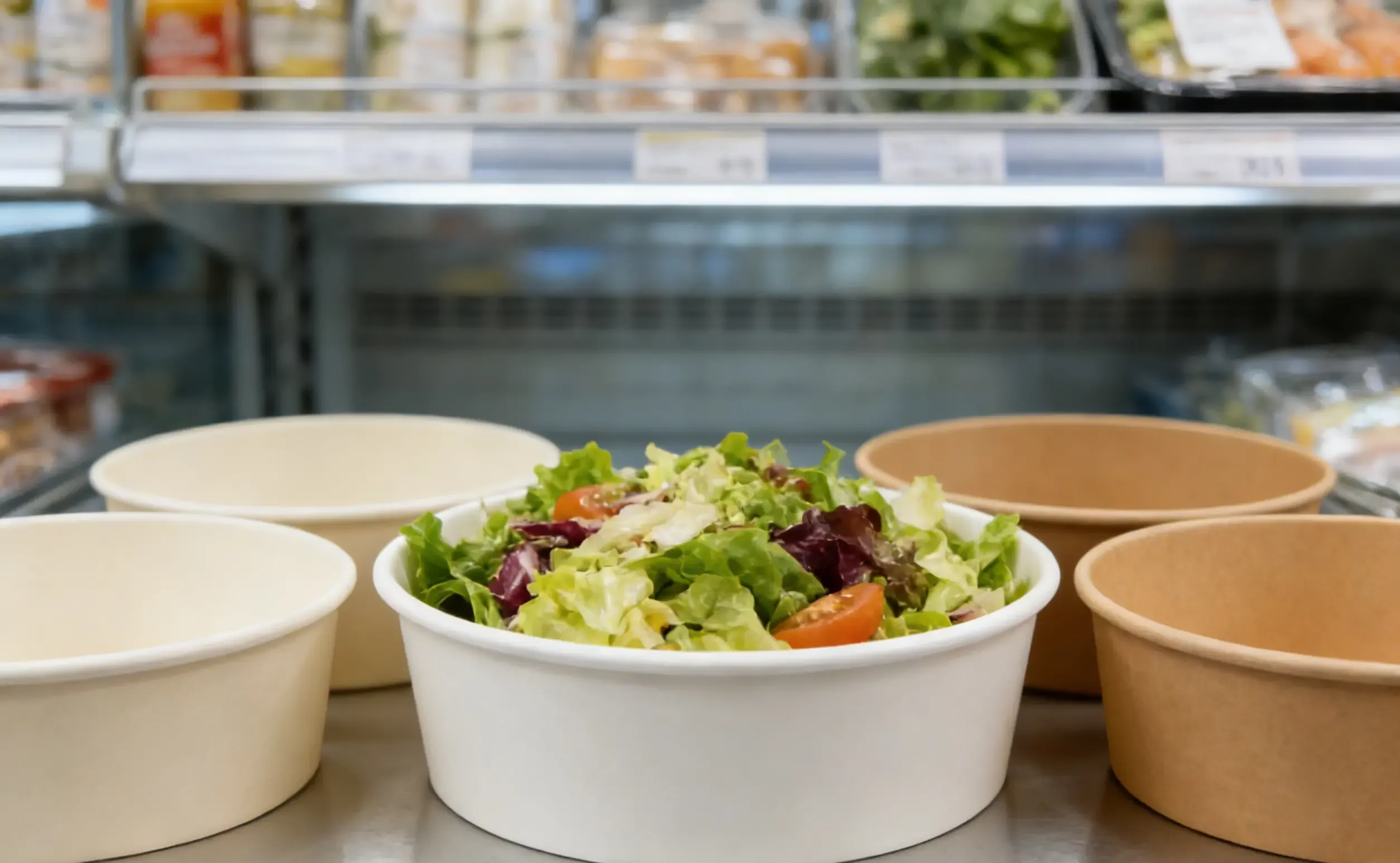
Why Dressing Load Tests Structure as Much as Coating
A salad bowl that holds lettuce and cucumber is a different object from one that holds the same salad plus a ladle of vinaigrette. The weight is modest, but the liquid is mobile, acidic and oily at once, and it spends the whole delivery looking for a weak point. That is the moment a Paper Bowl specification is genuinely tested.
Buyers often begin with the coating, because the coating is the part suppliers talk about. Coating choice matters, yet a bowl can fail with a perfectly good coating if the side seam is starved, the bottom crease is cracked, or the board is too light for the fill weight. Performance is a system property.
The commercial context sharpens the problem. Delivery menus are built around dressings served on the side or poured over, and neither version tolerates a leak, because a leak reaches the bag, the other containers and the customer's hands before it reaches the food.
This article separates the failure modes, looks at how dressings attack board, and sets out what to specify and test before a menu goes live.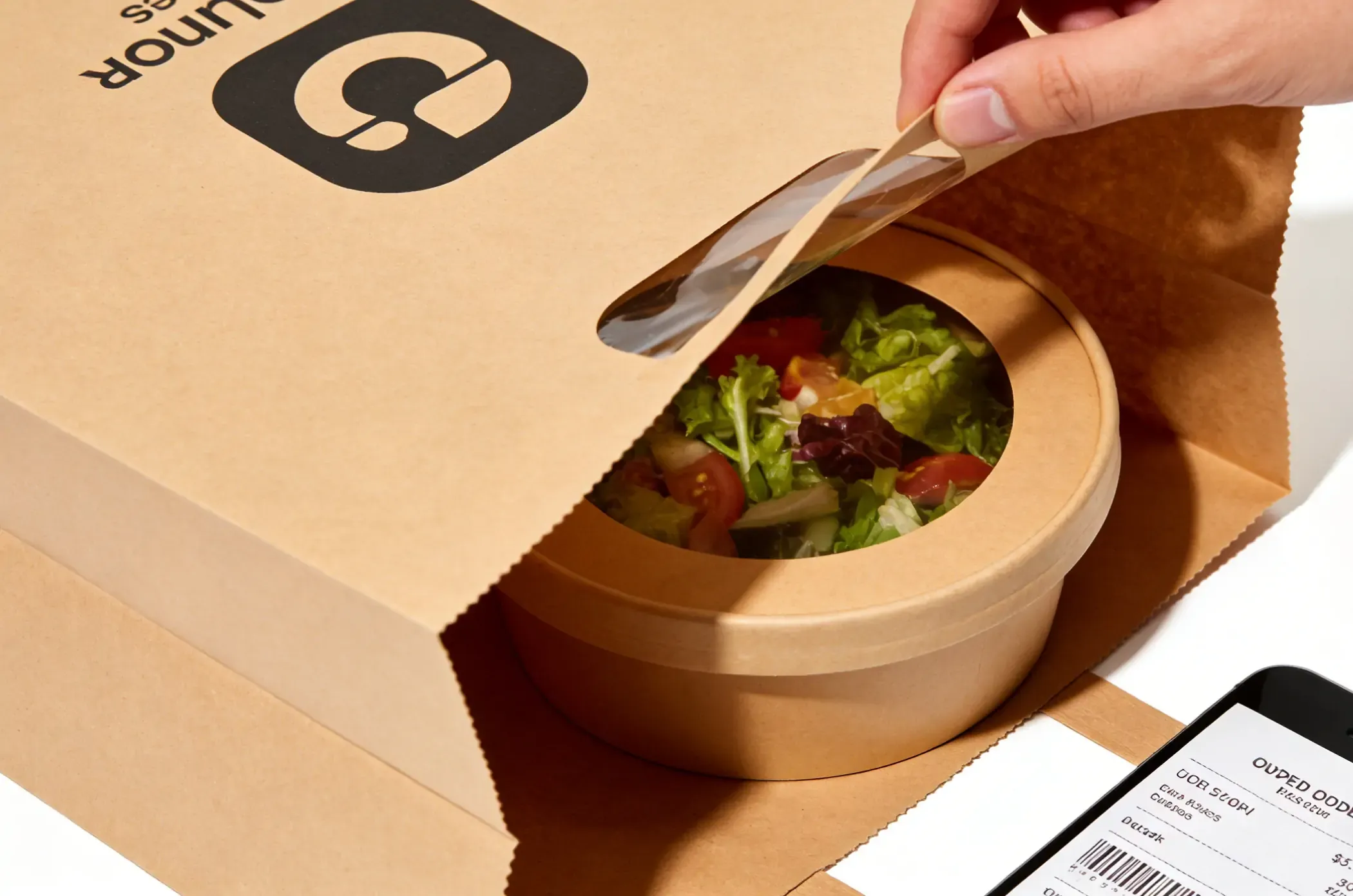
How Oil and Acid Reach the Board
Dressing is not one substance but a mixture, and its two main fractions behave differently against a paper surface.
Oil Migration Through a Coated Surface
Oil wets a surface and then migrates along the fibre network, which is why a bowl can look sound while a translucent stain spreads across the outside wall from a single pinhole. Coating weight and continuity decide how long the barrier holds, and exposure time is set by the delivery window rather than by the meal. A Paper Bowl intended for a thirty-minute journey and one intended for a next-day chilled salad should not carry the same coating specification, even when both are sold as an oil-resistant paper bowl. In practice, migration shows as a dull patch on the outer wall long before the seam gives way.
Acid Attack and Coating Continuity
Vinegar, lemon juice and tomato dressings lower the pH at the surface, and acid softens some coatings while swelling the board beneath them. The risk is not a dramatic failure but a gradual loss of stiffness, so a bowl that felt rigid at packing feels soft when it is opened. Continuity matters more than thickness: a fold, a score line or a cut edge exposes bare fibre, and that is where acid and oil begin. A paper salad bowl for a Caesar and one for a lemon-dressed grain bowl may therefore need different protection, and a Paper Bowl fails at its weakest line rather than its thickest wall.
Seams and Bottoms Under Wet Load
Every bowl has a place where material is joined and a place where it is folded, and both are more sensitive to liquid than the wall.
Side Seam Behaviour With Vinaigrette
The side seam is a lap joint, and dressing that reaches it can wick between the layers. A well-made Paper Bowl keeps the coated face continuous through the seam so the liquid meets coating rather than fibre, and seam width and pressure matter as much as the adhesive. In practice, ask for the seam to be inspected on a filled bowl after the delivery window, looking for darkening along the joint and softening at its top and bottom ends. A seam that fails usually does so at one end rather than along its length.
Bottom Crease Failure Under Stacking
The bottom is a pressed or folded disc, and its perimeter crease is where leaks usually begin. Wet board loses stiffness quickly, and a stack of filled bowls adds load to exactly that crease. Failure often appears as a slow seep rather than a drip, which is harder to spot in a dark delivery bag than a drip. Where bowls are stacked three or four high in a hot bag, the bottom of a Paper Bowl deserves as much attention as the coating, because no coating compensates for a crease that has been crushed flat at packing.
Wide-Mouth Formats for Salad Menus
Salad presentation pushes bowls wide and shallow, which changes where liquid sits and how much of a Paper Bowl is exposed to it.
Why Wide-Mouth Shapes Change Coating Demands
A wide opening spreads the dressing over a larger floor area and holds the liquid line close to the seam for the whole journey. Square and rectangular formats add four corners to that exposure, and corners are where coated board is stretched thinnest. Sowin's rectangular salad bowls, from 500 ml to 1000 ml on a common 171 x 118 mm top, pair a moisture- and oil-resistant inner coating with that geometry, but any Paper Bowl in the range still needs a fill height that stays below the point where the wall flexes under load. A paper salad bowl with a wide floor needs the same check.
Pairing Lids Across Bowl Sizes
A lid is part of the leak strategy, not just a cover. Sowin lists PET, rPET, PP and paper lids for its salad bowl formats, and the choice follows the menu: a clear lid for display, a paper lid for a plastic-free pack, a PP lid where a hot item shares the format. Each family has its own rim engagement, so a Paper Bowl approved with one lid should not be assumed sealed with another. Confirm the pair, lid and rim, on a filled takeaway food container before the menu is printed, and keep the approved pair on file.
Specifying and Testing Before a Delivery Menu Launches
The specification is where a dressing problem is either prevented or found by a customer instead.
Building a Test Protocol
Fill with the real recipe at the real temperature, including the dressing volume the kitchen ladles rather than the one on the recipe card. Hold at delivery temperature, place the takeaway food container in the bag at the angle it will travel, then inspect at thirty and sixty minutes: seam, bottom perimeter, outer wall for staining, board for softness. Repeat with a stack of four. A Paper Bowl and lid that pass this sequence are a specification, while a pack that passes a water test is a guess, and food delivery packaging buyers pay for that difference later, one complaint at a time. Write the result on the bowl drawing with the date.
Line Trials and Packing Order
Kitchen practice defeats good packaging more often than material does. Dressing poured at the pass, lids pressed on one corner at a time, bowls stacked while still warm: each shortens the working life of a Paper Bowl. Run a line trial that includes the assembly order, then write the order down and post it at the station, because a trial that ignores assembly order tests the material rather than the kitchen. Where dressing is served separately, specify the small container and its lid as part of the same pack, so that leak risk is designed out rather than managed by whoever is packing.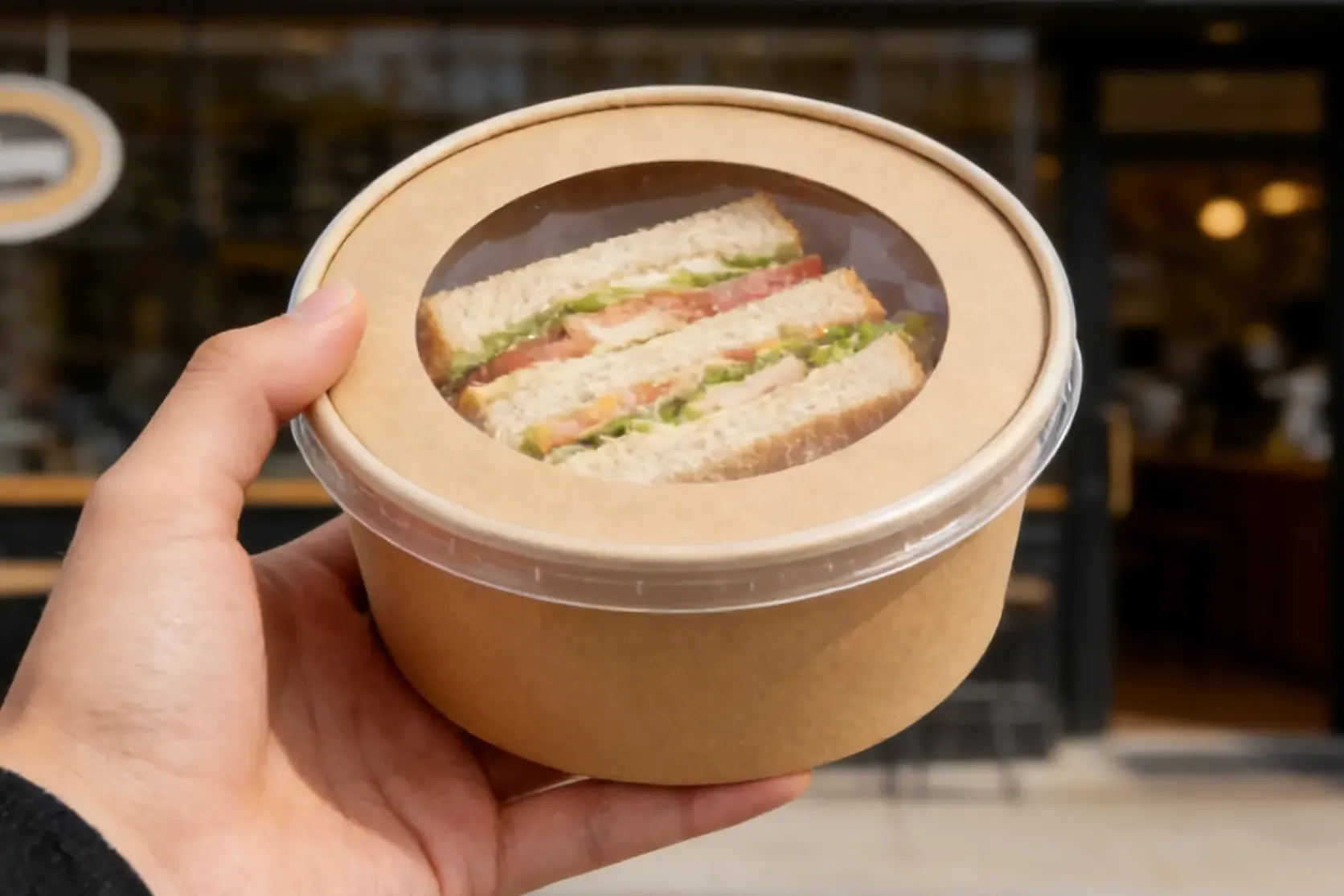
FAQ
Is a coated Paper Bowl sufficient for oily dressings?
A coating is necessary but not sufficient. Oil resistance depends on coating weight, on continuity through seams, scores and the bottom crease, and on how long the dressing sits against the surface. Sowin describes its salad bowl formats as carrying a moisture- and oil-resistant coating suited to salads with dressing and sauces, which sets a starting point rather than the whole answer. An oil-resistant paper bowl is only as good as its seam, so confirm the grade against the delivery window and test a filled Paper Bowl in a stacked bag.
Do wide bowls leak more easily than deep ones?
They can, because a wide format spreads liquid across a larger floor and holds dressing against the seam over a longer distance. A wide Paper Bowl also flexes more across the base when it is lifted with one hand, and flexing opens creases. That does not rule the format out, since salad presentation rewards an open shape, but the base and the seam deserve closer attention and the fill height should stay clear of the point where the wall gives.
How should a food delivery packaging buyer compare two bowl quotations?
Compare like with like. Ask both suppliers for board grade, coating type and weight, seam construction and dimensions with tolerances, then test both with the same recipe for the same time. Price per bowl means little if one quotation assumes a lighter board. Where a supplier lists lids with the Paper Bowl, confirm lid material and rim fit in the same comparison, because a cheap bowl with a poor lid still fails somewhere between the kitchen and the door, and the difference is usually the lid.