


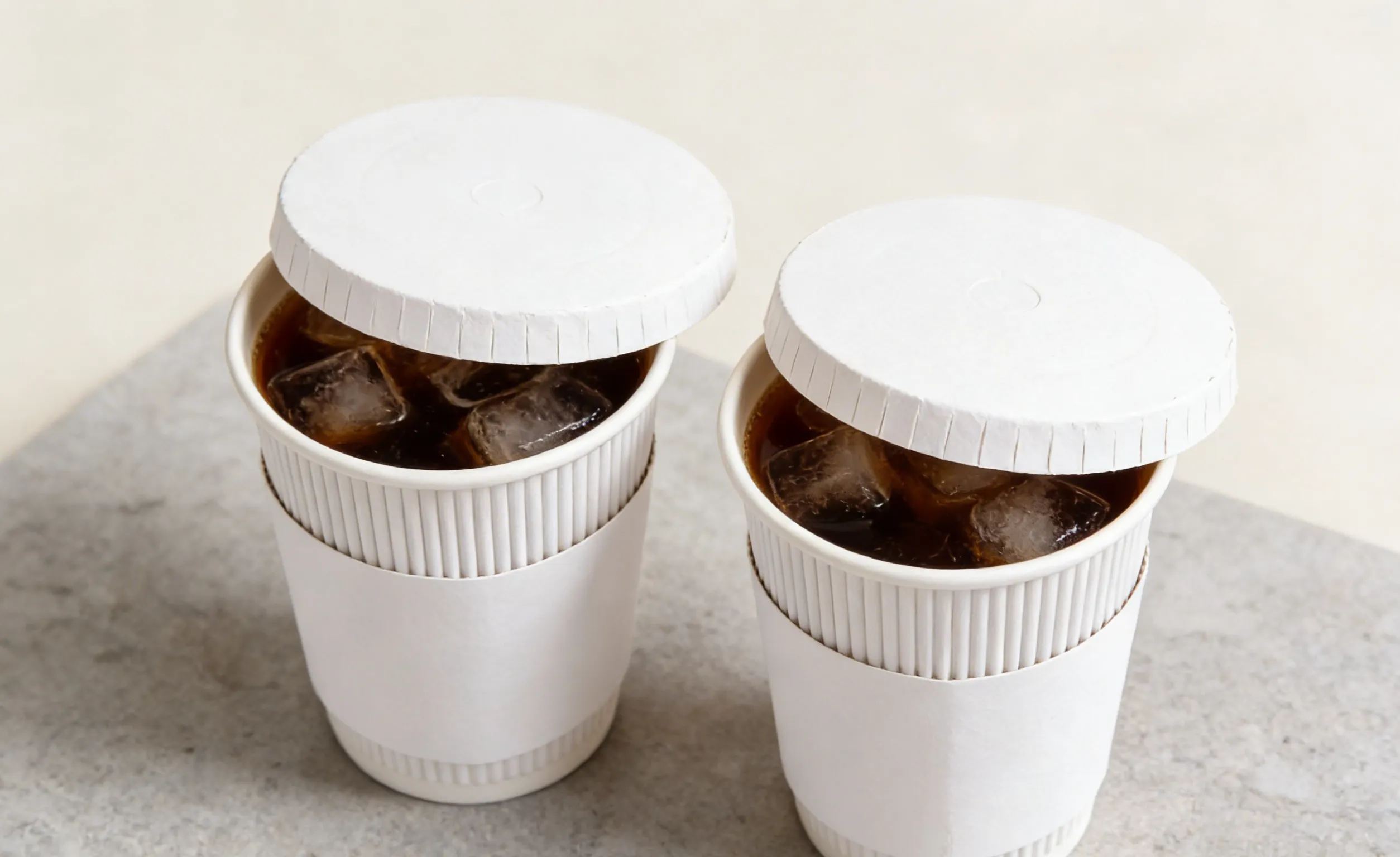
Lid Geometry as the Final Stage of the Drinking Experience
A takeaway coffee is judged at the moment the lid goes on. Everything the roaster and the barista controlled, from grind to extraction to milk texture, passes through one opening in a paperboard disc, and the customer's first impression is formed by how that opening delivers. Lids are a sensory decision before they are a procurement one.
That is an adjustment for buyers used to treating a lid as an accessory. While it was a commodity, the brief was fit and price. Once a paper lid is specified, it starts to influence cup diameter, rim profile, wall build and even the way the drink is handed across the counter.
The functional job is narrow and unforgiving: hold the beverage in during a walk, a bus ride or a scooter delivery, then release it in a controlled stream at a temperature the customer can drink. Nothing else in the pack does as much work per gram.
This article examines that work in four parts, covering the sip opening, the rim fit, the material system, and the way a paper lid sends the cup specification back to the converter.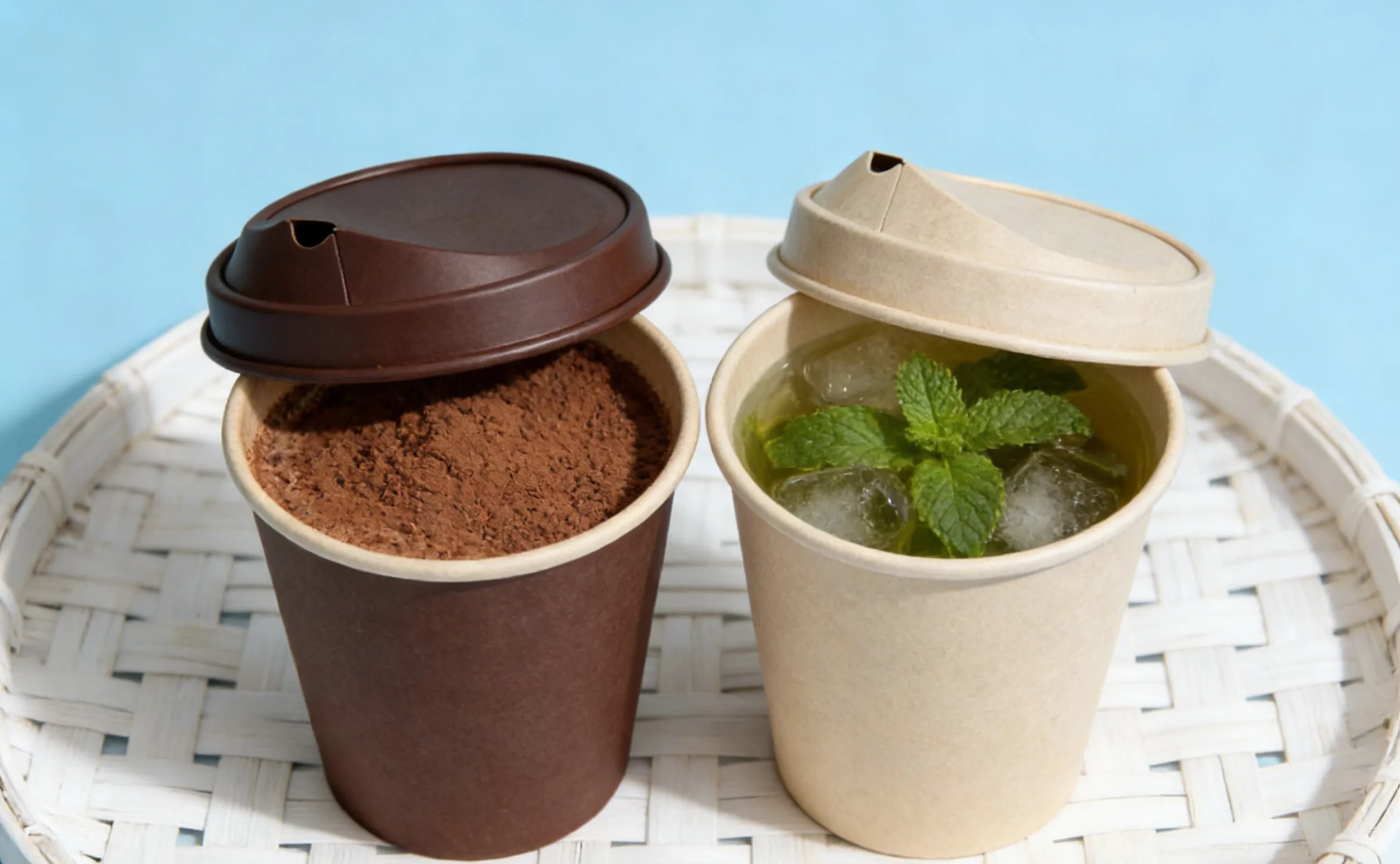
Sip Openings and the Control of Flow
Flow is set by the opening rather than by the cup, and the difference between a comfortable drink and a spill is often a few square millimetres of board.
Sizing a Sip Hole for Coffee Service
Sowin's sip-through paper lids are listed in diameters of 62, 80 and 90 mm with a pre-cut drinking opening, and that opening is the first thing a buyer should examine. A modest aperture slows the flow, which suits a full cup carried by hand, while a wider one vents more freely and serves faster at a busy counter. Just as important is the edge of the cut: a clean, coated cut resists softening, whereas a ragged one wicks liquid and begins to fray within minutes. Because hot beverage cup lids are judged at the counter as well as in a car, sample the opening with the drink the shop sells most.
Venting and Pressure Release
A sealed lid traps hot vapour, and the headspace pressurises as the drink cools, so liquid can be pushed up through the drinking hole even when the cup is barely tilted. The industry answer is an air path, either a small vent behind the opening or a cross-cut that opens only under suction. A cross hole paper lid, which Sowin lists with a cross-cut for straw insertion or controlled sipping, is a practical compromise for menus that mix hot and iced drinks in one cup size, and pairs with the sip-through paper lids in the same range.
Rim Fit Between Lid and Cup
Rim fit decides whether the drink arrives, and it is the one part of the closure that a customer never inspects.
Diameter Matching Across Cup Ranges
Nominal diameters are a starting point, not a specification. The sip-through range covers 62, 80 and 90 mm and the flat paper lids cover 80 and 90 mm, which means one cup rim can accept either format, but only if the actual rim measures as expected. Board thickness, the curl at the top of the cup and the depth of the skirt all shift the effective fit, so buyers should measure a production cup rather than trust a catalogue figure, and then confirm the same combination on a filled cup. Paper lids are less forgiving of that gap than moulded ones.
Holding a Seal While the Cup Moves
Engagement depth is what survives motion. A lid that sits only on the outer curl lifts when the cup is squeezed in a carrier or pressed by a hand, while a deeper skirt holds through vibration on a scooter. Heat adds a second variable, because the rim of a paper cup softens as steam condenses on it. Ask for the lid to be tested on a cup held at serving temperature for the length of a typical delivery, not on an empty cup at room temperature. Lids that pass on a bench can still lift inside a hot delivery bag.
Single-Material Design and End-of-Life Sorting
A paper lid only removes plastic if the whole pack can be sorted, and that depends on what sits between the board and the drink.
Coating Choice Inside a Paper Lid
Sowin lists PET, PE, PP, PLA and water-based coatings for both sip-through and flat paper lids, with kraft, white and bamboo board. The coating governs heat sealing, moisture resistance and repulpability at the same time. A water-based coating keeps the pack inside the paper stream in mills that accept it, PLA supports industrial composting where collection exists, and PE remains the most forgiving on sealing lines. The right answer follows the waste infrastructure of the market being served, not a general preference. Where the coating is not stated on a quotation for paper lids, assume the default used on the sealing line.
What a Paper Lid Changes in the Cup Specification
Paper gives less elastic recovery than plastic, so the lid cannot absorb a sloppy rim. Cup diameter tolerances tighten, the curl has to be consistent, and the board at the rim must resist softening long enough for the drink to be finished. This is why a switch to a paper lid is really a cup project. Double wall and ripple wall cups, which Sowin offers for hot drinks, also change the outer diameter that the lid skirt must clear. Buyers who keep the cup and change only the closure usually return to the cup within a season, because the lids and the rim are one system.
Adjusting the Cup Before a Paper Lid Is Approved
The lid and the cup are one closure, and for takeaway coffee cups the specification should move together rather than in sequence.
Wall Build and Heat Transfer
A paper lid conducts heat where a hand grips the rim, and a single wall cup that was comfortable under a plastic lid can feel hot at the seam. Double wall construction, a corrugated ripple wall or an embossed surface all add an insulating layer without a separate sleeve, and each changes the outside diameter at the rim, and the lids have to clear it. Choose the wall build first, then confirm the lid, because the reverse order usually ends in a lid that fits the sample and not the production cup on the pallet.
Trials Before a Chain-Wide Switch
Run the trial on the drinks that are hardest to serve: a bone-dry flat white, an extra-hot americano and an iced latte with a straw. Carry each for the length of a real delivery, invert it once, stack four in a carrier and open and close the lid twice. Score the sip opening for flow, the rim for lift, the board for softening and the print for rub. A switch approved on one drink in one store tends to fail across a menu, and lids are usually where the complaint starts, long before anyone blames the cup.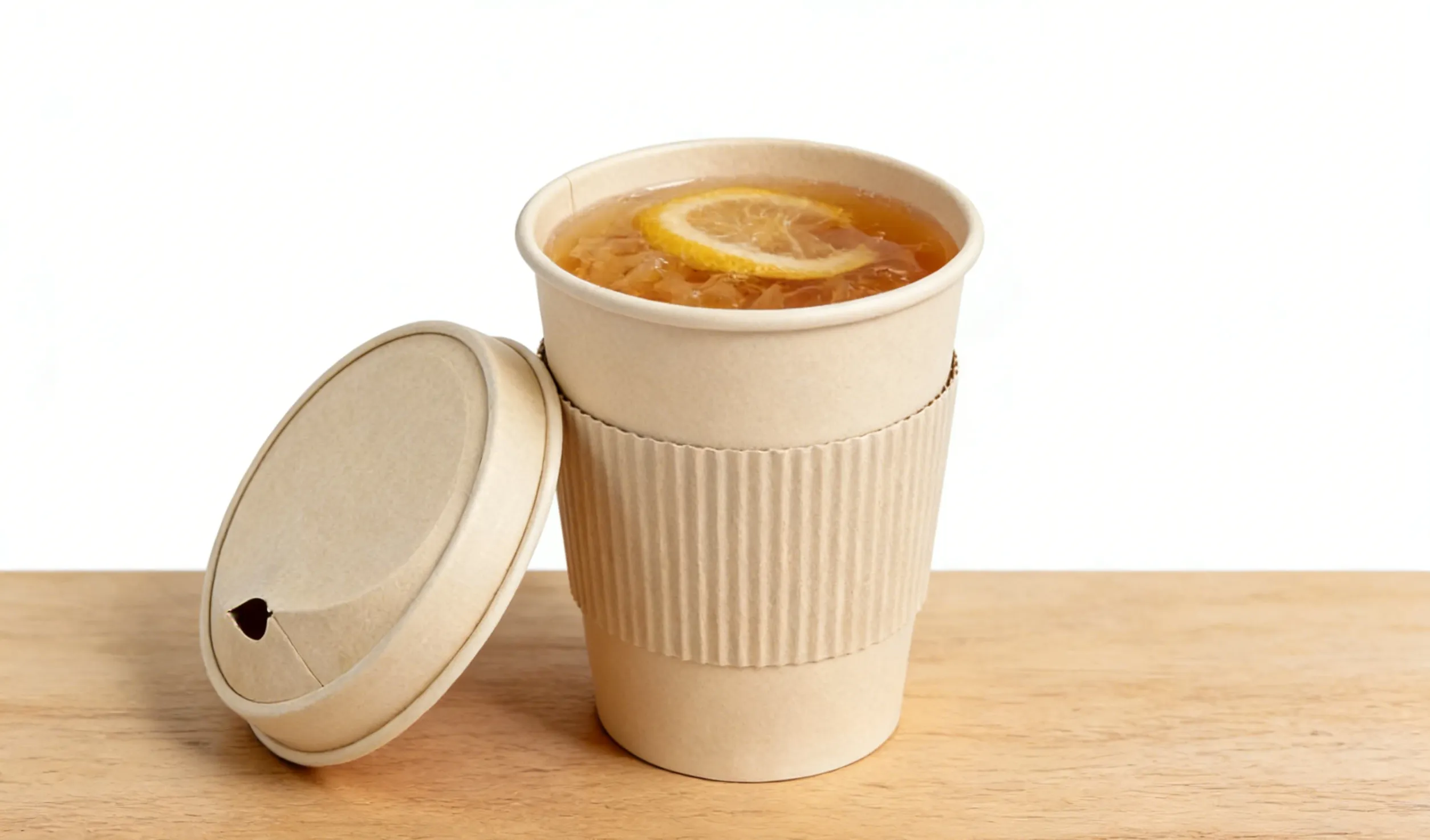
FAQ
Do paper lids fit standard takeaway coffee cups?
In most cases they fit cups made to the same nominal rim diameter, and Sowin lists sizes at 62, 80 and 90 mm for sip-through and 80 and 90 mm for flat formats, described as fitting common cup rim diameters. The caveat is tolerance. Paper lids have less stretch than plastic, so a cup at the top of its tolerance and a lid at the bottom of its own can still lift. Measure both, then trial the pair on filled cups before committing a menu.
Is a paper lid suitable for very hot drinks?
Yes, within limits. Sowin describes its hot beverage cup lids as heat-resistant and suitable for hot drinks such as coffee and tea, and the board is usually coated to keep the rim from softening. The constraint is time. A paper rim holds its shape long enough for a normal takeaway drink, but a cup left standing for half an hour in a hot hold will soften more than a plastic rim would. Set a service window in the specification.
Which coating should be specified for a recyclable paper lid?
Start from the waste stream the pack will meet. A water-based coating keeps the lid repulpable with the cup in mills that accept coated board, while a PLA coating supports industrial composting where collection exists. PE and PP coatings seal reliably and suit markets without that infrastructure. Ask for the coating to be stated on the specification by name, together with the board grade, so that the recyclability claim is tied to a material rather than to a general assurance.