


Manufacturing Process and Material Composition
Kraft Pulping and Natural Lignin Retention in Brown Kraft Paper Rolls
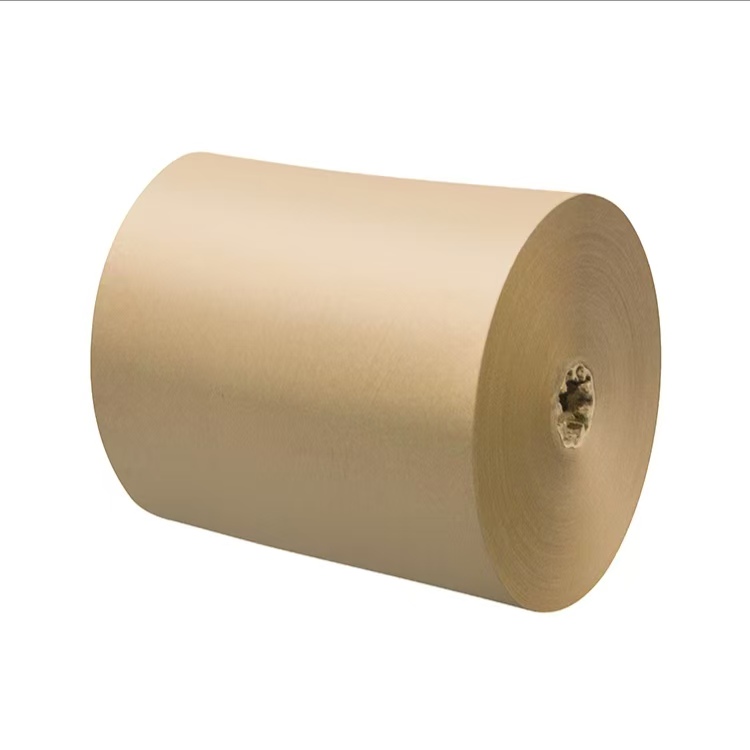
A brown kraft paper roll begins with softwood or hardwood chips cooked in a pressurized alkaline solution of sodium hydroxide and sodium sulfide—the sulfate (kraft) process. Unlike more aggressive chemical pulping methods, kraft pulping intentionally retains a portion of the natural lignin that binds cellulose fibers. This residual lignin imparts the characteristic tan to deep brown color and enhances sheet strength and stiffness by preserving fiber integrity. Because the pulp remains unbleached, the process uses fewer chemicals, less water, and less energy per ton. Mills often retain the natural fibrous texture, which further supports tear resistance and stacking strength. Shade variation reflects wood species, cooking time, and liquor ratio—not quality inconsistency. This efficient route delivers lower production costs than bleached grades while maintaining robust mechanical performance.
Bleaching Stages, Fiber Weakening, and Yield Impact in White Kraft Paper Rolls
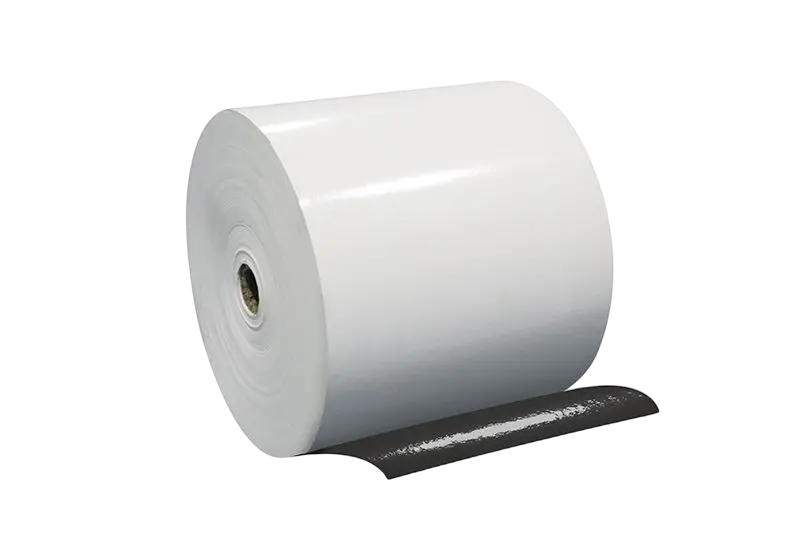
White kraft paper rolls begin with the same kraft pulp but undergo elemental chlorine-free (ECF) or totally chlorine-free (TCF) bleaching—using oxygen, chlorine dioxide, hydrogen peroxide, or ozone—to remove residual lignin. Each stage increases brightness but also degrades cellulose and hemicellulose: fiber length shortens, fines increase, and bonding potential declines. Yield drops by 5–8% as additional wood mass is dissolved or washed away. The resulting sheet is smoother, brighter, and more uniform—ideal for high-fidelity printing—but carries higher chemical, water, and energy demands per ton. Effluent management from bleach plant filtrates requires greater care. Compared with unbleached grades, white kraft trades some tensile and tear strength for optical clarity and print readiness—critical distinctions when selecting between industrial protection and branded packaging applications.
Physical Properties and Performance Metrics
Selecting a kraft paper roll requires matching strength, absorbency, and surface quality to the packaging task. Brown and white kraft grades differ primarily in fiber integrity, porosity, and surface treatment—determining how they respond to tension, folding, moisture, and ink.
Tensile Strength, Tear Resistance, and Fold Endurance Across GSM Ranges
TAPPI test data show that, at equivalent GSM, unbleached brown kraft typically delivers 10–15% higher tensile index and tear factor than bleached white kraft. Across common basis weights (40–120 GSM), tensile strength rises nearly linearly with GSM, while tear resistance peaks near 80–100 GSM for many machine-finished papers. Fold endurance reveals a consistent gap: at 70 GSM, bleached grades withstand 30–40% fewer double folds before failure. In side-by-side testing, brown kraft at 50 GSM averages ~65 N·m/g tensile index versus ~56 N·m/g for white kraft at the same weight. For heavy-duty wrapping, void fill, or pallet interleaving—where sharp edges, repeated flexing, or puncture resistance matter—brown kraft provides a wider safety margin.
Absorbency (Cobb Test), Surface Uniformity, and Print Readiness
Cobb values clearly differentiate the two: brown kraft absorbs 35–50 g/m² in 60 seconds; bleached white grades absorb 20–30 g/m² due to sizing agents and reduced porosity (TAPPI T441). Lower absorbency improves ink holdout, minimizes feathering, and enables cleaner halftone reproduction—key for brand-critical graphics. Bleaching and calendering also produce a smoother, brighter surface with reduced fiber prominence, supporting accurate barcode scanning and security marking. Brown kraft’s more open structure accepts water-based adhesives and coatings rapidly—making it ideal for tape and label lamination—but can cause mottling under heavy ink coverage. White kraft excels where visual fidelity and food-grade presentation are priorities; brown remains superior where moisture exposure, abrasion, or rough handling dominate.
Application Suitability and Packaging Use Cases
Selecting the right kraft paper roll depends on visibility, print requirements, and load-bearing needs. The following use cases clarify where each substrate delivers the most value.
Eco-Friendly Mailers, Void Fill, and Industrial Wrap with Brown Kraft Paper Rolls
Brown kraft paper roll stock is widely used for eco-friendly mailers because its unbleached fibers retain natural lignin, delivering high tear resistance and a lower chemical footprint. Its puncture resistance and oil absorption make it ideal for void fill—especially around heavier items—and for industrial wrap, including pallet interleaving and metal part protection. With no bleaching required, brown kraft carries lower embedded energy per ton, reinforcing its role as the default for sustainability-focused logistics and e-commerce packaging.
Premium Branding, Food-Grade Wrapping, and High-Fidelity Printing with White Kraft Paper Rolls
White kraft paper rolls provide a clean, bright surface optimized for premium retail packaging—where brand colors, fine typography, and precise halftones must reproduce accurately. Bleaching and surface finishing yield a uniform base that reduces ink bleed and supports high-resolution flexographic or digital printing. Food-grade applications—including deli sheets, bakery liners, and sandwich wraps—rely on white kraft for direct-contact compliance and hygienic appearance. Though slightly lower in strength at equivalent GSM, white kraft still meets performance thresholds for lightweight to medium-weight packaging. It is commonly selected for subscription boxes, luxury e-commerce inserts, and branded void fill—where visual consistency and unboxing experience directly influence customer perception and brand equity.
Sustainability, Cost Efficiency, and Strategic Selection
Biodegradability, Recyclability, and Chemical Load Comparison
Brown kraft paper rolls retain natural lignin and skip bleaching, resulting in significantly lower chemical load in mill effluent. Both grades are widely recyclable and compostable, but brown stock requires 20–30% fewer process chemicals per ton (2023 industry average) and avoids chlorinated organic byproducts associated with older bleaching chemistries. Compostability studies show brown kraft breaks down fully within 90–120 days under commercial conditions; bleached white grades may take slightly longer due to trace residual agents—but both meet ASTM D6400 and EN 13432 standards. Recyclability remains high for both, yet brown kraft’s simpler chemistry supports more stable repulping and fewer contaminants in recovered fiber streams. For buyers prioritizing circularity and upstream environmental impact, brown kraft is the lower-impact default choice.
Total Cost of Ownership: Bleaching Costs, Yield Loss, and Energy per Ton
White kraft paper rolls carry hidden cost drivers that brown grades avoid. Bleaching reduces fiber yield by 5–8% and adds $40–$70 per ton in chemical and energy inputs (2023 mill benchmarks). Brown kraft production consumes less purchased energy per ton—eliminating bleaching and associated drying cycles—and often achieves equivalent protective performance at lower basis weights, reducing freight and storage costs by 5–10%. Over a full year, switching from white to brown for non-printing packaging can lower total material cost by 10–15% without compromising functional performance.
| Cost factor | Brown grade | White grade |
|---|---|---|
| Bleaching chemical cost per ton | None | $40–$70 |
| Fiber yield loss | Minimal | 5–8% |
| Energy per ton | Lower | Higher |
| Typical total cost of ownership impact | 10–15% lower | Baseline |
For non-printing packaging—such as industrial wrap, pallet interleaving, or bulk void fill—brown kraft represents the leaner, more resilient, and more economical total cost choice.
Frequently Asked Questions
What is the main difference between brown and white kraft paper rolls?
Brown kraft paper is unbleached, retaining natural lignin for better structural strength and environmental efficiency. White kraft paper is bleached for a smoother, brighter surface, designed for printing and food-grade applications.
Which kraft paper roll is better for eco-friendly applications?
Brown kraft paper rolls are better suited for eco-friendly applications because they use fewer chemicals and energy during production and break down faster in composting conditions.
Does white kraft paper have lower tensile strength?
Yes, white kraft paper typically has slightly lower tensile strength than brown kraft paper due to the fiber weakening during the bleaching process.
Can brown kraft paper be used for printing?
Brown kraft paper can be used for printing; however, it is not ideal for applications requiring high-fidelity graphics or detailed typography due to its higher porosity and absorbency.
Is brown kraft paper more cost-effective?
Yes, brown kraft paper is generally more cost-effective because it avoids bleaching costs, retains higher yield, and consumes less energy during production.