


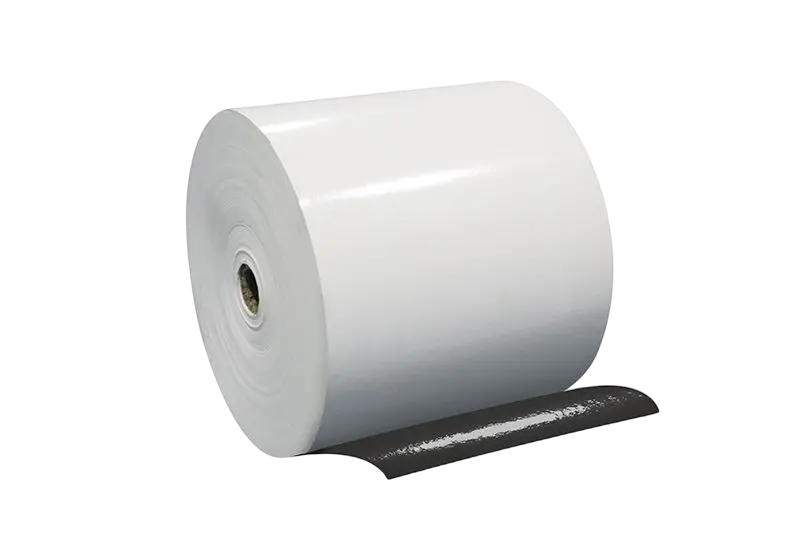
What GSM Really Means for Kraft Paper Roll Selection
GSM Defined: Why Grams per Square Meter Is the Critical Metric for Roll Consistency
GSM (grams per square meter) measures the mass of one square meter of paper—expressed in g/m². For kraft paper rolls, it reflects fiber content per unit area, independent of roll width, diameter, or total weight. While standard office paper averages 80 gsm, packaging grades span from 30 gsm tissue to 250+ gsm industrial sacks. Because GSM isolates fiber mass from physical reel dimensions, it provides a reproducible, globally recognized benchmark for comparing products across suppliers, batches, and converting lines.
Consistent GSM within a roll minimizes tension drift, print registration shifts, and defects in sealing or folding. It also supports predictable tensile, tear, and burst strength—key inputs for structural integrity. Uniformity simplifies yield forecasting and roll-weight calculations, helping buyers avoid over-ordering and material waste. For reliable converting, specify a GSM tolerance of ±3–5%.
GSM vs. Basis Weight and Thickness: Dispelling Common Confusion in Global kraft paper roll Sourcing
In North America, basis weight is commonly quoted in pounds per ream—but ream sizes vary by grade (e.g., 500 sheets of 17″ × 22″ for bond vs. 25″ × 38″ for text), making direct comparisons misleading. A 20 lb bond sheet and a 50 lb text sheet may have nearly identical mass per square meter. Thickness (caliper), meanwhile, adds another layer: two kraft rolls with identical GSM can differ significantly in caliper due to fiber type, refining intensity, and calendering pressure—factors that affect bulk and density.
| Measure | Definition | Sourcing Implication |
|---|---|---|
| GSM | Mass per square meter | Best global comparator |
| Basis Weight | Weight of 500 sheets in a stated sheet size | Ream-size dependent, regional |
| Caliper/Thickness | Distance between paper surfaces | Affects stiffness, feed, and print nip |
For global sourcing, relying solely on basis weight introduces substitution risk. Anchor your specification in GSM first, then add acceptable caliper range and bulk or density targets. This ensures fiber mass aligns with functional rigidity—and avoids costly mismatches in performance or machine compatibility.
Matching kraft paper roll GSM to Application Requirements
Selecting the correct kraft paper roll GSM protects product integrity, optimizes material cost, and prevents converting downtime. Match GSM to functional load—not just price per ton.
Light-Duty (30–60 gsm): Pouch Liners, Tissue Interleaving, and Decorative Wrap
Light-duty kraft paper (30–60 gsm) serves non-load-bearing roles: pouch liners, tissue interleaving, and decorative wrap. Its low mass delivers flexibility for conforming to irregular shapes without cracking, while adding negligible bulk or freight weight. Single-ply thickness typically ranges from 0.04 mm to 0.08 mm. If used as a liner for moist or chilled goods, specify minimum wet tensile strength—low-GSM sheets can lose up to 70% of dry strength when saturated. For high-speed unwind, require tight moisture content control (±1.5%) and consistent caliper to prevent web breaks and static buildup.
Medium-Duty (70–120 gsm): The Sweet Spot for Retail Bags, Food-Grade Mailers, and E-commerce Packaging
Medium-duty kraft (70–120 gsm) is the workhorse for retail bags, food-grade mailers, and e-commerce shipping solutions. At 80 gsm, the sheet offers balanced stiffness for clean gussets and crisp fold lines. Between 100–120 gsm, tear resistance and burst strength rise meaningfully—supporting heavier shipments without stepping up to corrugated. This band performs well on flexographic and digital presses, enabling branded unboxing at lower total package weight. For direct food contact, verify compliance with FDA 21 CFR §176.170 and EU Regulation (EC) No 1935/2004, including certified fiber sourcing and migration testing. On high-speed bag lines, medium-GSM grades deliver superior runnability and fewer jam events compared to ultra-light alternatives.
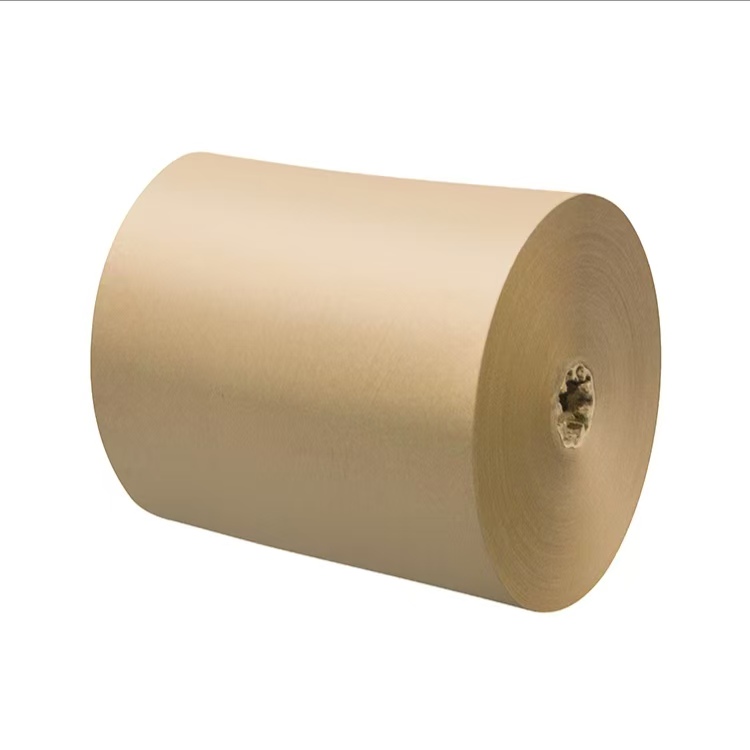
Heavy-Duty (135–250+ gsm): Industrial kraft paper roll Uses in Multi-Wall Sacks and Structural Protection
Heavy-duty kraft (135–250+ gsm) is engineered for multi-wall sacks, pallet interleaving, and structural protection. At 150–175 gsm, a single outer ply often replaces two lighter plies—reducing lamination complexity while improving burst strength. Above 250 gsm, puncture resistance becomes critical for sharp metal parts, heavy hardware, and corner boards. Multi-wall sack producers frequently combine one high-GSM outer ply with lighter inner plies to balance performance and cost. For demanding industrial lines, validate cross-direction tear (CD tear) and Gurley porosity—thicker sheets may require more drying capacity post-flexo printing and slower line speeds.
kraft paper roll Dimensions, Weight, and Practical Sizing Considerations
Standard Roll Widths (300–1600 mm) and Lengths (1,000–10,000 m) by End-Use Segment
A kraft paper roll’s width and length must align with both converting equipment and final package design. Narrow rolls (300–500 mm) suit pouch liners, tissue interleaving, and decorative wrap. Mid-width rolls (600–900 mm) serve retail bags, food-grade mailers, and e-commerce void-fill applications. Wide rolls (1,000–1,600 mm) feed high-volume bag lines and multi-wall sack operations. Lengths range from 1,000 m for heavy-duty grades to 10,000 m for lightweight tissue and interleaving. Core size and outer diameter influence unwind tension stability and storage density. Ordering exact widths reduces slitting waste and changeover time—especially valuable in high-mix production environments.
Calculating Net Roll Weight: Simple Formula Using GSM, Width, and Length
Net roll weight (kg) = (GSM × width in meters × length in meters) ÷ 1,000
(Convert width from millimeters to meters by dividing by 1,000)
Example:
- A 120 gsm roll, 1.0 m wide × 1,200 m long = 144 kg
- A 70 gsm roll, 0.6 m wide × 1,500 m long = 63 kg
Net weight excludes core and packaging. Add core weight (typically 2–8 kg depending on diameter and material) to calculate gross shipping weight. Use net weight to plan freight class, warehouse rack loading limits, and unwind brake settings. Always confirm core size (e.g., 3″, 6″, or 12″) and maximum outer diameter with your supplier before ordering—to prevent handling damage and unplanned downtime.
Beyond GSM: Key Factors That Impact kraft paper roll Performance in Production
GSM measures weight—not strength. Two kraft paper rolls with identical grammage can behave very differently during bag making, wrapping, or slitting. Tear resistance, burst strength, stiffness, fold endurance, and moisture response depend on fiber composition, refining, coating, and winding—not just mass per square meter.
Virgin kraft pulp delivers higher tensile strength and tensile energy absorption (TEA) than recycled fiber at equivalent GSM, thanks to longer, stronger fibers. TEA—measured in J/m²—is especially predictive of real-world durability: it quantifies how much energy the sheet absorbs before failure, which matters during drops, swings, or sudden impacts. A roll with high burst strength but low TEA may fail catastrophically under jerk loads.
Grain direction, coatings, and winding control further shape performance. Machine-direction (MD) orientation increases tensile strength along the primary load path—so MD alignment is essential for heavy-duty bags. Moisture-resistant coatings or PE liners improve wet strength for produce, greasy foods, and cold-chain applications—but they alter stiffness, fold behavior, and surface friction. Winding tension is equally critical: uneven tension across slit widths creates inconsistent finished rolls; taper tension profiles help prevent inner-layer compression—particularly important for softer or lower-GSM kraft.
| Factor | Why it matters | Production control |
|---|---|---|
| Fiber source and length | Virgin kraft tends to have higher tensile and TEA than recycled fiber at equivalent GSM. | Specify fiber mix and test burst factor and TEA—not just weight. |
| Grain direction | MD orientation increases tensile strength in the primary load path. | State MD or CD orientation for heavy-load bags. |
| Coatings and moisture resistance | PE liners or coatings improve wet strength but alter stiffness and fold behavior. | Validate coating compatibility with converting and end use. |
| Winding tension and taper | Uneven tension creates loose or tight finished rolls; taper controls inner-layer compression. | Set taper ratio to match material grade and roll diameter. |
Frequently Asked Questions (FAQ)
What does GSM stand for in kraft paper rolls?
GSM stands for Grams per Square Meter, which measures the weight of one square meter of paper. It is used as a standard metric to compare the density and fiber content of kraft paper rolls across different suppliers and grades.
Why is GSM important in choosing kraft paper rolls?
GSM ensures consistent tension, print registration, and structural integrity, which reduces material waste and improves converting efficiency. It provides a standardized method to compare kraft paper rolls irrespective of their physical dimensions.
How is GSM different from basis weight and caliper?
Basis weight refers to the weight of 500 sheets of paper in a specified size, which can vary by region and grade, making it less reliable for comparison. Caliper refers to the thickness of the paper, influenced by the fiber type and processing. GSM, on the other hand, is a global standard for the mass per square meter of paper.
What GSM range suits different kraft paper applications?
Light-duty (30–60 gsm) for pouch liners and decorative wrap, medium-duty (70–120 gsm) for retail bags and mailers, and heavy-duty (135–250+ gsm) for industrial applications like multi-wall sacks and structural protection.
How do I calculate the net weight of a kraft paper roll?
The formula to calculate net roll weight is: Net roll weight (kg) = (GSM × width in meters × length in meters) ÷ 1,000. This provides the weight excluding the core and packaging.
What other factors influence kraft paper roll performance?
Beyond GSM, factors such as fiber composition, grain direction, coatings for moisture resistance, and proper winding tension all affect performance during production and end use.
Table of Contents
- What GSM Really Means for Kraft Paper Roll Selection
- Matching kraft paper roll GSM to Application Requirements
- kraft paper roll Dimensions, Weight, and Practical Sizing Considerations
- Beyond GSM: Key Factors That Impact kraft paper roll Performance in Production
-
Frequently Asked Questions (FAQ)
- What does GSM stand for in kraft paper rolls?
- Why is GSM important in choosing kraft paper rolls?
- How is GSM different from basis weight and caliper?
- What GSM range suits different kraft paper applications?
- How do I calculate the net weight of a kraft paper roll?
- What other factors influence kraft paper roll performance?