


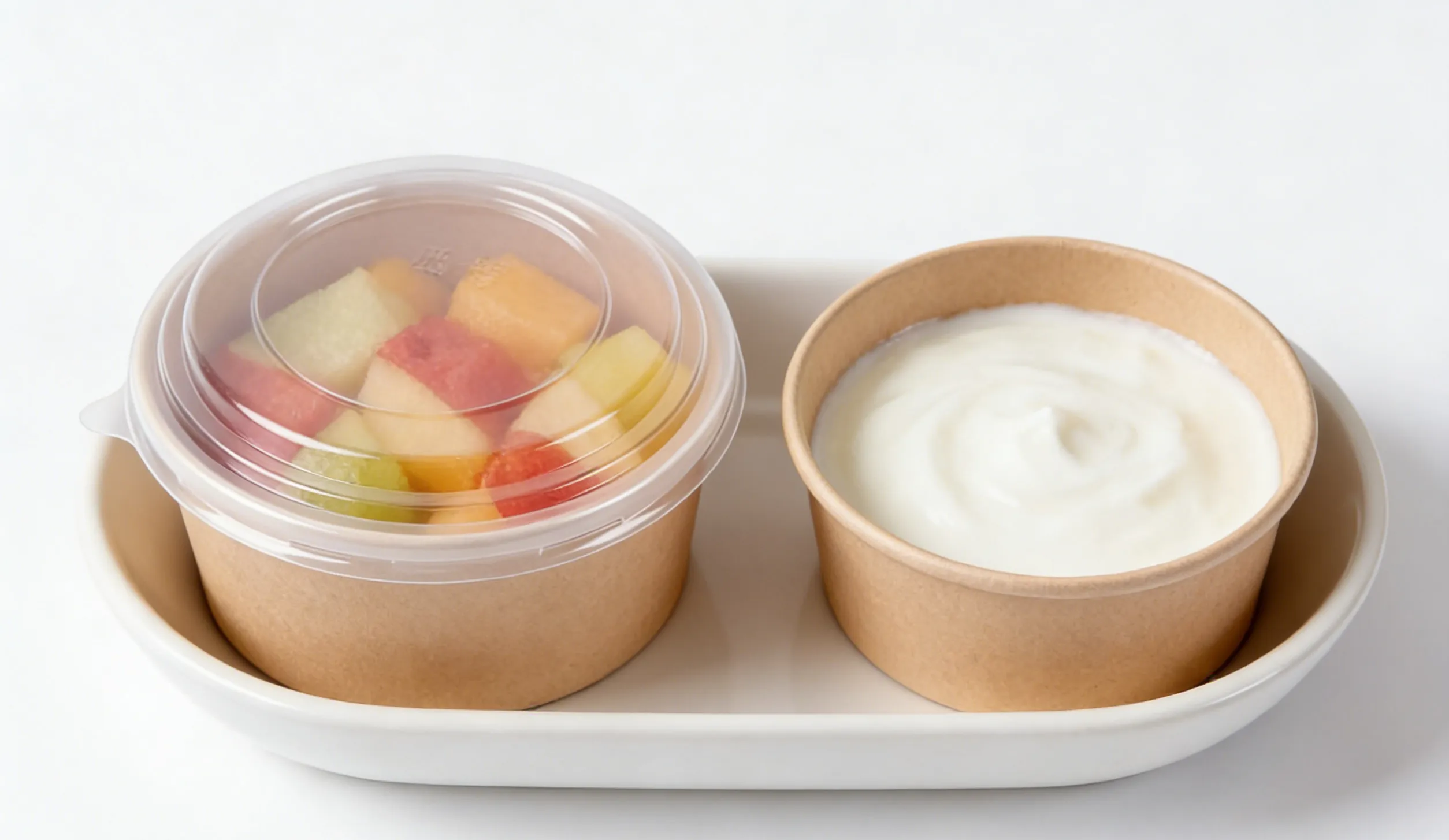
Clarity as a Commercial Requirement in Chilled and Ambient Display
A buyer evaluating a Plastic Lid for a chilled salad or a ready-meal range is solving two problems at once. The lid has to keep the food inside the pack during handling, and it has to let the customer see the food well enough to buy it. Neither can be optimised alone, because gains in transparency are paid for in thickness, geometry or material cost.
Suppliers who assemble complete packs, bowl and lid and sleeve together, carry that trade-off. Chosen late, after the bowl and artwork are fixed, it collapses into whatever fits. Chosen early, it sets rim dimensions, stacking height and how a chiller cabinet reads from a metre away.
Mechanics matter more than adjectives. Clarity depends on how light passes through the polymer, where condensation collects, how much headspace a dome adds, and whether the rim keeps the lid flat under load. Buyers of food presentation packaging learn this in the chiller, not the design file.
The sections below turn clarity into questions about material grade, geometry, rim fit and validation, so that a Plastic Lid can be approved on evidence instead of appearance.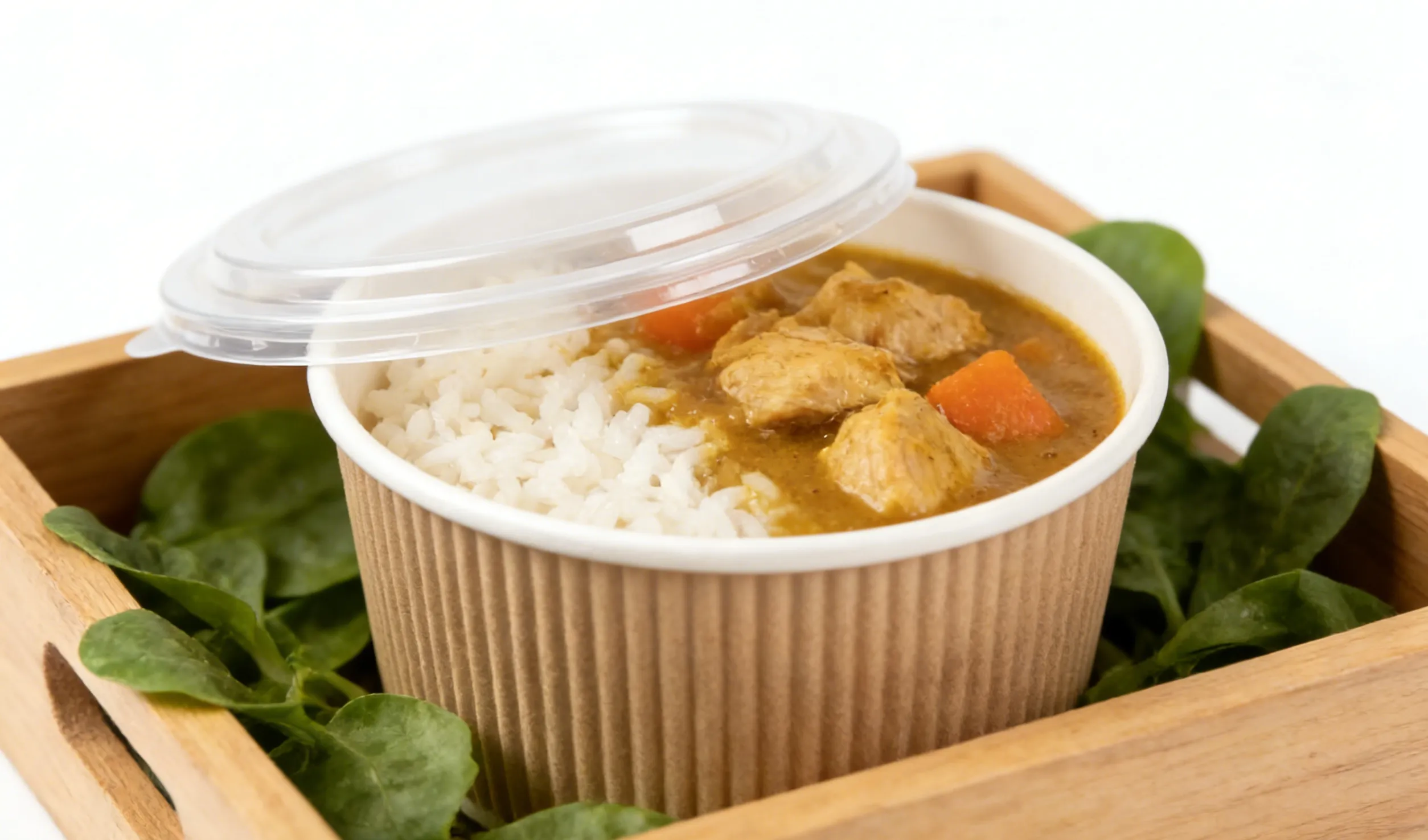
The Optics of Clarity and the Physics of Fogging
Clarity is often written into a brief as one attribute, yet it behaves differently at chiller temperature, at ambient temperature and after an hour in a delivery bag. A Plastic Lid approved on a bench often disappoints in a cabinet.
How Condensation Forms on a Cold Lid Surface
Cold food puts moisture into the headspace of a pack. When the inner face of a Plastic Lid drops below the dew point of that headspace, water condenses on it, and the droplets scatter light so the contents lose contrast and colour. Three levers control this in practice: lower the filling temperature, reduce the empty volume above the food, and keep the cold chain stable so the surface does not cycle repeatedly across the dew point. Anti-fog additives are used in the industry to spread droplets into a thin film, but their presence has to be confirmed in the grade being quoted.
Reading Material Clarity in rPET and PP
rPET is recycled polyethylene terephthalate, and Sowin lists its rPET bowl lids as high transparency with a strong structure for food display. PET is generally the clearer of the two common lid polymers, while PP gives up some optical sparkle and gains heat resistance, which is why polypropylene lids are offered for hot meals and warm takeaway dishes. Recycled feedstock can introduce a slight tint or batch variation, so every Plastic Lid should be approved against a sample from the production grade, viewed under the lighting of the actual cabinet, at the temperature it will sit at in the chiller.
Dome and Flat Geometry in Display Decisions
With the polymer fixed, geometry decides how much food a shopper truly sees and how the pack behaves once cases are stacked or palletised. It also separates one set of clear bowl lids from another.
Where a Dome Earns Its Volume
A domed Plastic Lid buys usable headspace. The 98 mm PET dome in the Sowin range is positioned for cups where toppings, foam or whipped cream need room, and the same logic carries into bowls: a raised centre keeps cling film, garnish or a domed sauce away from the flat plane of the lid, so the viewing surface stays clear. The real cost is cube and case fill. A dome adds height to every case and shelf layer, so it suits premium or display-led lines better than dense retail sets where case fill drives freight.
Flat Formats for Stacked Retail Sets
Flat lids trade headspace for density, and density is what pays for freight. The clear bowl lids offered in rPET and PP sit flat on the rim, which lets bowls stack, keeps cartons shallow and reduces the air gap that fogs. Flat geometry also brings the food close to the surface, so presentation depends on how the bowl is filled rather than on how the lid is shaped. Where a plastic-free pack is required, a paper lid with a clear window keeps a viewing panel, and Sowin lists that option for rectangular bowls as a Plastic Lid alternative.
Seal Integrity When the Lid Is Transparent
A transparent Plastic Lid that lifts at one corner during delivery has failed at both jobs: the leak is visible and the food is spoiled.
Rim Matching Across Bowl Dimensions
Lid ranges are built around rim dimensions rather than volumes, and that is where SKU discipline begins. The rectangular salad bowls in the Sowin range run from 500 ml to 1000 ml on a common 171 x 118 mm top, and the rPET lids for rectangular bowl formats are listed at 171 x 118 mm, alongside 194 x 142 mm, 167 x 167 mm and 108 x 80 mm. One lid dimension can therefore serve several fill weights, provided the rim profile is identical. Square bowls with a 166.5 mm top need their own family.
Crack Resistance Through Transport and Stacking
Polymer toughness matters most at corners and tabs, where stress concentrates first when a lid is pressed on and when a stack shifts in a vehicle. Sowin describes its rPET bowl lids as resistant to cracking during transport and stacking, and its PP lids as strong and flexible, with good resistance to cracking in transit. Temperature changes the picture: PET stiffens in a cold room, while PP keeps more of its impact strength, which is why hot and frozen menus are usually specified on separate Plastic Lid lines even when the bowl rim is shared.
Specifying Visibility Without Losing Protection
A specification turns a preference into something a factory can repeat, and it is the reliable way to compare quotations for the same Plastic Lid from two suppliers.
What to Write Into a Lid Specification
State the polymer and any recycled content, the dimensions with tolerances, the rim engagement depth, and the temperature window, because rPET bowl lids are recommended for cold or room-temperature food rather than hot soups. Add a clarity reference, ideally a signed sample or a photograph taken under defined lighting, and a stacking load for the packed case. Where printing is planned, fix the print area and confirm that custom sizes, colours and logo printing are available at volume, since a strong Plastic Lid offer is a supply question as much as a design one.
Validation Before a Menu Change
Test with the real product, not water. Fill at production temperature, chill to case temperature, then hold, invert, shake and stack for a period that matches the longest realistic journey, photographing the lid at intervals. Record where fogging appears and whether droplets run. Repeat with the lid at the low end of its tolerance and the bowl at the high end, because rim mismatch hides in the extremes and rarely appears in the centre of the range. Only then run a line trial, since filling equipment often stresses a Plastic Lid harder and faster than the road does.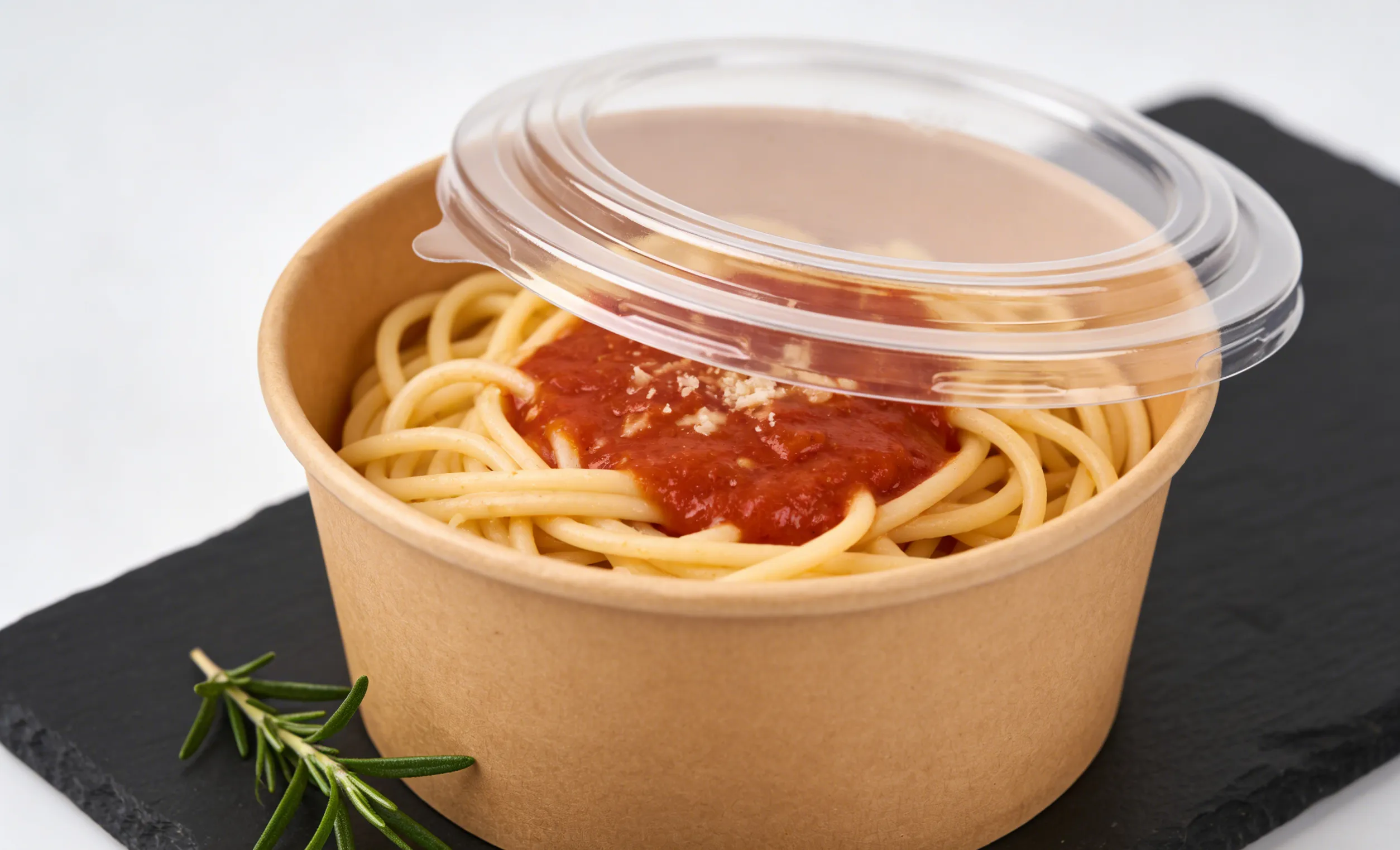
FAQ
Does a clear Plastic Lid protect food as well as an opaque one?
Protection comes from the seal and the structure, not from opacity. A transparent Plastic Lid made from rPET or PP can deliver the same rim engagement and crack resistance as a coloured lid, provided the grade suits the temperature of the food. The real differences are optical: a clear lid shows condensation, and it shows a poor fill. In food presentation packaging that exposure is an advantage, because it forces filling discipline, but the specification then needs a fogging check as well as a leak check.
Can one lid size cover several bowl volumes?
Often yes, when the bowls share a rim. Sowin's rectangular paper bowl lids follow the capacity steps of the bowl range, where 500, 650, 750 and 1000 ml formats sit on the same 171 x 118 mm top, so one Plastic Lid dimension covers the family. Confirm the rim profile, not only the top dimension, and confirm that the deepest bowl still seals when the sidewall flexes under load. Fewer SKUs cut inventory and changeover, but only if the seal holds at every fill weight.
Is rPET suitable for hot food?
Generally it is specified for cold and room-temperature food. Sowin recommends its rPET lids for rectangular bowl ranges holding cold or room-temperature items rather than hot soups, and offers PP lids where heat resistance is required. The reason is mechanical rather than chemical: PET softens and can distort as temperature rises, which affects rim grip on the bowl and on the rectangular paper bowl lids paired with it. If a menu mixes hot and cold items in one format, plan two lid materials and keep the bowl rim unchanged.