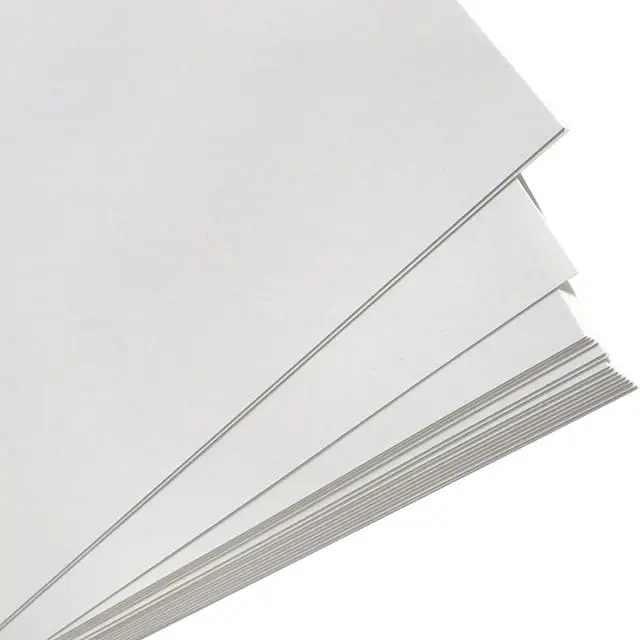
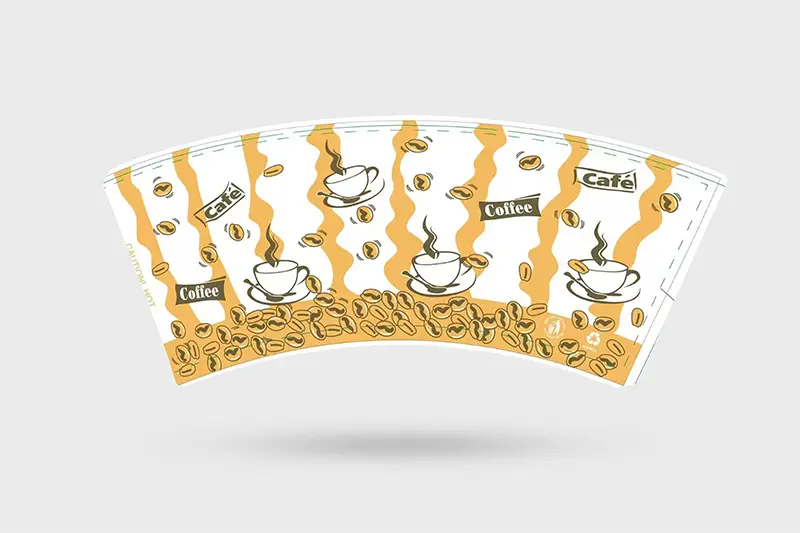
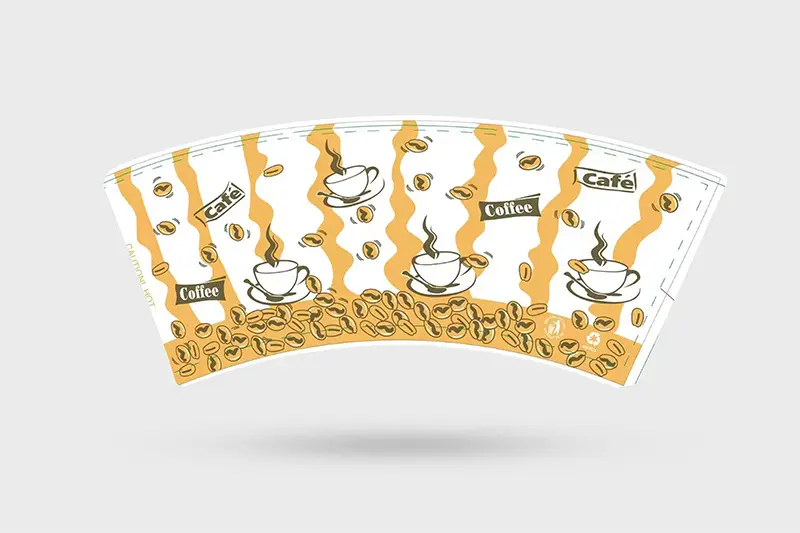
Paper cup blanks are a critical yet often overlooked core component in paper cup manufacturing. These flat die-cut substrates undergo forming, sealing, and curling to become the final paper cup. Their significance extends far beyond ordinary paper stock, directly determining the end product's performance, production efficiency, and a brand's sustainability commitment.
From a quality and performance perspective, the liner forms the foundation of a paper cup's integrity, safety, and brand image. Its paper strength, basis weight, and composition directly influence the cup's leak resistance, thermal insulation, and anti-condensation capabilities, ensuring a satisfactory user experience. Simultaneously, as the direct beverage contact layer, it must utilize food-grade virgin pulp or certified recycled fiber, paired with compliant coatings (such as compostable PLA or recyclable PE) to meet stringent food safety regulations. Furthermore, the surface smoothness and coating quality of the paper sheet guarantee high-quality printing, carrying the brand's visual identity as the first impression for consumers.
At the production level, paper sheet quality is the core driver of manufacturing efficiency. Each sheet with precise dimensions, uniform thickness, and stable moisture content is essential for the smooth operation of high-speed automated cup machines, minimizing paper jams, waste, and downtime. Its excellent formability ensures perfect sealing of side seams and bottom seals, directly improving production yield and controlling overall costs.
From a supply chain strategy perspective, selecting paper sheets is a decision with far-reaching implications. It concerns production cost control, supply stability, and order flexibility, serving as the cornerstone for building strategic partnerships with core suppliers. More critically, the choice of paper material—whether fibers from sustainably managed forests, high post-consumer recycled content, or eco-friendly barrier coatings—fundamentally defines a paper cup's environmental attributes and end-of-life disposal methods. This makes it a pivotal element in a company's ESG (Environmental, Social, and Governance) objectives.
Therefore, selecting premium paperboard for paper cups is not merely a raw material procurement decision. It represents a fundamental investment in the competitiveness of the end product, production line efficiency, and a brand's environmental responsibility. It serves as the invisible foundation connecting reliable raw materials, efficient manufacturing, and responsible consumption.