


Where Bakery Quality Is Lost Between the Oven and the Shelf
A bakery product leaves the oven at its best and spends the rest of its commercial life inside packaging. As routes lengthen, bakery packaging has to hold a stable internal environment across more handling points, more vehicles and more hours at ambient temperature. The MAP Series was built for this stage of the journey, when the bakery itself can no longer protect the product.
In food distribution, what changes over distance is not one defect but the interaction between several. Crumb moisture migrates outward, crust loses crispness, starch re-crystallises, and stacked cartons transfer load onto soft surfaces. Each problem has a different cause, so one change rarely solves all of them.
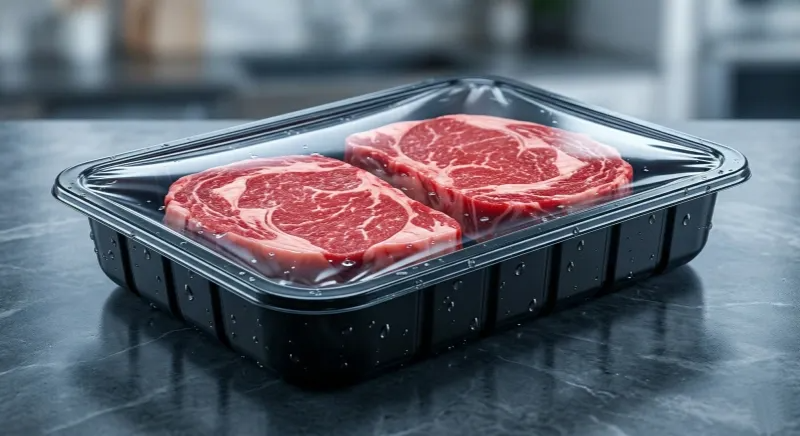
Barrier packaging of this kind addresses the atmosphere rather than the surface. Replacing the air around the product with a controlled gas mix and holding it inside a sealed structure slows oxidation and microbial growth that shorten usable life. That is a different proposition from closing a bag.
The question a buyer faces is narrower than the technology: whether a MAP Series format fits the product geometry, survives the route, and can be validated by measurement.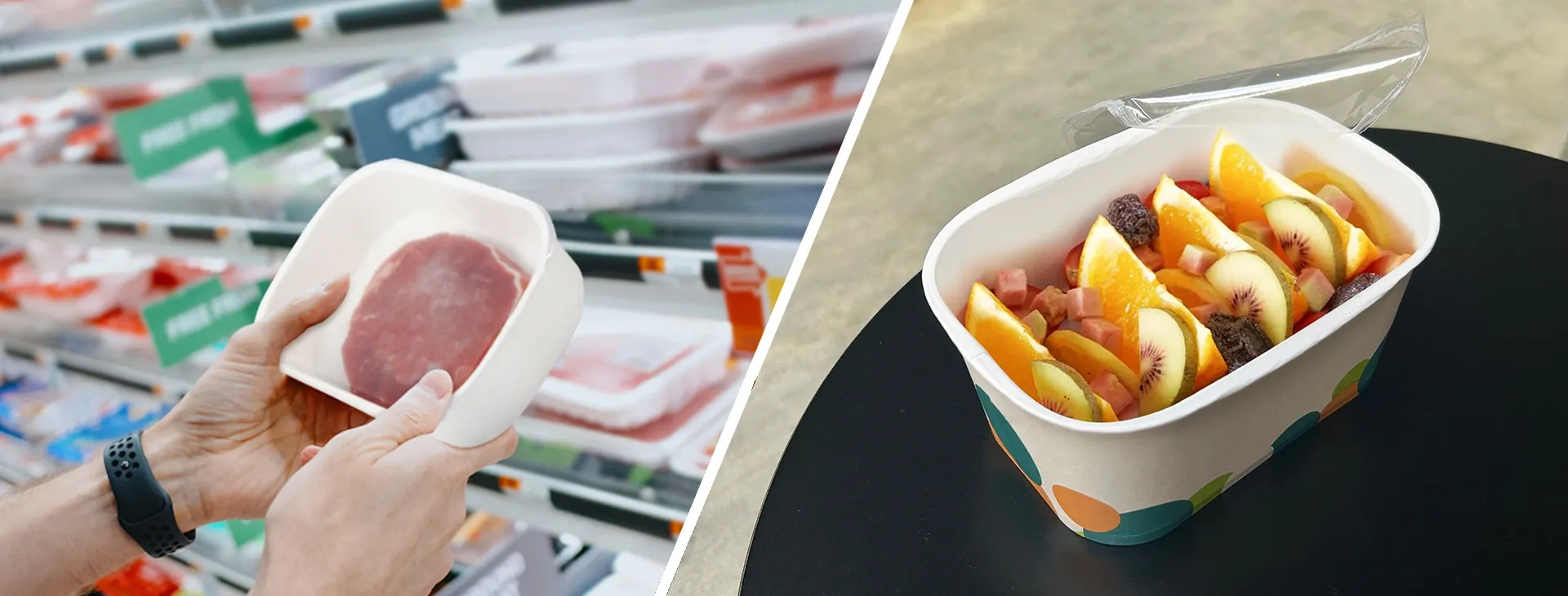
The Two Failure Modes That Longer Routes Expose
Distance reveals two problems that a short route hides. One is slow and chemical, the other sudden and mechanical, and they are usually measured by different people in different departments.
Moisture Migration Between Crumb and Crust
Bread settles toward equilibrium, moving water from the moist crumb into the drier crust and into the surrounding air. In a permeable pack the crust absorbs that water, loses its fracture and turns leathery within a day. In a sealed pack the same water has nowhere to go, so it redistributes inside the headspace and can soften a crisp surface instead. Neither outcome is a packaging fault on its own. It is a mismatch between the moisture of the product and the permeability of the format, and it is why the same MAP Series pack can perform well on one recipe and poorly on another.
Crushing and Load Damage in Mixed Pallets
Compression is the failure that shows up as a complaint rather than a laboratory result. Soft laminated doughs, cream-filled items and fragile decorations deform under the weight of the layers above them, and the damage accumulates at every transfer point rather than at one. Carton design, stack height and the rigidity of the primary pack all contribute. A shallow rigid tray distributes load across its base; a deep flexible pack concentrates it on the product. Buyers who only test a MAP Series pack in a single case, unstacked and hand-carried, learn very little about a mixed pallet.
How a Barrier Format Changes the Trade-Off
The barrier packaging in the MAP Series does not make a bakery product shelf-stable. It buys time by controlling exchanges at the pack wall, and the gain is only as large as the weakest point in that wall.
Gas Composition and the Oxygen Budget
Oxygen drives oxidation of fats, fading of colour and growth of aerobic spoilage organisms. A modified atmosphere reduces the oxygen available at the surface and replaces it with nitrogen or carbon dioxide, depending on what the product needs. Residual oxygen inside the pack, oxygen dissolved in the product and oxygen entering through the film all count against the same budget. This is why gas flushing alone rarely delivers the expected result if the pack is filled loosely, if the headspace is large, or if the seal is incomplete. The gas mix is a MAP Series specification, not a machine setting.
Where the Barrier Reaches Its Limit
Barrier packaging performance is a property of the whole pack, not of the film. Folds, creases, seal contamination and pinholes created during palletising all create paths that a flat sample would never show. MAP Fanpak, the fan-shaped format in the MAP Series, uses a high barrier EVOH film laminated to a paper base, and the useful question is not what the film achieves in a laboratory but how a formed pack holds that performance after filling, sealing and transport. Any product with a live culture or a high water activity also spoils in ways gas control will not stop.
Fitting the Pack Format to Product Geometry
Within the MAP Series, format decisions follow the product rather than the other way round. A fan-shaped pack suits some baked goods and fights others, and the difference shows in the first trial.
Volume Steps and Footprint in the MAP Fanpak Range
The MAP Series is offered in 500, 650, 750 and 1000 ml formats, with one further 1000 ml size on a wider 194 by 142 mm top. Depths run from 40 mm on the smallest to 75 mm on the deepest, and each size carries a minimum order of 50,000 units. Those steps matter because a pastry that sits below the rim will slump into the headspace, while one that touches the film will mark and crush. Choosing the shallowest size that clears the product usually protects appearance better than choosing a larger pack and adding padding.
Visibility, Sealing and Base Material
The transparent film is the commercial reason many bakeries choose this format: the product is the display, and a window does the selling that printed board cannot. Sealing is the technical condition. The MAP Series supports both vacuum and modified atmosphere packing, and the seal area must stay clean of crumbs and sugar for either to hold. Paper base is available in kraft, white and bamboo finishes, which changes the outer appearance without changing the barrier logic. Buyers should confirm that the print and finish survive a humid chilled vehicle.
Validating a Longer Route Before Committing Volume
For bakery packaging buyers working from the MAP Series, a route trial is a measurement exercise, not a demonstration. It should be designed so that a failure tells you which variable failed.
Designing the Trial Shipment
Build the MAP Series trial around the real food distribution route, not a simulation of it. Load the same pallet configuration, use the same vehicle type and the same number of transfers, and include at least one worst case such as a delayed leg or a vehicle that cannot hold temperature. Keep a control pack stored at the bakery so that any change can be attributed to transport rather than to time. Record the filling line, the seal settings, the gas mix and the time between sealing and dispatch, because those four variables explain most of the variation between two shipments meant to be identical.
Readings at Each Checkpoint
Decide in advance what will be measured, where, and at what point a result counts as a failure for the MAP Series format under test. Typical checkpoints are dispatch, arrival at the distribution centre, arrival at the store and the end of the agreed display period. At each one, assess the same attributes: seal integrity, pack deformation, visible condensation, crust texture, crumb firmness and any off-odour. Score them on a simple scale rather than describing them, so that two people on two shifts produce comparable records. A trial that ends with opinions instead of readings usually has to be repeated.
FAQ
How does MAP Fanpak differ from a standard bakery bag?
A bag controls dust and handling, while a barrier format controls the atmosphere. Within the MAP Series, the MAP Fanpak pairs a high barrier EVOH film with a paper base, so the pack can be flushed with a gas mix or drawn to vacuum and then hold that condition. The film also separates from the paper base to support recycling. For a bakery, the difference is that shelf life becomes a specified outcome rather than an assumption.
Can a longer route be validated without a full production run?
Yes, provided the trial uses production packs from the real line and the real route. A reduced batch across two or three shipments is usually enough to expose seal and compression problems in a MAP Series format, because those failures appear early. What cannot be shortened is the observation window: the product has to be assessed at the end of the display period it is meant to survive. Statistical confidence grows with volume, but the first failures rarely need it.
What information should a bakery give a packaging supplier first?
Start with the product itself: weight, dimensions, water activity, fat content, filling type and whether it carries a live culture. Then the route: duration, temperature range, number of transfers and stack height. Finally the commercial frame, including target shelf life, print requirements and annual volume against the 50,000 unit minimum per MAP Series size. Suppliers who receive all three sets at once can recommend a format instead of guessing at one.